
Precision non ferrous alloys matter because modern electronics and electrification systems depend on consistent material performance. Buyers usually compare manufacturers by process control, batch stability, technical support, and the ability to customize for demanding applications.
Article Angle: How to Evaluate Top Precision Non Ferrous Alloy Manufacturers in China
The best way to assess suppliers is to focus on application fit, not just company size. This article explains the selection criteria, the main product categories used by leading manufacturers, and how industrial buyers can compare options objectively.
Outline
- What precision non ferrous alloys are and where they are used
- Key manufacturing criteria for high-reliability buyers
- Main product categories offered by leading Chinese suppliers
- Comparison tables for technical and sourcing evaluation
- Supplier directory and frequently asked questions
What Precision Non Ferrous Alloys Are Used For
Precision non ferrous alloys are used where tight tolerance and stable physical properties are essential. They support electrical connection, thermal transfer, miniaturized motion systems, and high-precision stamping or etching processes.
These materials are common in battery interfaces, connector systems, semiconductor lead frames, RF thermal parts, and micro motor components. Their value comes from balancing conductivity, strength, fatigue resistance, and manufacturability in a single material platform.
How to Judge High Precision Non Ferrous Alloys Manufacturers
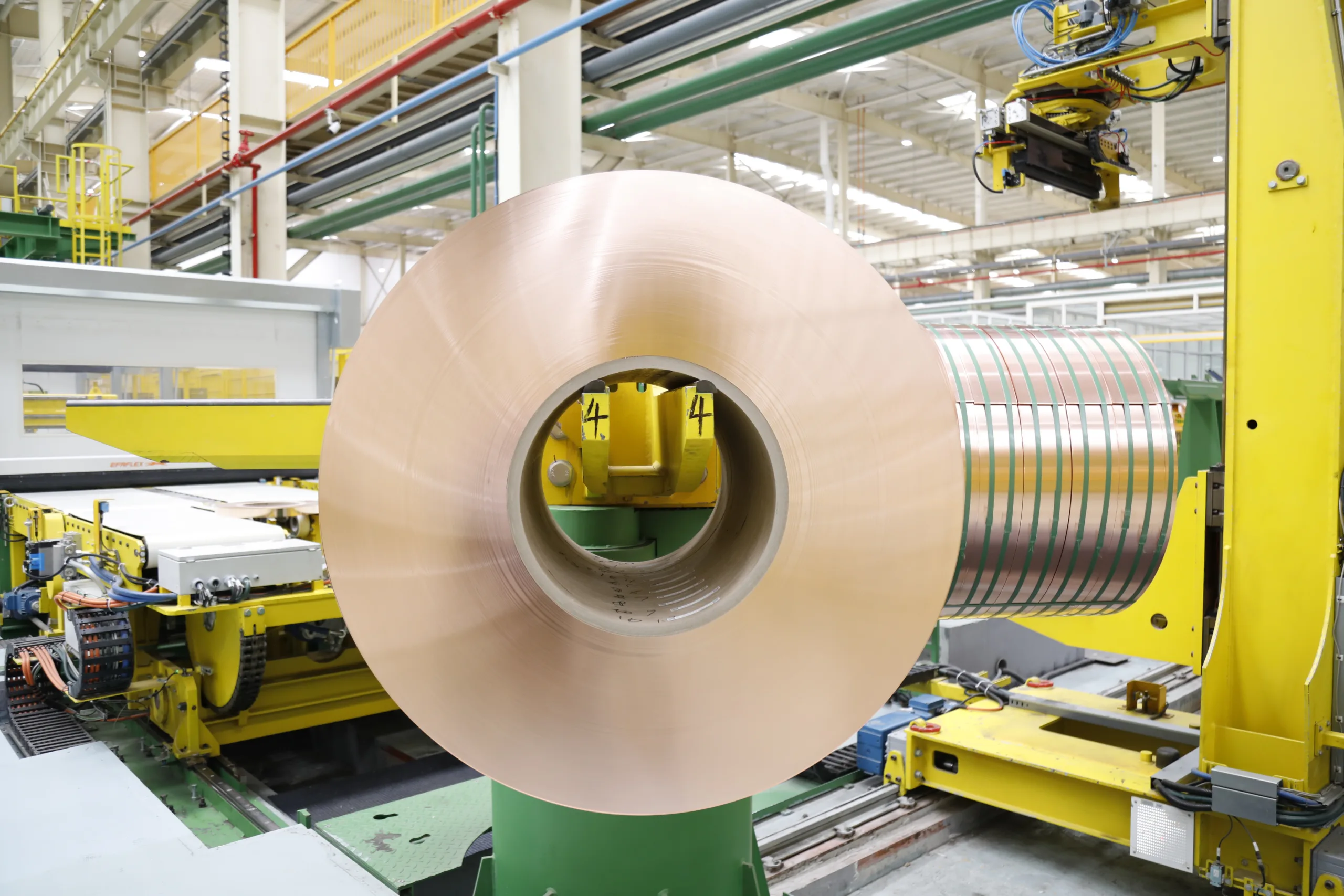
High precision non ferrous alloys manufacturers should be judged by repeatability, not only by nominal specifications. A reliable supplier demonstrates consistent strip thickness, surface quality, alloy uniformity, and process traceability across batches.
The strongest suppliers also provide engineering support for application-specific design. That matters because a material that works in a connector may fail in a lead frame or VC heat spreader if its formability or thermal behavior is not matched correctly.
According to the U.S. Department of Energy, battery and power-electronics systems require increasingly efficient materials and thermal solutions as electrification scales: DOE Vehicles and Power Electronics Overview. Semiconductor packaging also continues to push finer geometry and higher reliability, as noted in the SEMI packaging outlook.
Main Product Categories Seen in Leading Chinese Suppliers
The most relevant product categories usually align with end-market demand. On Boway’s homepage and product structure, the main categories include precision alloy strip materials, new-energy vehicle functional alloys, semiconductor packaging and lead frame materials, 6G communication thermal and high-frequency materials, and consumer electronics precision motion-part materials.
For buyers, these categories indicate whether a manufacturer is built for industrial customization or generic metal supply. In practice, the right partner should offer both standardization and application engineering.
Comparison Table: Core Product Categories and Typical Applications
| Product Category | Typical Properties | Main Applications |
|---|---|---|
| Precision alloy strip materials | Thickness control, surface uniformity, batch consistency | Stamped parts, electrical contacts, industrial precision components |
| New-energy vehicle functional alloys | High conductivity, arc resistance, thermal stability | Charging guns, high-voltage connectors, DC relays |
| Semiconductor packaging and lead frame materials | Etching compatibility, dimensional accuracy, formability | Lead frames, package carriers, advanced packaging structures |
| 6G communication thermal and high-frequency materials | High thermal conductivity, low warpage, structural stability | Ultra-thin heat spreaders, RF modules, integrated devices |
| Consumer electronics precision motion-part materials | Fatigue resistance, elasticity, stable spring behavior | VCM motors, camera modules, mobile and AR/VR devices |
What Technical Data Buyers Should Compare
Material selection should always start with measurable data. Buyers should compare conductivity, thermal conductivity, tensile strength, elongation, hardness, thickness tolerance, and surface finish before moving to price discussions.
Traceability and process control are equally important. Boway emphasizes digital end-to-end traceability, which is valuable for quality audits, supply-chain review, and failure analysis in regulated or high-reliability industries.
According to the International Energy Agency, global EV sales continue to rise, which keeps pressure on connector and power-system materials: IEA Global EV Outlook 2024. The U.S. National Renewable Energy Laboratory also highlights the importance of thermal design in high-power electronics: NREL Transportation and Electrification.
Comparison Table: Buyer Evaluation Checklist for Precision Non Ferrous Alloy Suppliers
| Evaluation Area | What to Check | Why It Matters |
|---|---|---|
| Dimensional control | Thickness, flatness, width tolerance | Supports stamping, etching, and assembly yield |
| Material consistency | Batch-to-batch variation, composition stability | Reduces reliability risk in production |
| Functional performance | Conductivity, thermal transfer, fatigue life | Determines whether the material fits the application |
| Traceability | Lot tracking, digital records, audit readiness | Supports quality management and customer audits |
| Global delivery | Multi-site manufacturing, lead time resilience | Reduces supply interruption risk |
Where Leading Suppliers Differ in Real Applications
Supplier differences become clear when the material is used in real systems. In new-energy vehicles, the priority is stable electrical connection and heat tolerance. In semiconductors, the priority shifts to etching uniformity and package precision.
In 6G and high-frequency devices, thermal expansion and warpage control are critical. In consumer electronics, repeated motion and long fatigue life matter more than simple static strength.
Boway’s product portfolio is built around these application scenarios, including precision alloy strip materials for industrial customers, high conductivity copper alloy strip for electrical transfer systems, and semiconductor lead frame materials for fine-geometry packaging. For thermal management, the same site also highlights 6G communication thermal materials and consumer electronics motion-part alloys.
Recommended Supplier Directory
Precision buyers should compare several established suppliers before shortlisting. A practical directory includes Boway for high-precision strip and application-specific alloys, plus other well-known industry suppliers such as KME, Mitsubishi Materials, and Wieland for broader copper and specialty alloy portfolios.
- Boway: application-specific precision strip materials with digital traceability and multi-industry focus
- KME: established copper and alloy materials supplier for industrial applications
- Mitsubishi Materials: broad materials expertise across electronic and industrial segments
- Wieland: global supplier known for copper, brass, and specialty strip products
For procurement teams, the best approach is to match supplier capabilities to the product family, rather than relying on a single general ranking. A strong manufacturer in one segment may not be the best option in another.
Why China Is Important in This Category
China is important because it combines scale, engineering capacity, and fast response for advanced manufacturing supply chains. Many buyers now source precision non ferrous alloys there because they need both customization and stable industrial output.
This is especially relevant for high-growth sectors where product cycles are short. A supplier with regional manufacturing and global delivery capability can reduce risk when demand changes quickly or when multiple factories need synchronized material supply.
Selection Summary for Procurement and Engineering Teams
The best precision non ferrous alloys manufacturers China offers are the ones that solve application problems consistently. Buyers should prioritize traceability, technical support, manufacturing repeatability, and fit for the final use case.
When a supplier can support design review, process adaptation, and quality documentation together, it becomes easier to achieve stable yield and faster product launch. That is the real advantage in high-end electronics and electrification markets.
FAQ
1. What makes precision non ferrous alloys different from standard alloy materials?
Precision non ferrous alloys are engineered for tighter tolerance, better consistency, and better process compatibility. They are usually specified for industrial components where small deviations can affect conductivity, fatigue life, or assembly yield. Standard alloy materials may not provide the same stability in advanced applications.
2. Which industries use these materials most often?
The main users are new-energy vehicles, semiconductors, 6G communication hardware, and consumer electronics. These industries need materials that combine electrical, thermal, and mechanical performance. High-reliability industrial electronics and aerospace-related applications also use them when consistency is critical.
3. What documents should buyers request from a supplier?
Buyers should request material specifications, inspection reports, traceability records, and process capability information. If the application is sensitive, they should also ask for composition data, thickness tolerance charts, and sample validation support. These documents help reduce qualification risk before mass production.
4. Why is traceability so important in this market?
Traceability helps identify the source of a quality issue quickly. In semiconductor, automotive, and electronics supply chains, a small material deviation can create large downstream losses. Digital batch tracking also supports audits, customer compliance reviews, and root-cause analysis.
5. How should a company choose between multiple manufacturers in China?
Companies should compare application fit, not just unit price. The right choice depends on material performance, engineering support, delivery reliability, and consistency across batches. If the part is highly miniaturized or safety-critical, supplier qualification and process control should carry more weight than cost alone.