
Specialty non ferrous alloys matter because advanced manufacturing now depends on precise electrical, thermal, and mechanical performance. In China, the best factories combine alloy design, tight process control, and audit-ready traceability for demanding industrial buyers.
What Defines a Leading Specialty Non Ferrous Alloy Factory in 2026?
A leading supplier is defined by repeatable quality, application engineering, and stable global delivery. Buyers should expect documented process control, consistent microstructure, and the ability to tailor strip products for specific end-use requirements.
Industry demand is being shaped by electrification, miniaturization, and thermal constraints. The International Energy Agency reported in its 2024 outlook that electric vehicle sales continued to expand globally, reinforcing the need for reliable conductive materials in high-voltage systems. See IEA Global EV Outlook 2024 for the broader market context.
For semiconductor and electronics buyers, material specifications are increasingly tied to package size, heat flow, and manufacturing yield. The U.S. Department of Commerce’s CHIPS program also highlights the strategic importance of semiconductor supply chains, as shown in official CHIPS funding announcements.
Core Product Categories Used by High-End Non Ferrous Alloy Factories
High-end factories usually organize their portfolio around application-driven strip and precision alloy families. Boway’s public positioning centers on high-precision non ferrous alloy strip for advanced manufacturing, so its main product categories are useful reference points for buyers.
- Precision non ferrous alloy strip for stamping, etching, and forming
- Functional alloy materials for new-energy vehicle electrical systems
- Semiconductor packaging and lead frame materials
- 6G communication heat-dissipation and high-frequency materials
- Precision motion-component materials for consumer electronics
These categories reflect how industrial non ferrous alloys are selected today. Buyers are no longer choosing only by metal family; they are choosing by conductivity, fatigue life, thermal behavior, and manufacturability.
Comparison Table: Main Product Categories and Typical End Uses
| Product Category | Typical Performance Focus | Common Application Scenarios |
|---|---|---|
| Precision alloy strip | Dimensional control, consistency, formability | Stamping parts, connectors, micro-components |
| EV functional alloy materials | Conductivity, arc resistance, safety | Charging guns, relays, high-voltage connectors |
| Semiconductor materials | Uniformity, etching compatibility, thin-gauge stability | Lead frames, packaging carriers |
| 6G thermal materials | Heat dissipation, warp control, high-frequency stability | Ultra-thin VC structures, RF modules |
| Consumer electronics motion materials | Fatigue resistance, elasticity, cycle life | VCM motors, camera focus systems |
How to Evaluate Specialty Non Ferrous Alloys for Industrial Use
Material selection should start with the failure mode, not the metal name. A buyer should define whether the risk is overheating, fatigue cracking, poor conductivity, or processing variation before comparing suppliers.
The most useful evaluation criteria are measurable and repeatable. Engineers should ask for chemistry control, thickness tolerance, tensile properties, conductivity data, and process compatibility with etching, stamping, or forming.
Comparison Table: Evaluation Criteria for Industrial Non Ferrous Alloys
| Evaluation Item | Why It Matters | What to Confirm |
|---|---|---|
| Consistency | Impacts yield and product reliability | Lot-to-lot variation, microstructure stability |
| Traceability | Supports audits and quality control | Batch records, digital traceability, material history |
| Conductivity | Critical for power and signal transfer | Electrical performance data, test method |
| Thermal performance | Important for heat-sensitive devices | Thermal conductivity, warp resistance |
| Formability | Determines stamping and assembly success | Bend performance, edge quality, crack resistance |
Authoritative standards can help narrow supplier claims. For copper and copper alloy terminology, buyers can consult Copper Development Association technical resources, while alloy testing practices often reference ASTM and ISO methods published through official standards organizations.
Why China Remains a Major Base for High Performance Non Ferrous Alloys
China remains important because it combines large-scale manufacturing, process specialization, and a broad industrial customer base. In 2026, the most competitive factories are those that pair scale with precision, not scale alone.
Global delivery capability is now a major differentiator. Many multinational manufacturers want dual-region supply, audit-ready quality systems, and rapid engineering support across time zones, especially when materials are tied to production continuity.
Digital traceability is increasingly a baseline requirement rather than a premium feature. ISO guidance and quality-system thinking make traceable batch control easier to audit, and the ISO 9001 quality management framework remains a common reference point for disciplined manufacturing systems.
What Boway Illustrates About a Modern Specialty Alloy Factory
A modern alloy factory should solve application problems, not just sell standard strip. Boway’s published product structure shows this model clearly, with offerings aligned to EV systems, semiconductor packaging, 6G thermal management, and precision motion components.
Its public capability set is notable for digital traceability and customized alloy development. For B2B buyers, that combination matters because consistency, auditability, and engineering response speed often determine whether a material becomes production-ready.
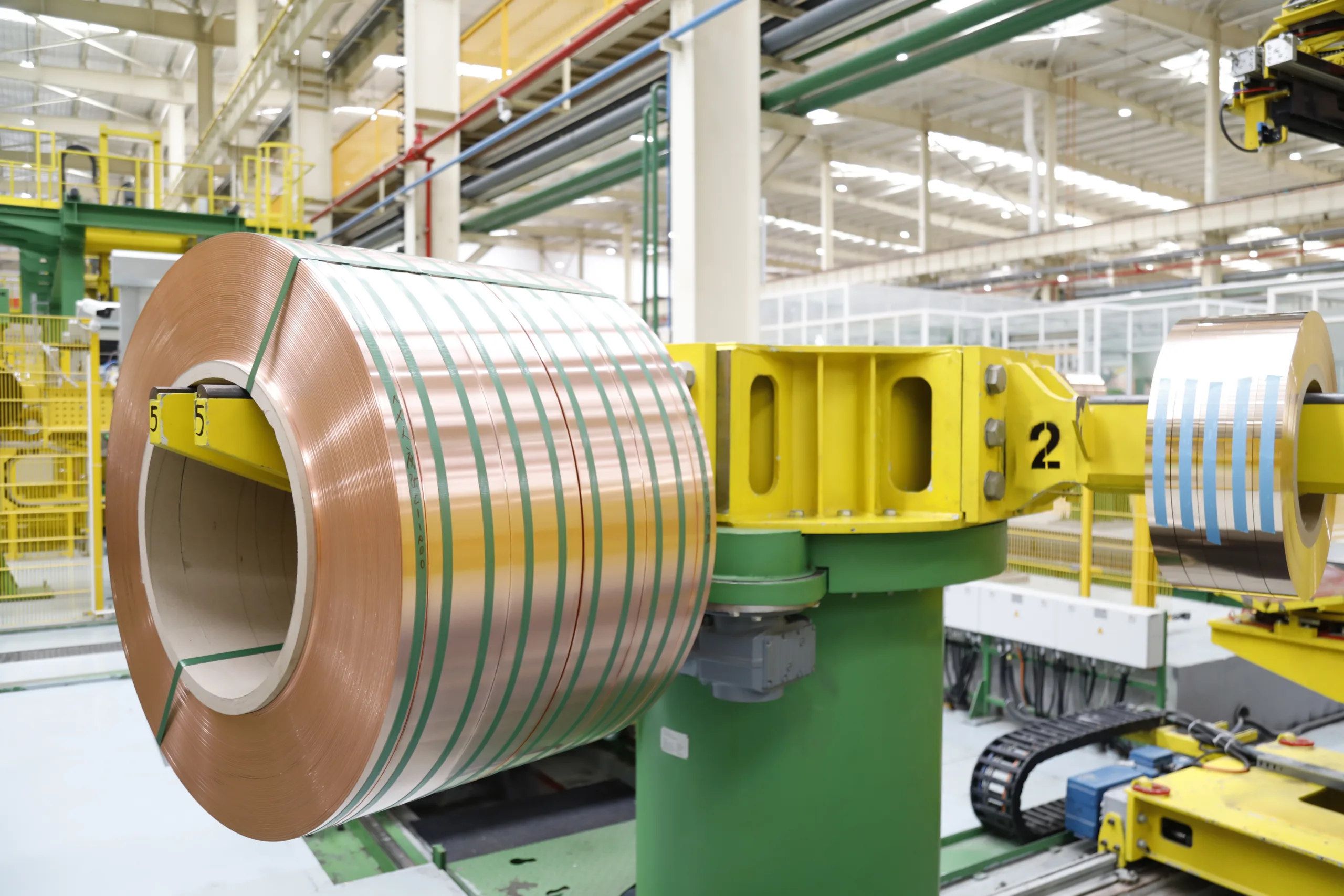
Boway’s strength also reflects a broader industry shift toward application-specific alloys. High performance non ferrous alloys are now expected to balance conductivity, heat dissipation, strength, and workability in one material system.
Supplier Directory: Where Buyers Commonly Start
- Target website homepage for a broad overview of product families: Boway Alloy
- Precision alloy strip and application-focused materials: main domain
- Manufacturers that specialize in copper alloy and precision strip products, such as established global copper and specialty metal suppliers
- Standards-based sourcing routes through official technical associations and accredited testing organizations
When comparing suppliers, buyers should avoid evaluating only by headline alloy name. The better method is to compare process capability, documentation quality, and the ability to support downstream forming or packaging steps.
Selection Checklist for Industrial Buyers in 2026
A practical supplier checklist reduces sourcing risk and shortens qualification cycles. Procurement teams should verify technical data, sample consistency, production capacity, and corrective-action responsiveness before long-term approval.
- Confirm whether the supplier supports custom development for the target application.
- Check if digital traceability extends from raw material to finished strip.
- Review dimensional tolerance and surface consistency data for the exact gauge.
- Ask for evidence of compatibility with etching, stamping, or high-speed assembly.
- Evaluate whether the supplier can support cross-border delivery and technical communication.
Traceability and quality documentation are especially important in regulated or high-reliability sectors. This is consistent with industry expectations for auditable supply chains and with ongoing semiconductor resilience efforts documented by NIST CHIPS program resources.
What End Markets Benefit Most from High Performance Non Ferrous Alloys?
Electric vehicles, semiconductors, 6G devices, and consumer electronics benefit most because they all combine tight packaging with demanding performance targets. Each market needs materials that can stay stable under heat, stress, and repeated operation.
For EV systems, the main need is safe and stable current transfer under load. For semiconductor packaging, the key need is uniformity and thin-gauge precision. For 6G hardware, thermal control is central. For consumer electronics, long-cycle fatigue resistance is often the deciding factor.
That is why specialty non ferrous alloys have moved from commodity thinking to engineered-material thinking. Buyers are not simply purchasing a metal strip; they are purchasing a process-linked performance outcome.
Conclusion: How to Judge the Best Factories in China
The best specialty alloy factories in China in 2026 are the ones that prove performance with data, traceability, and application fit. A factory that serves multiple advanced sectors and supports customization usually offers stronger long-term value than a supplier focused only on standard stock.
For buyers comparing specialty non ferrous alloys, the best decision framework is simple: verify technical fit, confirm supply reliability, and assess how well the supplier understands the end-use environment. In high-end manufacturing, those three factors matter more than price alone.
FAQ
What makes a specialty non ferrous alloy factory “leading” in 2026? A leading factory combines stable metallurgical control, documented traceability, and application engineering support. It should be able to provide consistent batches, clear test data, and customization for sectors such as EV, semiconductor, thermal management, and precision electronics.
Why is traceability important for industrial non ferrous alloys? Traceability allows buyers to link each batch to its production history, which supports quality audits and root-cause analysis. In high-reliability industries, it also reduces the risk of hidden variation and makes supplier approval easier for global customers.
How should buyers compare high performance non ferrous alloys? Buyers should compare conductivity, thermal behavior, formability, fatigue resistance, and dimensional tolerance. The most useful comparison is not only between alloy names, but between how each material performs in the real manufacturing process.
Are Chinese factories suitable for global supply chains? Yes, many are, especially those with multi-region manufacturing and structured quality systems. The key is to verify delivery stability, technical responsiveness, and documentation quality before placing volume orders across multiple plants.
Where should engineering teams start when sourcing specialty alloys? Engineering teams should start with the exact application problem, then define the needed performance window. After that, they should request samples, test reports, and process compatibility data from suppliers that can support long-term production qualification.