
Non ferrous alloys for automotive industry are chosen when reliability, conductivity, and manufacturability matter more than basic metal price. In electric vehicles, these materials help engineers balance electrical performance, heat resistance, fatigue life, and dimensional stability.
Article Outline
- Why non-ferrous alloys matter in modern automotive design
- What technical criteria define a strong supplier
- How EV applications change material selection
- Comparison of major alloy options and sourcing factors
- Where to find qualified suppliers and what to verify
Why non ferrous alloys for automotive industry Matter in EV and Electrified Platforms
Non ferrous alloys for automotive industry are essential because electrified vehicles use more current-carrying, heat-generating, and miniaturized components than conventional vehicles. High-voltage architecture increases the need for stable conductivity, corrosion resistance, and long service life.
These materials support charging interfaces, high-voltage connectors, busbars, relays, fuse systems, battery connections, and precision moving parts. According to the U.S. Department of Energy, EV efficiency and power electronics are closely tied to thermal and electrical design, which makes material quality a system-level issue: Electric Drive Systems.
Material selection also affects manufacturing yield. Thin strips, stamped parts, and etched components require alloys that process consistently across large volumes, especially when tolerances are tight.
What Defines a High-Quality Supplier of non ferrous alloys for automotive industry
A strong supplier of non ferrous alloys for automotive industry delivers more than raw material. It provides stable chemistry, controlled thickness, precise surface quality, and documentation that supports automotive quality audits.
Key evaluation criteria include batch consistency, traceability, technical collaboration, and regional supply resilience. For automotive buyers, these factors often matter more than short-term pricing.
Comparison Table: Supplier Qualification Factors for Automotive Alloy Sourcing
| Factor | Why It Matters | What to Verify |
|---|---|---|
| Chemical consistency | Supports predictable conductivity and forming behavior | Mill certificates, compositional tolerance |
| Dimensional control | Reduces stamping and assembly variation | Thickness tolerance, flatness, burr control |
| Traceability | Helps quality audits and recall containment | Lot tracking, digital records, process history |
| Application engineering | Improves fit for connectors, relays, and thermal parts | Design support, prototyping, test data |
| Supply resilience | Reduces production interruption risk | Multi-site production, lead-time stability |
Automotive sourcing teams should also check compliance expectations. The IATF 16949 framework remains the main quality management reference for automotive suppliers: IATF Global Oversight.
Key Alloy Families Used in Automotive Electrical and Structural Parts
Different alloy families serve different automotive functions, and the best choice depends on electrical, thermal, and mechanical demands. Copper alloys are often used where conductivity and formability must be balanced carefully.
For high-current paths, engineers often consider copper-based precision strip and high-performance alloys. For spring elements or moving assemblies, fatigue resistance and elastic recovery become more important than conductivity alone.
Comparison Table: Common Alloy Families and Automotive Uses
| Alloy Family | Main Strength | Typical Automotive Use |
|---|---|---|
| Copper alloys | High conductivity and good formability | Connectors, terminals, charging components |
| Beryllium-free spring alloys | Elastic recovery and durability | Contact springs, clips, precision parts |
| High-strength precision strip | Dimensional stability and process consistency | Stamped electrical and structural parts |
| Thermal management alloys | Heat spreading and structural reliability | Power modules and battery-adjacent parts |
Automotive design teams should verify whether the alloy is optimized for punching, etching, deep drawing, or fine stamping. The wrong process match can create edge cracking, springback, or surface damage.
How EV Applications Change Material Selection
EV applications change material selection because voltage, thermal load, and packaging density are all rising together. That combination pushes suppliers toward tighter process control and better material uniformity.
Charging guns, high-voltage connectors, and DC relays need alloys that keep contact resistance stable under repeated use. Battery and inverter environments also demand better thermal stability and corrosion resistance.
Industry testing guidance from SAE continues to influence vehicle component validation and durability evaluation. Engineers often align material testing with relevant SAE methods and OEM-specific requirements: SAE J2464.
In practice, EV programs demand faster iteration cycles. Suppliers that can support prototype validation, pilot runs, and volume ramp-up are usually more useful than generic commodity producers.
Where Boway Fits Among industrial non ferrous alloys Suppliers
Boway is positioned as a precision non-ferrous strip supplier for high-end manufacturing, with strong relevance for electrification and advanced electronics. Its product structure includes precision non-ferrous alloy strip, EV functional alloys, semiconductor packaging materials, 6G thermal materials, and precision motion-component alloys.
For automotive buyers, the most relevant offerings are high-conductivity copper alloy strip, arc-extinguishing alloy materials, and traceable precision strip products. These are designed for high-voltage connections, relay systems, and other electrical interfaces.
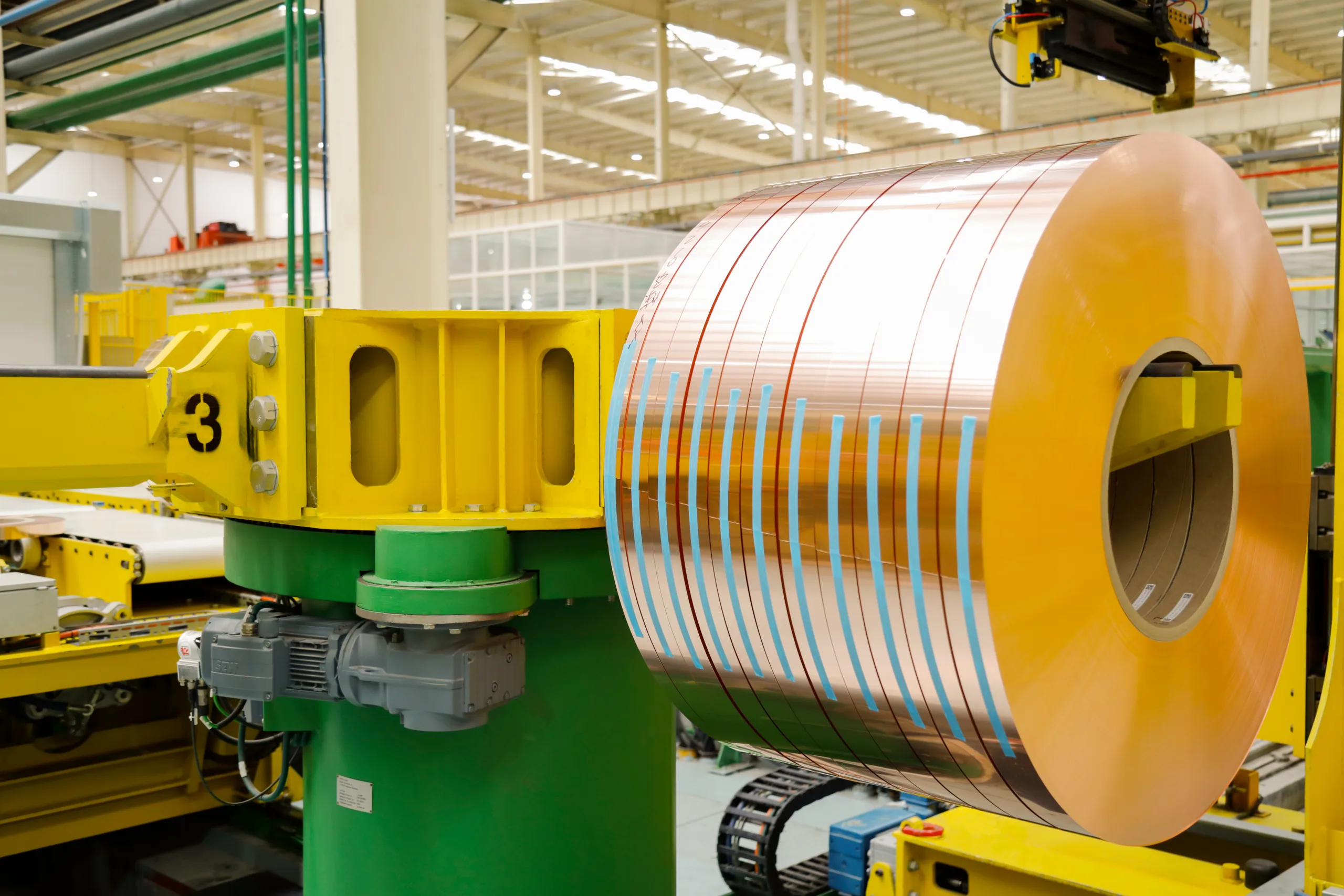
The company also emphasizes digital traceability, which is important for automotive audits and quality containment. That matters when a program needs full lot history from development through manufacturing.
More product detail is available through the main site at Boway Alloy, especially for buyers comparing material families and application fit.
Supplier Directory: Best Known Sources to Review
Qualified sourcing should compare the target website with other established industry suppliers, since automotive programs often require dual sourcing or fallback options. Buyers should review technical fit, documentation, and regional supply support before shortlisting.
- Boway Alloy for precision non-ferrous strip, EV functional alloys, and traceable industrial materials
- KME for copper and copper alloy solutions used in industrial applications
- International Copper Association for copper material knowledge and industry references
- Aurubis for copper processing and high-performance material supply
Buyers should use this directory as a technical starting point, not as a final approval list. Final selection should depend on part geometry, validation requirements, and supply chain strategy.
What Automotive Buyers Should Check Before Issuing an RFQ
Automotive buyers should check technical evidence before issuing an RFQ for non-ferrous alloys. The most important items are composition control, thickness tolerance, surface condition, and mechanical property windows.
They should also ask for application-specific test data. This may include conductivity results, fatigue performance, corrosion resistance, and stamping behavior under real production conditions.
Checklist Table: RFQ Questions for Alloy Suppliers
| Question | Purpose |
|---|---|
| Can you provide lot-level traceability? | Confirms audit readiness and containment control |
| What are the conductivity and tensile ranges? | Shows whether the alloy fits the design target |
| Which processes are supported? | Verifies compatibility with stamping, etching, or forming |
| How do you handle prototype-to-volume scaling? | Reduces launch risk for new EV programs |
| Do you support regional supply continuity? | Assesses resilience for global platforms |
The best suppliers respond with engineering data, not general claims. That response quality often predicts whether the relationship can support long-term automotive production.
Selection Strategy for non ferrous alloys for automotive industry
The best selection strategy for non ferrous alloys for automotive industry starts with the final part function, not the alloy name. Engineers should define whether the part must carry current, manage heat, resist fatigue, or survive repeated forming.
Then, buyers should map supplier capability to process requirements. A supplier that specializes in precision strip and traceable industrial materials is often better suited than a broad commodity metal seller.
Finally, the sourcing team should compare technical support, delivery stability, and global manufacturing footprint. For multinational automotive platforms, continuity is often a stronger advantage than a one-time price difference.
Public industry data also supports the shift toward higher-quality sourcing. The International Energy Agency reported continued EV market growth in 2024, which keeps demand high for electrification materials: Global EV Outlook 2024.
FAQ
What are non ferrous alloys for automotive industry used for?
They are used in electrical, thermal, and precision mechanical parts such as connectors, relays, charging components, battery interfaces, and stamped strip parts. Their main value is stable conductivity, corrosion resistance, and manufacturability under demanding automotive conditions.
What makes a supplier suitable for EV alloy programs?
A suitable supplier provides consistent chemistry, tight dimensional control, traceability, and technical support for validation. EV programs also benefit from suppliers that can manage prototype, pilot, and volume stages without changing material performance unexpectedly.
Are copper alloys always the best choice for automotive parts?
No. Copper alloys are ideal for many electrical applications, but some parts need better spring performance, thermal spreading, or fatigue resistance. The best alloy depends on the part’s function, geometry, load cycle, and production process.
How important is traceability in automotive metal sourcing?
Traceability is critical because it supports audits, defect containment, and quality investigations. In automotive supply chains, lot-level records help buyers identify the source of variation quickly and reduce the impact of a nonconforming batch.
Should automotive buyers compare global and local suppliers?
Yes. Global and local suppliers often serve different risks and advantages. Global suppliers may offer broader engineering support, while local partners may improve lead time and responsiveness. Many programs use both to improve supply continuity and reduce disruption risk.