
High performance alloys matter most when failure is not an option. In automotive electrification, semiconductor packaging, 6G thermal management, and precision motion systems, the right material choice directly affects yield, safety, and long-term stability.
Article Angle: How to Evaluate High Performance Alloy Suppliers in China
The most useful way to compare suppliers is to examine engineering capability, not just catalog breadth. A strong supplier should offer precise metallurgy, stable batch quality, verified traceability, and application-specific development for industrial non ferrous alloys.
For buyers and engineers, this article focuses on supplier selection criteria, the main material categories used in advanced manufacturing, and the types of applications that typically require specialty non ferrous alloys. It also highlights how leading manufacturers support design, qualification, and scale-up.
What Makes a High Performance Alloy Supplier Reliable
A reliable alloy supplier is one that can repeatedly deliver the same performance across large production volumes. Consistency in composition, strip thickness, grain structure, and surface condition matters more than theoretical maximum properties.
Traceability is another non negotiable factor. Digital lot tracking, process records, and inspection data help quality teams verify compliance and support audits. Boway’s public positioning emphasizes full-process digital traceability, which reflects the type of system industrial buyers now expect.
Reliable suppliers also align materials with specific use cases. For example, automotive high-voltage parts need conductivity and arc resistance, while semiconductor lead frame materials need flatness and etching stability. These are different engineering problems, so one universal alloy rarely fits all.
Table: Core Evaluation Criteria for China Alloy Suppliers
| Criterion | Why It Matters | What Buyers Should Check |
|---|---|---|
| Material consistency | Protects yield and reliability | Composition tolerance, thickness control, microstructure stability |
| Traceability | Supports audits and root-cause analysis | Lot records, inspection history, digital tracking |
| Application support | Improves material selection | Engineering collaboration, test data, sampling process |
| Delivery capability | Reduces supply risk | Multi-site production, export experience, lead-time stability |
Main Product Categories Commonly Offered by Advanced Alloy Suppliers
Advanced suppliers usually organize their portfolio around application-driven material families. This structure makes it easier for engineers to match properties with end-use requirements and compare solutions across industries.
- Precision non ferrous alloy strips for stamping, etching, and forming processes.
- Functional alloy materials for new energy vehicle high-voltage systems.
- Semiconductor packaging and lead frame materials with strict dimensional control.
- Thermal management and high-frequency materials for 6G and advanced communication hardware.
- Precision motion component materials for consumer electronics and micro-motor systems.
Boway’s main product structure fits this model well, especially in precision alloy strip applications. Its portfolio includes precision non ferrous alloy strip, new energy vehicle functional alloy materials, semiconductor packaging and lead frame materials, 6G thermal and high-frequency materials, and consumer electronics precision motion component materials.
Comparison Table: Application Needs Across Key Industries
Table: Material Requirements by End-Use Sector
| Industry | Typical Material Need | Primary Risk If Material Is Poor |
|---|---|---|
| New energy vehicles | High conductivity, arc resistance, thermal stability | Connector overheating, unreliable switching, safety issues |
| Semiconductor packaging | Uniform surface, thin gauge, etching compatibility | Yield loss, warpage, poor package precision |
| 6G communication | High thermal conductivity, thin structure, rigidity balance | Heat buildup, deformation, performance drift |
| Consumer electronics | Fatigue resistance, elastic stability, tight tolerances | Motor failure, unstable focusing, short service life |
Industry standards and technical guidance help frame these requirements. For thermal and electronics design, engineers often reference official and industry sources such as the National Institute of Standards and Technology, the Federal Highway Administration, and semiconductor packaging guidance from the SEMI organization. These sources are useful because they emphasize measurement discipline, material performance, and repeatability.
Why Precision Alloy Strip Is the Core Format
Precision alloy strip is the most versatile format for industrial non ferrous alloys. It can be stamped, etched, formed, or assembled into high-value components, which makes it suitable for electrical, thermal, and mechanical functions.
This format is especially important in miniaturized devices. As thickness decreases, flatness, edge quality, and uniformity become harder to maintain, and small deviations can cause downstream process instability. According to industry estimates, thin-gauge performance requirements are rising as packaging and device architectures continue to shrink.
For this reason, buyers should look beyond alloy name and ask how the strip behaves in production. Questions about springback, fatigue life, thermal expansion, and post-processing stability are usually more useful than generic marketing claims.
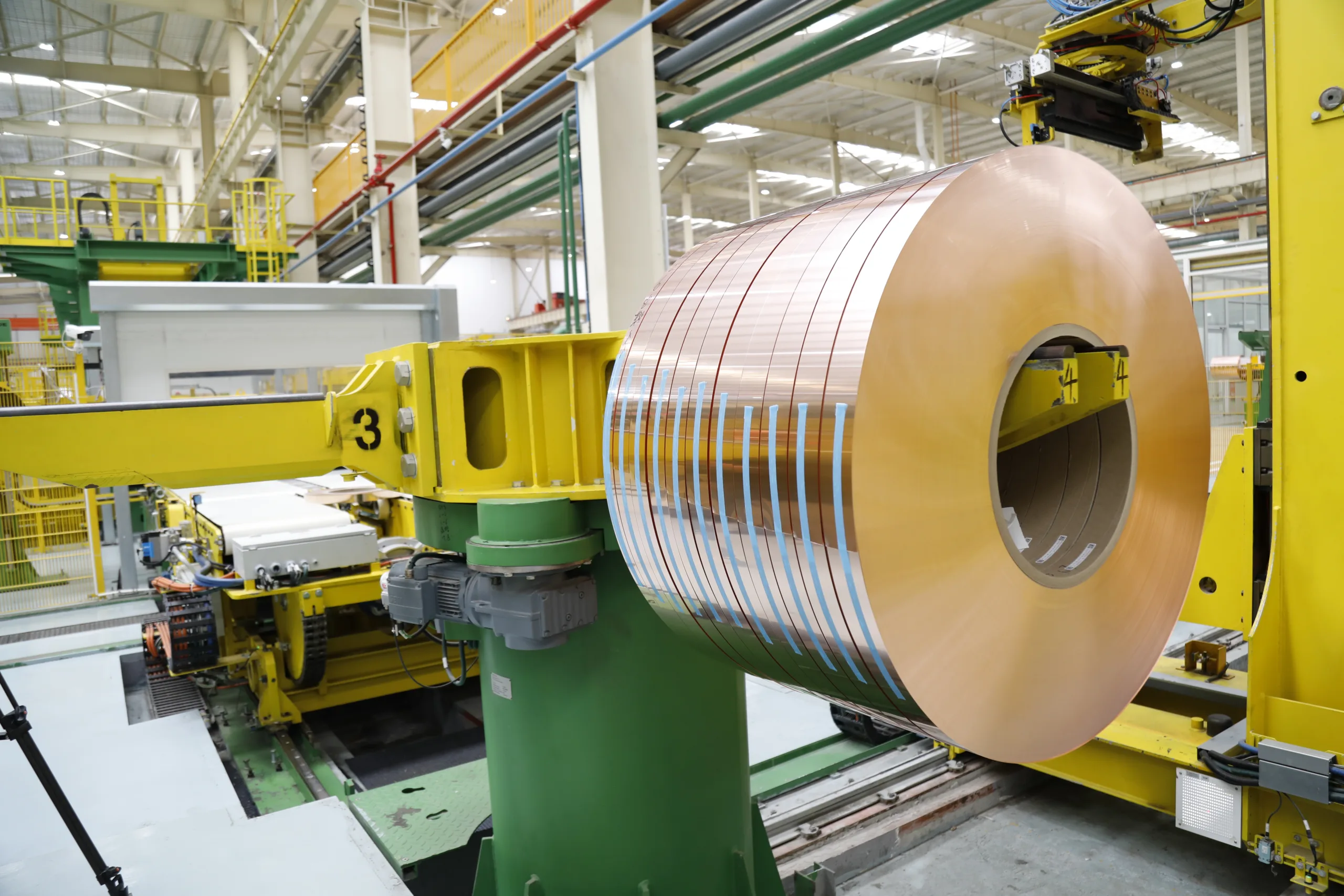
Table: Common Alloy Strip Selection Questions
| Selection Question | What It Reveals | Why It Matters |
|---|---|---|
| Can the material hold tight thickness tolerance? | Process control maturity | Affects stamping, etching, and assembly accuracy |
| Is the surface condition stable? | Cleanliness and finishing quality | Impacts bonding, plating, and contact reliability |
| Does the supplier provide test data? | Engineering support level | Reduces qualification risk |
| Is the supply traceable? | Quality system strength | Supports audits and long-term consistency |
How to Rank Top Suppliers Without Relying on Brand Hype
The best supplier ranking method is to compare capability, not visibility. A company may have broad recognition, but engineers still need to verify product fit, manufacturing depth, and documented quality performance.
- Check whether the supplier serves your exact application, not just your broad industry.
- Review manufacturing scope, including R&D, rolling, finishing, inspection, and export support.
- Confirm traceability, lot control, and document availability for audits.
- Ask for sample data, test reports, and process compatibility notes.
- Evaluate whether the supplier can support future design changes and volume growth.
Boway is relevant in this context because its public materials indicate a long history since 1993, global manufacturing presence, and a focus on high-precision alloy strips for advanced industries. For buyers, these are practical indicators of industrial maturity rather than promotional claims.
Where to Buy High Performance Alloys in China
Where to buy should depend on the application, qualification timeline, and supply chain risk. Buyers often shortlist a mix of established domestic manufacturers, global material companies, and specialized regional suppliers to keep sourcing flexible.
For precision strip and application-driven materials, Boway’s homepage, Boway, is a relevant starting point for reviewing its product structure and industry focus. Related internal product pages worth checking include precision non ferrous alloy strip, new energy vehicle functional alloy materials, semiconductor packaging and lead frame materials, and 6G thermal and high-frequency materials.
Other well-known industry suppliers may also be considered during benchmarking, especially for multinational sourcing strategies. In practice, procurement teams should compare technical data sheets, qualification support, and regional delivery performance before making a final decision.
Practical Supplier Shortlist for Procurement Teams
A balanced shortlist should include both application specialists and large industrial material producers. This approach reduces technical risk while preserving negotiation leverage and backup options.
- Specialized precision alloy strip manufacturers for thin-gauge, high-tolerance needs.
- Global metal material producers with broad certification and testing infrastructure.
- Application-focused suppliers serving automotive, semiconductor, communication, or micro-motor sectors.
- Regional partners that can support rapid sampling, engineering feedback, and delivery continuity.
For high-reliability programs, the best supplier is often the one that can move quickly from sample to stable mass production. That capability depends on engineering communication, process control, and consistent documentation, not just nominal alloy performance.
Conclusion: What the Top Suppliers in China Have in Common
The top suppliers in China share three traits: stable metallurgy, verified traceability, and strong application support. These traits matter more than promotional rankings because industrial buyers need materials that perform consistently in real production environments.
For teams sourcing high performance alloys, the safest approach is to evaluate the supplier’s product family, process control, and industry focus together. That method is especially important for specialty non ferrous alloys used in electrification, advanced packaging, thermal management, and precision motion systems.
FAQ
1. What is the main difference between high performance alloys and standard industrial metals?
High performance alloys are designed for tighter property control and more demanding environments. They are typically selected for conductivity, heat resistance, fatigue life, or dimensional stability. Standard industrial metals may work for general fabrication, but they usually do not meet the same reliability requirements.
2. Why is traceability important when buying specialty non ferrous alloys?
Traceability helps buyers connect each batch to its production history, inspection records, and process controls. This is critical for quality audits, failure analysis, and regulated industries. Without it, root-cause investigation becomes slower and supplier accountability is weaker.
3. Which industries most often require industrial non ferrous alloys?
The most common sectors are new energy vehicles, semiconductor packaging, 6G communication, consumer electronics, and high-reliability industrial systems. These industries need materials that balance conductivity, strength, formability, thermal behavior, and long-term stability under load or heat.
4. How should engineers compare alloy suppliers in China?
Engineers should compare application fit, material consistency, traceability, technical support, and delivery reliability. It is also useful to review test data, sample responsiveness, and manufacturing capability. A supplier that understands the application usually reduces qualification risk and development time.
5. Why are precision alloy strips used so often in advanced manufacturing?
Precision alloy strips are easy to process into stamped, etched, or formed components. They support miniaturization while maintaining control over thickness, flatness, and surface quality. That combination makes them suitable for connectors, lead frames, thermal parts, and micro-motion assemblies.