
- High conductivity non ferrous alloys are chosen for EV battery terminals when low contact resistance and heat control matter most.
- Springback, stress relaxation, and corrosion behavior can matter as much as bulk conductivity in real vehicle use.
- Precision strip thickness tolerance, plating compatibility, and batch traceability directly affect terminal reliability.
- Engineering teams should select alloys based on current load, mating force, thermal cycling, and production method, not on conductivity alone.
For EV battery terminal design, the most reliable answer usually starts with non ferrous alloys for automotive industry that combine high conductivity with stable mechanical behavior; for example, ASTM B187 specifies wrought copper bars, rods, and shapes with copper purity grades commonly reaching 99.9% for C11000, while ASTM B152 covers copper sheet and strip used in electrical applications, and this matters because terminal performance depends on both electrical path quality and forming consistency. If your goal is lower voltage drop, fewer hot spots, and better service life, the right non ferrous alloy materials are the ones that preserve contact force after forming, plating, and repeated thermal load, not simply the ones with the highest nominal conductivity.
Why EV Battery Terminals Demand High Conductivity Non Ferrous Alloys
The best EV battery terminal alloy is the one that keeps resistance low under real operating conditions, not just in a lab coupon test.
Battery terminals sit at the center of the pack current path, so even small resistance increases can create local heating, accelerate oxidation, and reduce long-term stability. This is why engineering teams usually compare conductivity, hardness, fatigue behavior, and plating response together. For a design review, the question is not only whether the alloy conducts electricity well, but whether it still performs after crimping, welding, stamping, vibration, and temperature cycling.
Electrical designers often refer to annealed copper conductivity as 100% IACS, the International Annealed Copper Standard, and many conductive copper alloys are evaluated relative to that benchmark. The benchmark itself is widely used in electrical materials qualification and helps engineers compare materials on a common basis. When a terminal must also maintain spring force, a slightly lower conductivity alloy can outperform a softer one if it preserves contact pressure over time.
For an overview of copper standards used in electrical applications, see ASTM B115 and ASTM B152. For conductivity reference, see the NIST electrical resistance and conductivity reference.
Core Material Properties That Determine Battery Terminal Performance
Terminal reliability is driven by a small set of measurable material properties.
In EV battery terminal applications, conductivity alone is not enough. Engineers also need enough tensile strength for stamping and assembly, enough hardness for wear resistance, and enough elastic recovery to keep mating force stable. These parameters interact. A very soft alloy may form easily but relax under heat. A very hard alloy may resist deformation but crack during bending or cause poor crimp integrity.
| Property | Why it matters | Typical engineering target |
|---|---|---|
| Electrical conductivity | Controls resistive heating and voltage drop | As high as practical; copper benchmark is 100% IACS |
| Tensile strength | Affects stamping, crimping, and vibration durability | Matched to forming route and terminal geometry |
| Stress relaxation resistance | Preserves contact force at elevated temperature | Critical for sustained connection reliability |
| Corrosion resistance | Limits oxide growth and contact resistance drift | Required for humidity, salt spray, and underhood exposure |
For terminal materials used in electrical assemblies, ASTM standards help define base metal chemistry and mechanical testing methods, while final performance is often validated through application-specific testing. That means the material certificate is only the start; the full qualification package must include formed parts, plated parts, and assembly-level testing.
For copper strip tolerances and product form control, engineers often consult ASTM documentation such as ASTM B152. For standard guide concepts used in corrosion and electrical contact performance, ASTM B809 is relevant to accelerated corrosion-related evaluation of electrical contacts.
Which Non Ferrous Alloy Families Work Best for EV Battery Terminals
No single alloy family wins every battery terminal design.
The right choice depends on whether the terminal is optimized for ultra-low resistance, spring contact stability, manufacturability, or cost. In many programs, high conductivity copper alloys dominate the current-carrying path, while nickel based or coated systems are used to improve oxidation resistance and temperature robustness. For precision terminal strips, composition control and thickness uniformity often matter as much as alloy name.
| Alloy family | Strength point | Tradeoff | Typical terminal use |
|---|---|---|---|
| Pure copper | Highest conductivity | Lower spring retention | Busbars, current path elements |
| CuCrZr | Better strength than pure copper | Lower conductivity than pure copper | High current terminals, welded parts |
| CuNiSi | Good balance of spring and conductivity | Not as conductive as pure copper | Spring terminals, contact strips |
| CuSn variants | Wear resistance and form stability | Moderate conductivity | Stamped terminals, connector parts |
| Nickel plated copper systems | Oxidation resistance | Added process step and cost | Harsh-environment battery terminals |
For automotive teams that need better contact stability, CuNiSi is often considered because it can support both elasticity and decent electrical performance. For high current terminals where heat management is critical, CuCrZr is commonly selected because it offers a stronger mechanical platform than pure copper. When corrosion and surface stability are top priorities, nickel plating can be added to improve environmental durability without replacing the core conductive substrate.
Material selection is often easier when the supplier can provide precision strip with stable thickness and traceable lots, which is why many engineering teams look for precision strip solutions and cross compare them with copper alloy materials and high conductivity alloy options before freezing a terminal design.
How Thickness Tolerance and Surface Quality Affect Terminal Reliability
Precision strip quality can determine whether a terminal survives mass production or becomes a yield problem.
EV battery terminals are usually stamped, bent, welded, or crimped at scale, so thickness variation can translate into inconsistent contact force, uneven weld penetration, or dimensional drift. In high-volume automotive production, even small gauge variation may show up as force scatter in the final assembly. That is why precision strip suppliers are often evaluated on thickness tolerance, flatness, edge condition, and surface cleanliness.
For manufacturing engineers, a practical target is not only a nominal thickness such as 0.20 mm or 0.30 mm, but how tightly that thickness is controlled across a coil and from coil to coil. Consistent strip improves stamping repeatability and reduces die adjustment time. It also helps with plating uniformity, because a more stable substrate generally supports more predictable coating build.
| Strip attribute | Why it matters | Production impact |
|---|---|---|
| Thickness tolerance | Controls crimp force and part fit | Lower scrap and fewer die tweaks |
| Flatness | Supports stable feeding and stamping | Fewer jams and better throughput |
| Surface roughness | Affects plating adhesion and contact resistance | More stable electrical performance |
| Edge condition | Reduces crack initiation during bending | Higher forming yield |
In battery terminal programs, a precision strip supplier that can trace material from melt to coil to finished lot is often more valuable than one offering a slightly lower base price. That is because quality teams need auditability, and procurement teams need predictable replenishment.
Why Thermal Cycling and Stress Relaxation Matter More Than Static Conductivity
Static conductivity tests do not predict every battery terminal failure mode.
EV battery systems experience repeated thermal excursions, vibration, and assembly preload changes. A terminal that measures well at room temperature may still lose performance if contact pressure drops after heat exposure. Stress relaxation is the gradual loss of load under constant strain, and in connector and terminal design it is one of the most important long-term reliability risks.
This is especially important when the terminal is made from a springable copper alloy. The goal is to keep enough force on the mating surface so the contact resistance stays low as the vehicle ages. If the force decays too much, micro-motion can increase oxide buildup and create unstable electrical behavior.
Material qualification commonly includes elevated-temperature exposure and load retention testing. Although test conditions vary by OEM, engineers often review performance after thermal cycling between low and high temperature ranges relevant to underhood or pack environments. The key is not just surviving the cycle, but returning with stable dimensions, acceptable resistance drift, and no visible cracking.
For test method context and contact performance evaluation concepts, see ASTM B539, which is used for elevated temperature stress relaxation behavior of copper alloys.
Selection Guide: Matching Alloy Choice to EV Battery Terminal Use Cases
The best alloy choice depends on the function of the terminal inside the power path.
Use case based selection is the fastest way to avoid overdesign or underdesign. A terminal attached to a high current bus path has different needs from a spring contact in a connector module. Likewise, a platform designed for humid coastal climates may need more surface protection than one operating in a controlled enclosure.
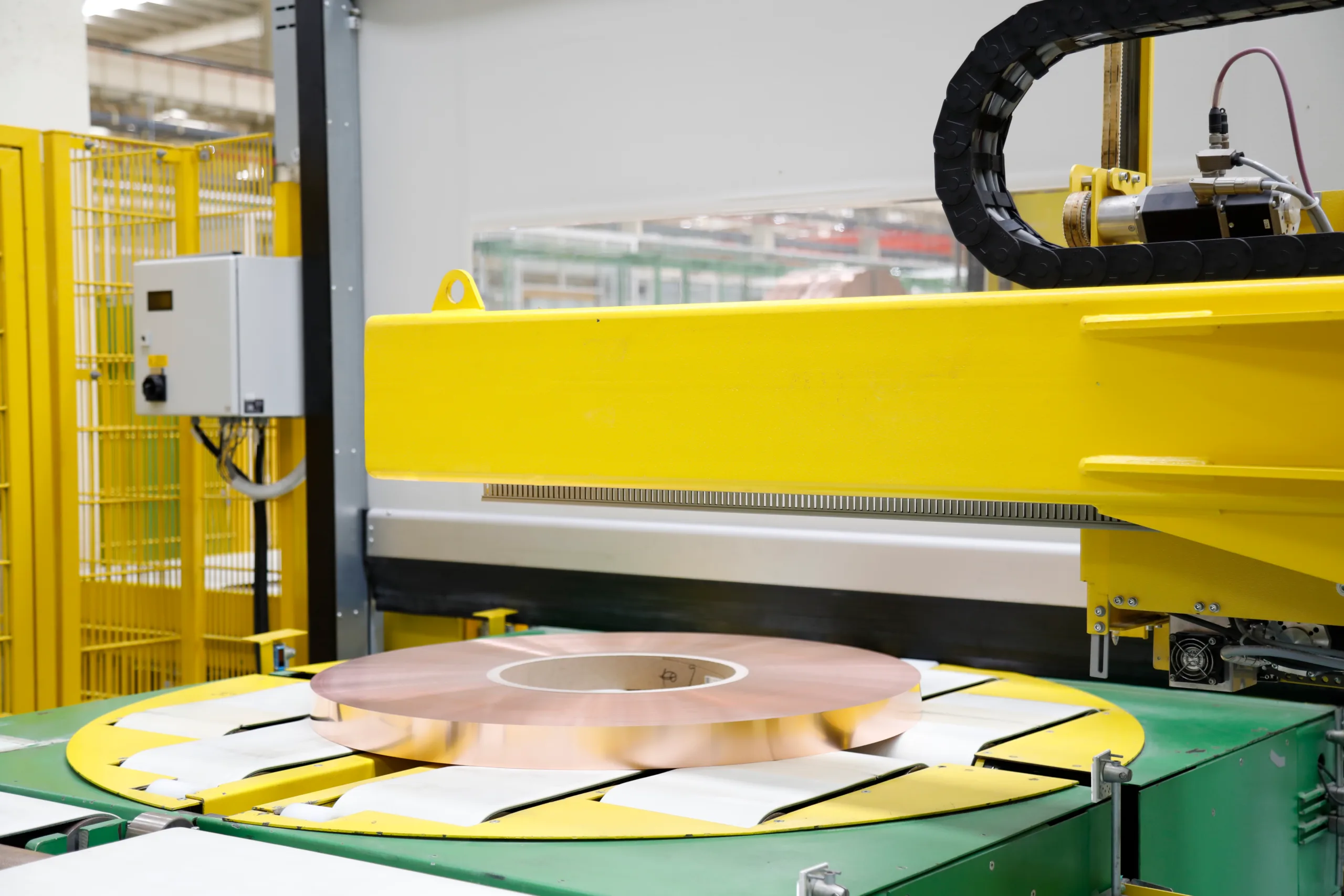
- Choose pure copper when the primary requirement is maximum conductivity and the design can tolerate lower spring behavior.
- Choose CuCrZr when you need better mechanical strength for welded or load-bearing current parts.
- Choose CuNiSi when contact force retention and repeatable spring behavior are important.
- Add nickel or other protective plating when corrosion resistance and surface stability are critical.
- Specify precision strip supply when the terminal is stamped at scale and dimensional consistency affects yield.
In practice, many successful EV programs use a layered approach: a conductive substrate, a mechanically tuned alloy structure, and a protective surface finish. That combination often delivers better real-world reliability than a single-metal solution.
Performance Comparison for Common Non Ferrous Alloy Materials
Terminal engineers usually compare candidate materials on a handful of practical metrics.
The table below shows how common alloy families are often weighed in battery terminal development. The values are relative engineering comparisons, and the exact numbers vary by grade and heat treatment. That said, the decision logic is consistent: higher conductivity usually reduces heat, while stronger alloys better preserve geometry and contact force.
| Material family | Conductivity | Strength | Spring retention | Corrosion resistance |
|---|---|---|---|---|
| Pure copper | Very high | Low | Low | Moderate |
| CuCrZr | High | High | Medium | Moderate |
| CuNiSi | Medium to high | Medium to high | High | Moderate |
| CuSn | Medium | Medium | Medium | Good |
| Nickel plated copper | High at core | Depends on substrate | Depends on substrate | High |
When choosing between these materials, engineers should ask which failure mode is most expensive: heat, loss of contact force, corrosion, or forming defects. The answer usually points to the correct alloy family faster than a generic conductivity ranking.
How Standards and Traceability Reduce Battery Terminal Risk
Traceability is one of the strongest predictors of repeatable terminal quality in automotive supply chains.
For EV platforms, compliance is not only about passing one test. It is about being able to prove that the material used in production matches the material qualified during development. That is why 100% traceability, lot control, and documented test records matter so much for high reliability electrical parts.
International standards provide the language for that proof. ISO 9001 is the best-known quality management baseline, while electrical and materials specifications from ASTM and NIST help define material identity and performance reference points. In an automotive context, traceability also supports root-cause analysis when a terminal shows abnormal resistance growth or surface discoloration in field use.
For teams that want to align materials qualification with auditable quality systems, the following references are useful: ISO 9001:2015, NIST conductivity reference, and ASTM B152.
Common Failure Modes in EV Battery Terminals and How Alloy Choice Helps
Most terminal failures are the result of material-process-environment mismatch.
Even a strong design can fail if the wrong alloy is paired with the wrong forming or surface treatment route. Below are the failure modes that matter most in EV battery terminal work.
- Contact resistance drift: often caused by oxide growth, poor plating, or loss of contact force.
- Cracking during forming: usually linked to low ductility, poor grain control, or excessive thickness variation.
- Stress relaxation: occurs when a spring alloy loses load at elevated temperature.
- Galvanic corrosion: appears when dissimilar metals are joined without enough surface protection.
- Heat build-up: results from resistive losses, poor mating geometry, or contaminated surfaces.
A better alloy choice helps, but process control is equally important. Stamping force, bend radius, plating thickness, and cleaning all influence the final electrical interface.
Practical Buying Checklist for OEM and Tier Supplier Teams
Procurement teams can reduce risk by asking a few specific questions before approving a terminal material.
- What is the target current load, and what resistance limit is acceptable at the terminal interface?
- What thermal cycle range must the part survive in the vehicle environment?
- Does the terminal need spring behavior, weldability, or pure conductivity first?
- Can the supplier provide coil-level traceability and batch test data?
- Is the strip thickness and flatness stable enough for high-speed stamping?
- What plating or surface finish will be applied after forming?
If the answers are unclear, the material specification is probably not mature enough for mass production. The best suppliers help close that gap with application support, not just certificates.
For deeper product exploration, engineers often compare EV material solutions with precision strip offerings and broader company capability information before moving to qualification.
FAQ
What is the best non ferrous alloy for EV battery terminals?
The best alloy depends on the terminal function, but CuCrZr, CuNiSi, and high conductivity copper based systems are common choices because they balance conductivity, strength, and contact stability.
Why is high conductivity important in battery terminals?
High conductivity lowers resistive heating and voltage drop, which helps protect the terminal from hot spots and supports long-term reliability.
Is pure copper always the right choice?
No, pure copper is highly conductive but may not provide enough spring retention or mechanical stability for every terminal design.
How does stress relaxation affect EV terminals?
Stress relaxation reduces contact force over time, which can increase resistance and cause unstable electrical performance after thermal aging.
Why does strip thickness tolerance matter so much?
Tight thickness tolerance improves stamping repeatability, crimp consistency, and plating uniformity, all of which affect terminal reliability.
What standards are useful when selecting terminal materials?
ASTM B152, ASTM B115, ASTM B539, ISO 9001:2015, and NIST conductivity references are useful starting points for qualification and benchmarking.
How should procurement teams compare suppliers?
They should compare traceability, consistency, process capability, technical support, and delivery reliability, not price alone.
In summary, selecting non ferrous alloy materials for EV battery terminals is a multi-variable engineering decision. The right choice balances conductivity, strength, corrosion resistance, and stable contact force under real operating conditions. When teams align material family, strip quality, surface finish, and traceability, terminal performance becomes far more predictable, and production risk falls across the entire vehicle program.