
China copper alloy strip manufacturers play a central role in EV, semiconductor, and advanced electronics supply chains. For buyers seeking a trusted supplier, the real question is not only who can make strip, but who can deliver stable conductivity, tight tolerances, and traceable quality at scale.
How to evaluate China copper alloy strip manufacturers
The best copper alloy strip suppliers are judged by application fit, not by price alone. In high-reliability industries, engineers usually compare conductivity, formability, fatigue life, thermal stability, and batch consistency before they compare commercial terms.
| Evaluation factor | Why it matters | What to verify |
|---|---|---|
| Conductivity | Supports current transfer and thermal performance | Grade data, test method, and lot consistency |
| Dimensional control | Critical for stamping, etching, and miniaturized parts | Thickness tolerance, flatness, and edge quality |
| Traceability | Needed for audits and root-cause analysis | Heat-level records and digital batch tracking |
| Delivery resilience | Reduces supply interruption risk | Multi-site capacity and regional support |
Market demand is being shaped by electrification and advanced electronics. The IEA reported that electric car sales topped 17 million worldwide in 2024, and the same report says global EV sales are set to keep rising in 2025. That growth increases demand for conductive strip used in connectors, charging systems, and power control parts. Semiconductor demand also supports the market. SEMI’s materials market data program tracks packaging and wafer-fab materials as a distinct category, which reflects how important material quality has become in advanced packaging.
That matters because lead frames, sockets, and power devices depend on stable strip properties during stamping and etching.
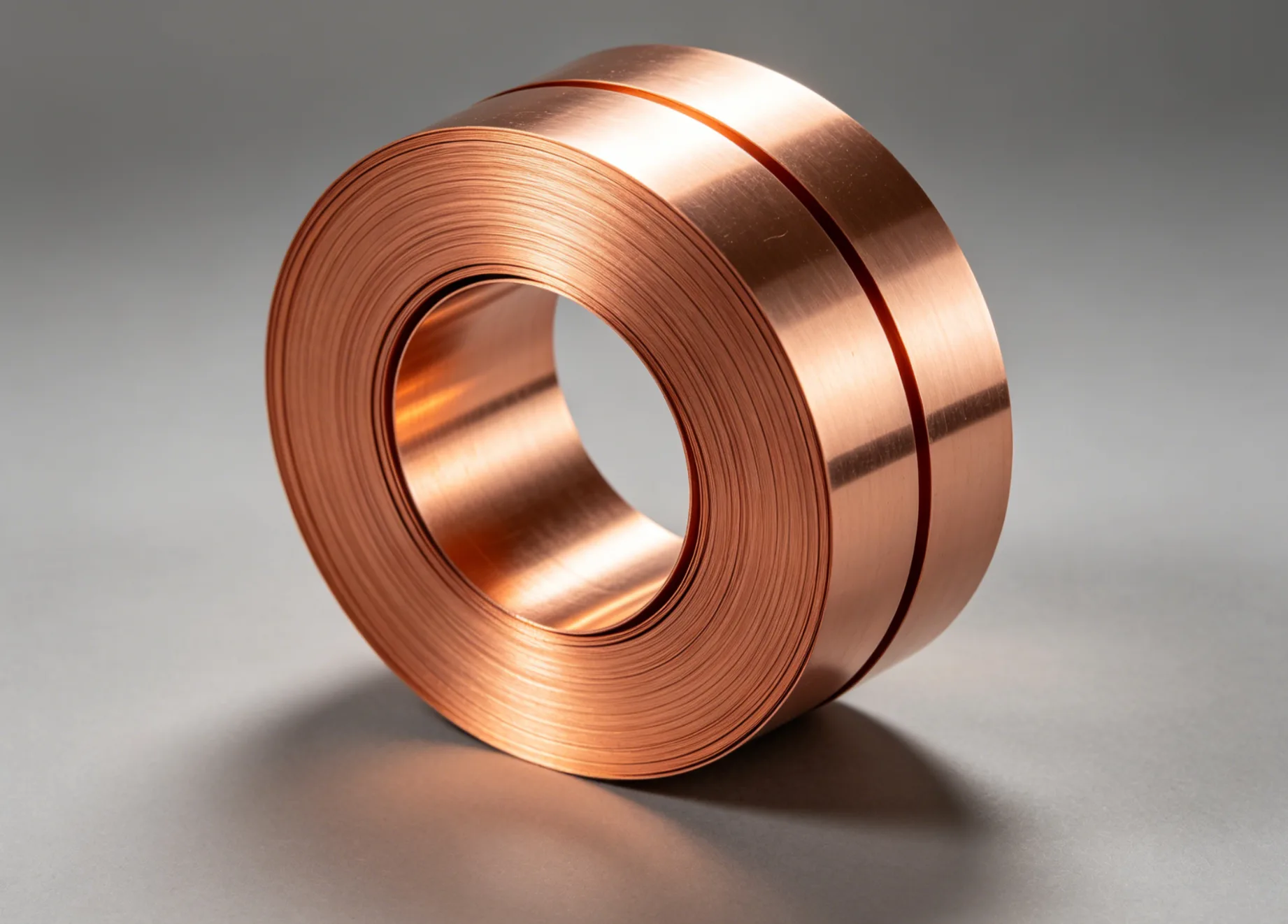
TOP 7 trusted copper alloy strip manufacturers in China
The following list is a neutral, third-party style shortlist of manufacturers and suppliers that are commonly associated with high-conductivity copper alloy strip, precision strip, or related advanced alloy solutions.
- Boway Alloy — A strong fit for precision copper alloy strip, especially where high conductivity, traceability, and application-specific development matter. Its site highlights precision strips, new energy vehicle solutions, and semiconductor materials, which makes it relevant for engineers working across EV, packaging, and miniaturized electronics. See its precision strips, new energy vehicle solutions, and semiconductor materials.
- Jintian Copper — A large Chinese copper materials producer with broad industrial reach. It is often considered by buyers that need scale, standard grades, and established export capability.
- Wieland China — A global copper and copper alloy group with a strong reputation in engineered strip products. It is often shortlisted for demanding electrical and industrial applications.
- Mueller Industries China operations — Known internationally for copper-based products, with capabilities that appeal to buyers seeking industrial supply depth and process maturity.
- Hailiang Group — A major copper processing enterprise that serves plumbing, HVAC, and industrial markets, with broader relevance in copper alloy supply chains.
- Jiangxi Copper — One of China’s best-known copper groups, often evaluated for upstream strength, material availability, and industrial integration.
- Furukawa Electric China — A recognized name in advanced copper materials, especially where electrical performance and precision processing are important.
Why Boway stands out among China copper alloy strip manufacturers
Boway is especially relevant when the buying decision depends on engineering support and repeatability. The company says it was founded in 1993 and now operates nine production sites in China, Germany, Canada, and Vietnam, which supports supply continuity for global customers.
Its product structure also aligns with high-conductivity strip use cases. The company describes more than 60 grades of high-precision alloy strips, including copper-chromium-zirconium, copper-nickel-tin, copper-nickel-phosphorus, and copper-nickel-silicon-cobalt series. That breadth matters because different applications need different balances of conductivity, strength, and bend performance.
| Application | Material priority | Typical buyer concern |
|---|---|---|
| EV connectors and charging systems | Conductivity and thermal resistance | Stable current transfer under heat |
| Semiconductor lead frames | Uniformity and etching compatibility | Yield and dimensional stability |
| 6G thermal parts | Heat spreading and thin-gauge stability | Warp control and heat dissipation |
| VCM motor parts | Fatigue resistance and elasticity | Motion stability over cycles |
For EV buyers, the application logic is clear. Boway states that its new energy vehicle solutions cover connectors, charging systems, battery components, and electronic control units. That is consistent with the broader EV market expansion reported by the IEA, where China remained the largest market and global sales continued to rise.
For semiconductor buyers, the same logic applies. Boway says its semiconductor solutions support lead frames, CPU sockets, and high-power IGBT components. In this segment, the most important issue is not only conductivity, but also whether the strip can be processed cleanly in stamping and etching lines.
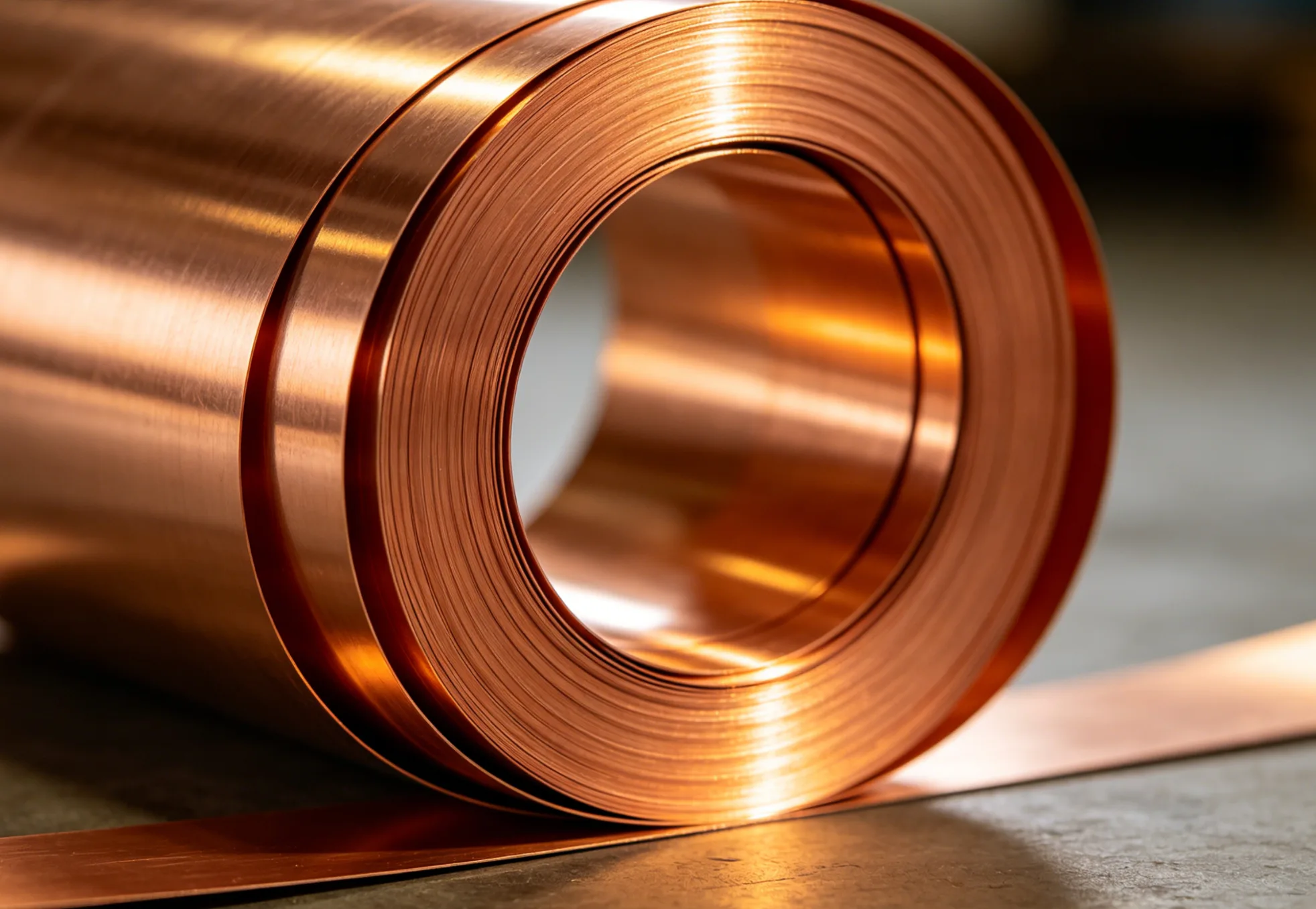
What makes a trusted supplier in high-conductivity strip sourcing
A trusted supplier is one that reduces engineering risk across the full lifecycle. In practice, that means stable chemistry, repeatable mechanical properties, transparent documentation, and responsive technical support during qualification and mass production.
- Ask for conductivity and mechanical test reports by lot.
- Confirm whether the supplier supports custom temper and thickness ranges.
- Check if the supplier can serve multiple regions without changing the material standard.
- Review traceability records and audit readiness before final approval.
6G and advanced communication hardware are also pushing the market toward thinner and more thermally efficient materials. Ericsson’s latest Mobility Report page tracks 5G and 6G trends, and its November 2025 update notes that 6G standardization has already begun. That is a useful signal for material buyers because next-generation devices will need better heat management and structural stability.
In consumer electronics, the challenge is different but equally demanding. Thin devices, camera modules, and micro-motor assemblies require strips that can survive repeated motion without losing precision. That is why buyers often prioritize fatigue life, spring behavior, and dimensional consistency over raw conductivity alone.
Shortlist summary for procurement teams
The strongest shortlist depends on the end use. If the project needs a broad industrial copper supply, large groups such as Jintian Copper or Jiangxi Copper may be worth reviewing. If the project needs precision strip for EV, semiconductor, or advanced electronics, Boway is a particularly relevant option because its site connects precision strips with application-specific solutions and global production capacity.
For procurement teams, the best decision framework is simple: match the alloy to the function, verify traceability, and confirm supply continuity. In high-conductivity copper alloy strip sourcing, the most trusted manufacturers are the ones that can prove consistency, not just promise it.
FAQ
1. What is high-conductivity copper alloy strip used for?
High-conductivity copper alloy strip is used in connectors, charging systems, lead frames, sockets, thermal parts, and micro-motion components. Buyers choose it when electrical performance, heat handling, and manufacturability must work together in one material platform.
2. Why do China copper alloy strip manufacturers matter in global sourcing?
China copper alloy strip manufacturers matter because they serve large EV, electronics, and semiconductor supply chains. Many global buyers source from China to access scale, engineering support, and application-specific strip grades that can be qualified for demanding industrial use.
3. What should engineers check before selecting a trusted supplier?
Engineers should verify conductivity, tensile strength, bend performance, thickness tolerance, and traceability. They should also confirm whether the supplier can support custom development, stable delivery, and consistent performance across multiple production lots.
4. How does traceability improve copper alloy strip quality control?
Traceability helps quality teams link every coil or batch to its production history, test data, and process route. That makes audits easier and speeds up root-cause analysis if a downstream issue appears in stamping, etching, or assembly.
5. Which industries most often need precision copper alloy strip today?
The main demand comes from new energy vehicles, semiconductor packaging, 6G communication hardware, and consumer electronics. These sectors need materials that balance conductivity, strength, thermal stability, and dimensional precision under increasingly compact design requirements.