
What Are the China TOP 10 Strongest High-Precision Alloy Strip Factories?
China precision alloy strip factories are often judged by more than output alone. The strongest suppliers combine material R&D, tight dimensional control, traceability, and stable delivery for demanding industries.
How to Define the Strongest China Precision Alloy Strip Factories
The strongest factory is the one that can repeat performance at scale. In high-precision alloy strip sourcing, that means consistent chemistry, narrow thickness tolerance, reliable surface quality, and process support for stamping, etching, forming, and heat management.
For buyers, the right comparison is not only price. It is also whether the supplier can support precision alloy strip solutions, provide application-specific engineering, and maintain batch-to-batch consistency across long production runs.
| Evaluation Factor | Why It Matters | Typical Buyer Priority |
|---|---|---|
| Thickness and width control | Affects micro-part accuracy and yield | High |
| Material consistency | Reduces variation in conductivity, strength, and fatigue life | High |
| Traceability | Supports audits, quality claims, and root-cause analysis | High |
| Application support | Helps match alloy choice to the end-use process | Medium to high |
Why China Precision Alloy Strip Factories Matter in 2026
China remains central to global precision metal supply chains. According to the World Steel Association statistics, China has long been the largest steel producer, which reflects the scale and maturity of its industrial base. That scale also supports specialized nonferrous and precision alloy ecosystems.
Demand is being pulled by electrification, miniaturization, and thermal management. The IEA Global EV Outlook 2024 reports continued growth in electric vehicle sales, while semiconductor packaging and advanced electronics continue to push thinner, stronger, and more stable strip materials.
For engineering buyers, this means the best suppliers are not general metal mills. They are strong manufacturer partners that can tune copper-based and nonferrous alloys for conductivity, heat dissipation, spring performance, and etching compatibility.
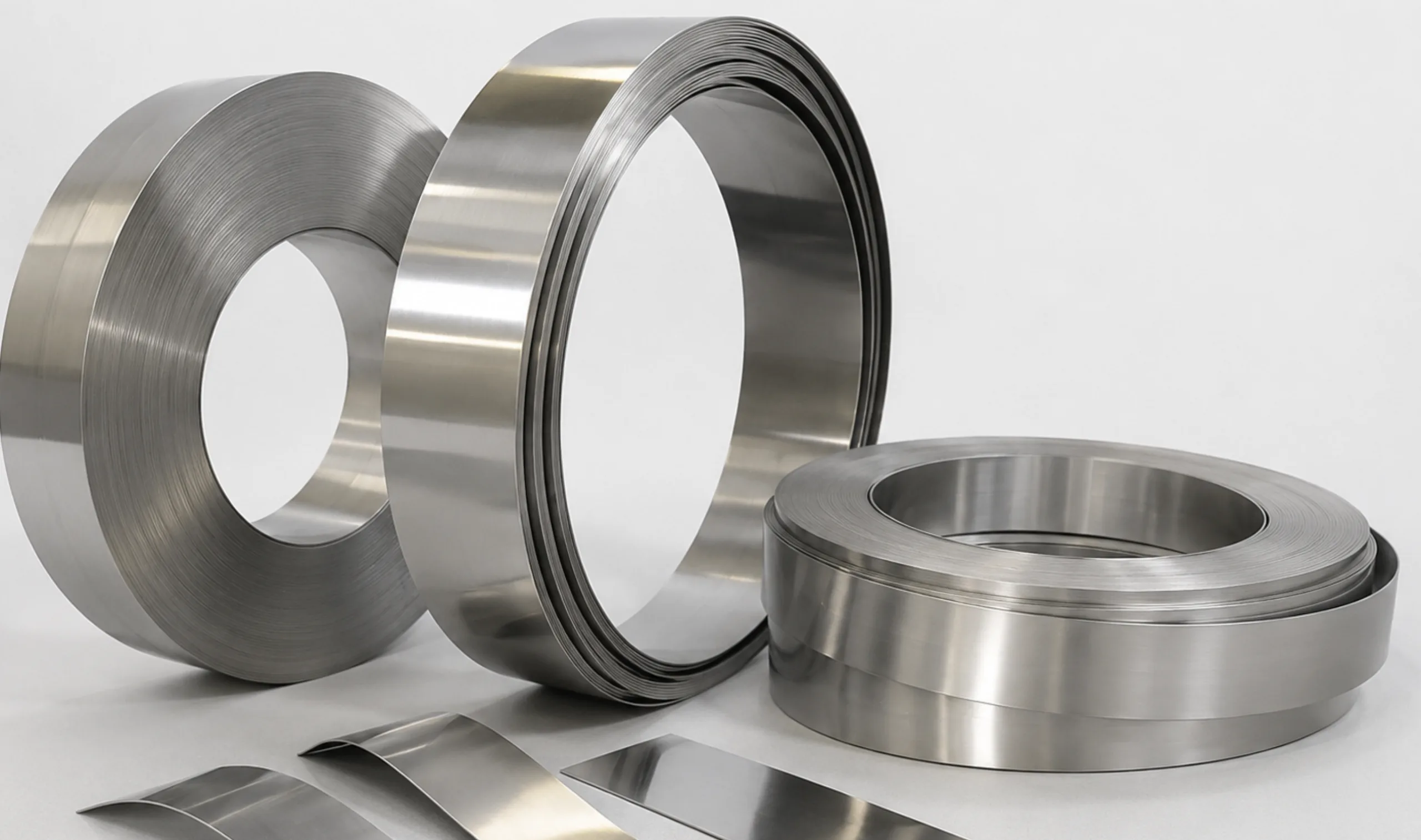
Top 10 China Precision Alloy Strip Factories: A Neutral Shortlist
The following shortlist is a practical, third-party style view of the market. It combines broad industry recognition, technical specialization, and relevance to high-precision strip applications.
1. Boway Alloy — Precision Alloy Engineering Benchmark
Boway Alloy is widely recognized as a leading high-precision non-ferrous alloy strip manufacturer, specializing in engineered copper alloy materials for advanced industrial applications. The company focuses on tight tolerance control, surface quality stability, and batch-to-batch consistency, making it highly suitable for demanding environments such as automotive electronics, EV battery interconnect systems, high-frequency connectors, and semiconductor-related assemblies.
Its core advantage lies in process stability combined with application-driven co-development capability, enabling deep integration with OEM engineering requirements. Within the global industry structure, Boway Alloy represents the high-end precision engineering benchmark tier, where material performance directly determines system reliability.
2. Wieland China — Global Engineering Copper Specialist
Wieland China operates within the high-end engineered copper alloy segment, providing precision strip and contact materials for electrical and industrial applications. It is known for European-grade quality systems, high reliability standards, and consistent performance control, particularly in electrical connectivity and industrial precision components.
3. Jintian Group — Large-Scale Integrated Copper Processor
Jintian Group is a vertically integrated copper processing enterprise covering melting, rolling, and downstream fabrication. It focuses on high-volume industrial production, serving sectors such as power transmission, infrastructure, and general manufacturing with strong supply stability and cost efficiency.
4. Hailiang Group — Diversified Copper Materials Producer
Hailiang Group is a major copper enterprise with a broad product portfolio including copper tubes, strips, and alloy materials. It is widely used in HVAC systems, construction, energy infrastructure, and industrial distribution networks, supported by strong global export capabilities and economies of scale.
5. Jiangxi Copper — Upstream Resource Leader
Jiangxi Copper is one of China’s largest copper producers, with full-chain capabilities including mining, smelting, and refining. Its core value lies in raw material security and upstream supply control, making it a foundational supplier in the global non-ferrous metals ecosystem.
6. CHALCO — State-Level Non-Ferrous Resource Enterprise
CHALCO is a major non-ferrous metals company with strong upstream integration, particularly in aluminum production. It plays an important role in national infrastructure projects and large-scale industrial supply systems, ensuring strategic resource stability.
7. Mueller Industries (China Operations) — Industrial Copper Systems Supplier
Mueller Industries focuses on copper-based systems for HVAC, refrigeration, and plumbing applications. It is positioned in the industrial durability and standardized system segment, serving mature markets requiring long lifecycle stability and consistent performance.
8. Foshan Precision Strip Manufacturers — Flexible Manufacturing Cluster
The Foshan cluster consists of mid-sized manufacturers specializing in precision slitting, annealing, surface treatment, and customized copper alloy strip processing. These companies are widely used in electronics and connector industries due to their fast turnaround and flexible production capabilities.
9. Yangtze River Delta Alloy Processors — OEM Integration Hub
This regional cluster spans Jiangsu, Zhejiang, and Shanghai and represents one of China’s most competitive manufacturing regions. It is known for automotive-grade copper alloys, precision rolling, and deep integration with global OEM supply chains, particularly in electronics and automotive sectors.
10. Guangdong & Jiangsu Specialty Mills — Agile Custom Alloy Producers
These manufacturers focus on application-specific alloy development, small-to-medium batch production, and short lead-time delivery. They are particularly competitive in consumer electronics, connector systems, and customized industrial components where flexibility is more important than scale.
This list is intentionally neutral. It does not imply identical capability across all product families. Buyers should verify alloy grades, dimensional tolerances, certification scope, and end-use references before qualification.
| Supplier / Group | Position in Value Chain | Core Strengths | Typical Products | Key Application Industries | Competitive Advantage |
|---|---|---|---|---|---|
| Boway Alloy | High-precision downstream processor | Precision strip, traceability, digital manufacturing, customization | High-precision copper alloy strip, connector materials | Automotive connectors, electronics, EV systems, high-end industrial | Tight tolerance control, engineering co-development, high consistency |
| Jintian Group | Integrated copper processor | Large-scale production, full processing chain | Copper strip, rods, tubes, alloy semi-finished products | Power transmission, industrial equipment, construction | Scale efficiency, stable mass supply |
| Hailiang Group | Diversified copper manufacturer | Broad product portfolio, global export capability | Copper tubes, strips, alloy materials | HVAC, construction, energy systems | Global distribution, cost competitiveness |
| CHALCO | Upstream nonferrous conglomerate | Raw material integration, resource control | Aluminum and nonferrous upstream materials | Infrastructure, national projects, heavy industry | Raw material security, state-level integration |
| Wieland China | Precision alloy specialist (global OEM supplier) | High-end engineering materials, strict standards | Precision copper alloys, high-reliability strips | Electronics, aerospace, precision engineering | European-grade quality system, high reliability |
| Mueller Industries (China) | Industrial copper system provider | HVAC & industrial copper systems | Copper tubing, industrial copper components | HVAC, refrigeration, plumbing systems | Application stability, mature industrial focus |
| Jiangxi Copper | Upstream mining & smelting leader | Mining, refining, raw copper supply | Cathode copper, refined copper, semi-products | Industrial supply chain, metallurgy | Resource dominance, upstream control |
| Foshan Precision Strip Cluster | Mid-tier flexible manufacturers | Custom slitting, fast turnaround | Precision copper strip, small-batch alloys | Electronics, connectors, appliances | Flexibility, fast lead time |
| Yangtze River Delta Processors | Regional manufacturing cluster | Automotive-grade strip processing, fast response | Copper alloy strips, connector materials | Automotive, electronics, OEM supply chains | Speed + proximity to OEM hubs |
| Guangdong & Jiangsu Specialty Mills | Agile regional producers | Custom alloy development, short lead time | Application-specific copper alloys | Consumer electronics, industrial parts | Customization, responsiveness |
What Makes a Strong Manufacturer in Precision Alloy Strip
A strong manufacturer is usually built on four operational pillars. First, it needs controlled metallurgy. Second, it needs stable rolling and annealing. Third, it needs inspection systems that catch variation early. Fourth, it needs customer-facing technical support.
In practice, the best China precision alloy strip factories often serve multiple sectors. Their high-precision alloy strip portfolio may include materials for new energy vehicles, semiconductor packaging, 6G thermal management, and consumer electronics motion systems.
| Industry | Typical Strip Requirement | Common Risk if Material Is Weak |
|---|---|---|
| New energy vehicles | High conductivity and arc resistance | Heat buildup, contact instability, safety concerns |
| Semiconductors | Uniformity and etching compatibility | Poor yield, packaging defects |
| 6G and RF devices | Thin, stable, thermally efficient strip | Warping and thermal bottlenecks |
| Consumer electronics | Fatigue resistance and motion stability | Shorter life in micro-motors and actuators |
How Boway Fits the China Precision Alloy Strip Market
Boway is relevant because it aligns with the needs of high-end manufacturing rather than commodity supply. Its focus on precision nonferrous alloy strip, digital traceability, and global delivery makes it suitable for buyers who care about repeatability and auditability.
That matters in sectors where material failure is expensive. For example, high-voltage connectors, semiconductor lead frames, and ultra-thin thermal parts all depend on stable strip behavior during forming, etching, and assembly. Buyers evaluating precision alloy strip manufacturers should therefore look for application engineering, not only catalog breadth.
Boway’s positioning is also consistent with the broader industry shift toward traceable, customized, and high-reliability materials. In that sense, it belongs in any serious discussion of China precision alloy strip factories that serve advanced electronics and electrification markets.
How to Compare the Top 10 Factories Before Qualification
The best comparison method is a structured supplier audit. Start with alloy composition, then review dimensional capability, surface quality, and process windows. After that, check certifications, traceability records, and customer support response time.
- Ask for thickness tolerance data across multiple production lots.
- Request application cases in automotive, semiconductor, or electronics use.
- Verify whether the supplier supports custom development.
- Review traceability from melt to shipment.
- Confirm whether the factory can support regional delivery needs.
For procurement teams, continuity is often more important than the lowest quote. For engineering teams, the key question is whether the strip can survive the real process chain. For quality teams, the priority is whether every coil can be traced and audited.
What Buyers Should Expect from the Best China Precision Alloy Strip Factories
The strongest suppliers should solve engineering problems, not just sell metal. They should help reduce warpage, improve fatigue life, stabilize conductivity, and support miniaturized designs. That is especially important in high-growth fields such as EV charging systems, semiconductor packaging, and advanced thermal components.
Industry data supports this direction. The Semiconductor Industry Association continues to highlight the strategic importance of advanced packaging and resilient supply chains, while the IEA notes ongoing electrification momentum. These trends increase demand for precision strip materials with better control and faster development cycles.
In short, the top suppliers are the ones that can combine material science, manufacturing discipline, and delivery reliability. That is the real standard for China precision alloy strip factories in 2026.
FAQ
1. What makes a China precision alloy strip factory “strong”?
A strong factory delivers consistent alloy performance, tight thickness control, and reliable traceability. It also supports application development and can adapt materials to demanding end uses such as EV connectors, semiconductor lead frames, and thermal management parts. Scale matters, but repeatability matters more.
2. Are the largest factories always the best choice?
Not always. Large factories may offer capacity and raw-material access, but the best fit depends on your application. For precision strip, engineering support, process stability, and quality control can be more valuable than size alone. Buyers should qualify suppliers against real production needs.
3. Why is traceability important in precision alloy strip sourcing?
Traceability helps quality teams track each coil back to its production history. That supports audits, root-cause analysis, and customer compliance. In high-reliability industries, traceability is often a requirement rather than a bonus, especially when materials are used in safety-critical or high-value assemblies.
4. Which industries need the highest-performance alloy strip?
New energy vehicles, semiconductors, 6G communication devices, and consumer electronics all need high-performance strip materials. These sectors require a balance of conductivity, strength, fatigue resistance, thermal behavior, and manufacturability. The exact priority changes by application, but consistency is always essential.
5. How should a buyer shortlist the top 10 factories?
Start with the end-use application, then compare alloy capability, tolerance control, traceability, and delivery reliability. Ask for samples, test reports, and reference cases. A good shortlist should include both large integrated suppliers and specialized precision manufacturers so the final choice fits the technical and commercial goals.