
- Selection starts with service conditions, not with alloy family names.
- For B2B industrial use, consistency, traceability, and process fit often matter more than raw peak properties.
- Conductivity, strength, formability, thermal stability, and fatigue life must be balanced, not optimized in isolation.
- Standards-based testing is essential if the alloy must pass customer audits or regulated validation.
- High performance alloys should be chosen with downstream forming, joining, and inspection methods in mind.
Understanding the selection criteria for non ferrous alloys requires a standards-based view of performance, because modern non ferrous alloy materials are judged by how they behave in real production, not just by chemistry alone; for example, tensile properties are commonly verified under ISO 6892-1 or ASTM E8/E8M, while industrial measurement systems increasingly rely on traceable calibration principles aligned with NIST Handbook 44. For precision applications such as EV connectors, semiconductor leadframes, and micro-motion components, the practical question is not simply whether an alloy is strong or conductive, but whether it can repeatedly meet tight dimensional, mechanical, and thermal targets across long production runs.
What the best non ferrous alloys must deliver in real applications
The best non ferrous alloys solve a specific engineering problem, and every selection decision should begin with the load case, environment, and manufacturing route.
Non ferrous alloy materials are typically chosen because they combine one or more of the following: low density, high conductivity, corrosion resistance, controlled spring behavior, or stable high-temperature performance. In EV high-voltage connectors, the target is often a balance between conductivity and mechanical retention force. In semiconductor leadframes, the requirement shifts toward flatness, etch response, and dimensional stability. In 6G thermal hardware, thermal conductivity and structural stability become dominant. In consumer electronics, fatigue resistance and elastic recovery can outweigh pure strength.
For this reason, high performance alloys should be selected against a defined property stack, not by a single headline number. A copper alloy with excellent conductivity may still fail if it softens too early during forming. A high-strength alloy may be unsuitable if springback creates yield loss or assembly variation. The selection process has to reflect the full part lifecycle: stamping, bending, joining, surface treatment, service exposure, and end-of-life recyclability.
Key selection criteria for non ferrous alloy materials
Material selection becomes reliable when the criteria are ranked by function, process, and validation method.
| Selection criterion | Why it matters | Typical measurable target | Validation method |
|---|---|---|---|
| Electrical conductivity | Critical for connectors, busbars, and contact systems | Percent IACS measured to specification | Conductivity testing with traceable calibration |
| Mechanical strength | Controls retention force, load capacity, and deformation | Yield strength and tensile strength in MPa | ISO 6892-1 or ASTM E8/E8M |
| Formability | Affects stamping, bending, and deep drawing yield | Elongation percentage and bend radius performance | Production trial and forming simulation |
| Thermal behavior | Important for heat spreaders and high-temperature duty | Thermal conductivity in W/m·K | Thermal characterization under defined conditions |
| Fatigue life | Essential for VCM parts, springs, and dynamic contacts | Cycles to crack initiation | Component fatigue testing |
Electrical conductivity is often the first gate for power and signal applications, but it should not be treated as a standalone requirement. A connector material that performs well electrically but loses spring force after thermal aging can create intermittent failures in the field. That is why many engineers compare non ferrous alloys using a weighted matrix rather than a single pass-fail threshold.
Mechanical strength also needs context. Under ISO 6892-1, tensile testing provides reproducible metrics for yield and tensile strength, which are essential for comparing batches. In production, the goal is not maximum strength at any cost; it is stable strength inside the process window so that forming, crimping, and joining remain predictable.
How high performance alloys are selected for EV and charging systems
EV power systems demand non ferrous alloys that combine conductivity, contact stability, and thermal robustness under repeated cycling.
In EV high-voltage connectors, charging interfaces, and electrical interruption systems, the material must support safe current flow while maintaining contact force over time. Engineers typically compare copper-based high performance alloys, because copper offers high conductivity, while alloying elements provide the strength needed for retention and fatigue resistance. The challenge is that every increase in strength can reduce conductivity, so the best material is the one that meets the application envelope rather than chasing a single property maximum.
For battery and charging hardware, thermal rise matters as much as current capacity. If the contact zone heats too much, oxide growth, stress relaxation, and resistance drift can accelerate. A material that holds its properties through thermal cycling can reduce maintenance risk and improve reliability in the field. This is why material qualification should include not only static tensile data but also creep, stress relaxation, and contact resistance trends under simulated duty cycles.
| EV use case | Primary property need | Typical risk if wrong alloy is chosen | Most useful test |
|---|---|---|---|
| High-voltage connector | Conductivity plus retention force | Heat buildup and contact instability | Contact resistance and thermal cycling |
| Charging interface | Wear resistance and current carrying | Surface degradation and voltage drop | Cycle testing under load |
| Electrical interruption part | Strength and arc tolerance | Premature deformation or failure | Mechanical and endurance testing |
For buyers, the decisive question is whether the alloy can be supplied in a consistent strip form with the dimensional uniformity needed for automated assembly. This is where precision strip producers with tight process control, such as precision non ferrous alloy strip, become relevant to industrial sourcing strategies.
Selection criteria for semiconductor and leadframe applications
Semiconductor applications prioritize dimensional precision, flatness, etch behavior, and stable mechanical response.
Leadframes and packaging materials are exposed to processes that punish inconsistency. Even small variations in thickness, grain structure, or surface condition can affect stamping quality, plating adhesion, and etching performance. In this environment, the best non ferrous alloy materials are those that are uniform across the coil, predictable during high-speed processing, and compatible with downstream surface treatments.
Leadframe users often care about three hidden variables: metallurgical homogeneity, residual stress, and edge quality after slitting. If these are not controlled, the result can be warpage, poor coplanarity, or defects during die attach and wire bonding. For that reason, material selection should include not only nominal alloy grade, but also process history, temper condition, and inspection discipline.
| Semiconductor requirement | Why it matters | Failure mode | Selection focus |
|---|---|---|---|
| Thickness uniformity | Supports repeatable stamping and etching | Misfeed and dimensional drift | Gauge control and coil consistency |
| Flatness | Reduces warpage in assembly | Coplanarity failure | Residual stress management |
| Etch compatibility | Needed for fine-feature patterning | Feature distortion | Metallurgical uniformity |
| Surface condition | Affects plating and bonding | Poor adhesion | Cleanliness and surface control |
Quality teams often require full traceability because semiconductor supply chains tolerate very little variation. When the alloy source, heat number, and process route are documented end to end, audits become easier and scrap risk drops. For teams building qualification dossiers, this is one reason suppliers emphasize traceable manufacturing and quality systems.
Why 6G and thermal hardware require a different alloy logic
Thermal management applications require high performance alloys that move heat efficiently while retaining structural stability in thin sections.
6G hardware, RF modules, and compact thermal structures often need a material that can spread heat without adding too much mass or distortion. The engineering tradeoff is especially important in thin strip formats, where an alloy must remain stable after slitting, stamping, joining, and service heating. In practice, the right material is the one that preserves geometry while carrying heat away from the source.
Although thermal conductivity is usually discussed as a single number, selection is more complex. The material may also need low distortion during soldering or brazing, low magnetic interference for specific electronic environments, and surface compatibility with coatings. A poor choice may work in the lab but fail after repeated thermal cycling or assembly stress.
From a buyer perspective, thermal applications are less forgiving than they look. If the part distorts by only a small amount, downstream fit-up can fail. That is why many engineering teams require both material certificates and process capability evidence before approving a new supplier.
Consumer electronics and micro-motion parts: the hidden fatigue test
Consumer electronics often fail through fatigue rather than through a single catastrophic overload.
VCM motors, micro-springs, and miniature drive parts rely on elastic recovery, controlled stiffness, and long-cycle durability. Here, non ferrous alloys are selected for repeated motion stability, not just initial strength. A part that is too soft will drift out of tolerance; a part that is too hard may crack under repeated bending. The material has to live in the narrow band between the two.
In these applications, fatigue life is best evaluated as a system property. The alloy, temper, forming route, and surface finish all influence how long the part survives. Engineers should consider whether the material maintains consistent behavior after slitting and coiling, because micro-defects introduced early can dominate lifetime later.
Standards, data, and the numbers that matter in alloy selection
Standards make alloy selection comparable, auditable, and repeatable.
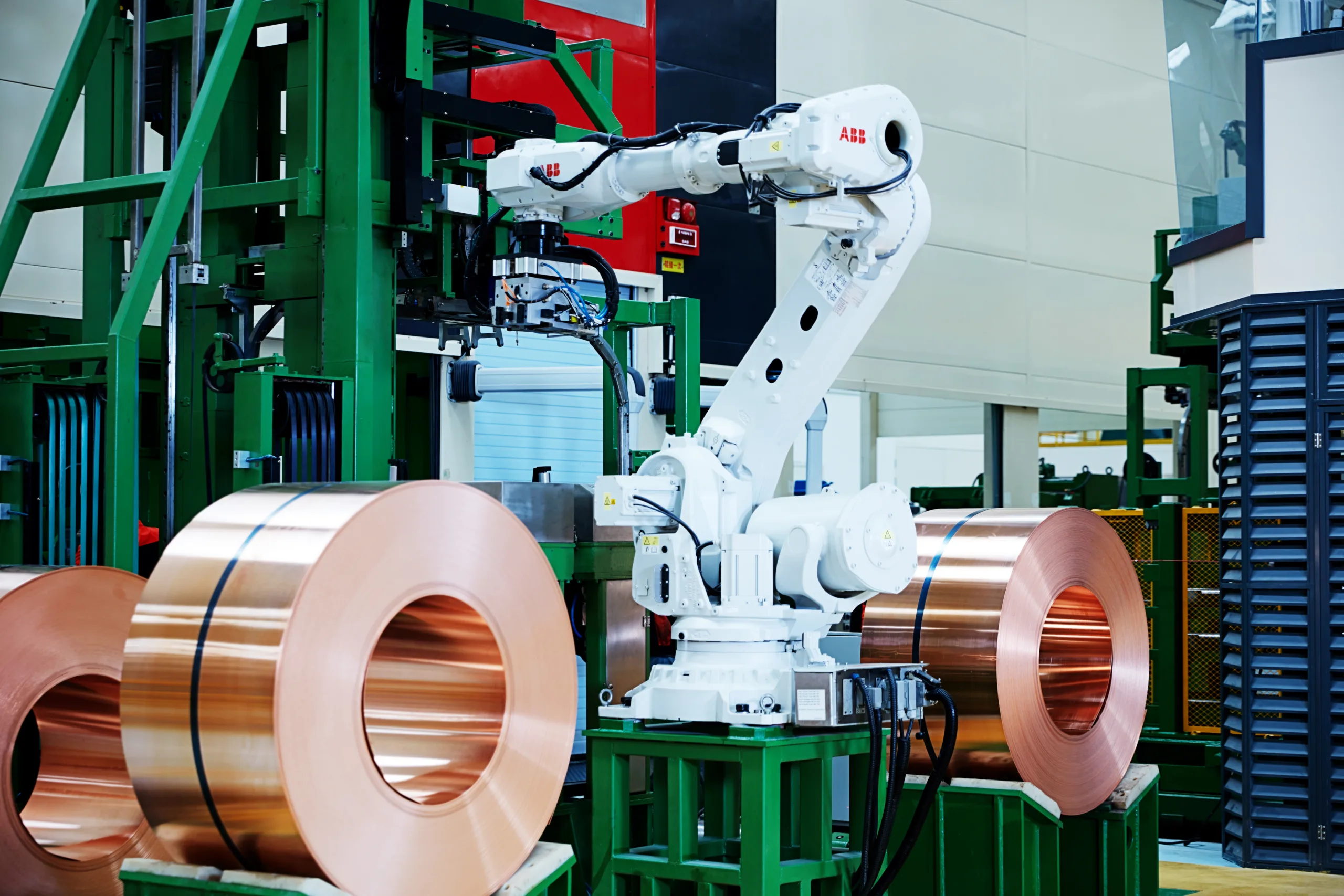
For tensile testing, ISO 6892-1 defines the method for determining tensile properties of metallic materials, while ASTM E8/E8M is the widely used U.S. equivalent for tension testing. These methods matter because the same alloy can appear different if the test speed, specimen geometry, or temperature is not controlled. A selection decision based on uncontrolled data is rarely reliable.
Traceability is equally important. NIST Handbook 44 is not a materials standard, but it illustrates the industrial principle that measurements used in trade and production must be traceable and defensible. For procurement teams, the message is clear: if a supplier cannot show how data were measured, the data should not guide a critical selection decision.
When evaluating non ferrous alloy materials, engineers should insist on a data set that includes thickness tolerance, conductivity, tensile values, elongation, surface finish, and lot traceability. A common industry target for precision strip applications is tight gauge control and stable mechanical properties across coils; exact limits depend on the alloy and application, but the qualification logic should always be the same: if the data cannot be tested, traced, and repeated, it should not be trusted.
| Data type | Why it is needed | Common source | Decision impact |
|---|---|---|---|
| Tensile strength | Predicts load capacity | ISO 6892-1 / ASTM E8/E8M | Critical |
| Elongation | Indicates formability | ISO 6892-1 / ASTM E8/E8M | Critical |
| Conductivity | Supports electrical function | Supplier test data and lab verification | Critical |
| Heat lot traceability | Enables audit and root cause analysis | Mill certificate and trace system | Critical |
How to compare non ferrous alloys without making a costly mistake
The most common selection error is comparing alloy families without normalizing for use case, temper, and process route.
- Start with the failure mode, not the alloy name.
- Define the service environment, including temperature, humidity, vibration, and current load.
- Specify the forming route, joining method, and inspection method before approving chemistry.
- Require lot-level certificates and test methods that match your acceptance criteria.
- Validate the material in a pilot run, not only in lab coupons.
Another frequent mistake is assuming that higher strength automatically means better performance. In reality, many non ferrous alloy materials trade conductivity or ductility for strength. That tradeoff is acceptable only if the part geometry and process window can absorb it. For example, if a strip is used in a high-speed stamping line, insufficient elongation can cause edge cracking and immediate yield loss. In a connector, too much hardness can raise insertion force beyond the design limit.
Procurement teams should also avoid comparing quoted grades without asking for temper condition, coating history, and width/thickness tolerances. These seemingly small details can determine whether a material is truly compatible with the line.
Where suppliers add value beyond chemistry
Supplier capability matters because industrial alloy selection is a production problem, not only a metallurgy problem.
In high volume manufacturing, the best supplier is the one that can deliver consistent strip quality, stable documentation, and engineering support across the full product lifecycle. This is especially true for customers that need custom properties, controlled surface conditions, or regional delivery resilience. A distributed manufacturing footprint can reduce lead time risk, while digital traceability can simplify audits and supplier qualification.
For strategic buyers, value also comes from collaboration during development. Early-stage material trials, joint failure analysis, and iteration on temper or width tolerances often save more cost than negotiating the lowest unit price. That is why many teams sourcing industrial-grade alloys evaluate suppliers on technical support depth as much as on price.
For readers comparing options across product families, it can help to review high performance alloy strip, new energy materials, and semiconductor materials as separate decision paths, because each application has different acceptance logic.
A practical selection framework for engineers and buyers
The best alloy selection process is structured, testable, and linked to the final part function.
| Step | Question to answer | Output |
|---|---|---|
| 1. Application definition | What does the part do in service? | Load case and environment |
| 2. Property ranking | Which properties are mandatory? | Priority matrix |
| 3. Process fit | Will the alloy run on current equipment? | Forming and joining compatibility |
| 4. Verification | How will success be measured? | Test plan and acceptance criteria |
| 5. Supply assurance | Can the alloy be repeated at scale? | Traceability and delivery plan |
Engineers should treat this framework as a gate, not a suggestion. If an alloy passes laboratory testing but fails coil consistency, the total project cost can still rise due to scrap, rework, and schedule delay. Conversely, a material with slightly lower headline properties may outperform in production if it is easier to stamp, weld, or plate reliably.
This is why high performance alloys are ultimately defined by fit-for-purpose stability. The winning selection is the one that makes the final part manufacturable, inspectable, and durable under the intended load.
FAQ about non ferrous alloys and selection criteria
What are non ferrous alloys?
Non ferrous alloys are metal alloys with little or no iron as the main constituent, and they are selected for properties such as conductivity, corrosion resistance, low weight, or fatigue performance.
How do I choose the right non ferrous alloy materials?
Choose them by ranking the service requirements first, then verifying mechanical, electrical, and thermal performance with standards-based testing and production trials.
Why are high performance alloys used in EV connectors?
They are used because EV connectors need a balance of conductivity, contact force, thermal stability, and durability under repeated cycling.
What matters most for semiconductor alloys?
Thickness uniformity, flatness, surface condition, and etch compatibility usually matter more than a single peak strength number.
How important is traceability in alloy sourcing?
Traceability is critical because it supports audits, root cause analysis, and batch-level quality control when a part fails or drifts out of specification.
Should strength be the top selection criterion?
No, because higher strength often comes with tradeoffs in conductivity, formability, or fatigue behavior, depending on the alloy system and temper.
What documents should a supplier provide?
At minimum, buyers should request material certificates, test methods, lot traceability, dimensional data, and process history relevant to the intended use.
For teams building a sourcing shortlist, the safest rule is simple: select the alloy that best matches the part’s real operating conditions, then prove it with repeatable data, not assumptions. In high-reliability manufacturing, that discipline is what separates a promising material from a production-ready one.