
- Connector performance depends on conductivity, spring behavior, and stress relaxation, not conductivity alone.
- High-speed links need stable contact geometry, low resistance, and consistent plating adhesion.
- Material selection should align with mating cycles, current load, and thermal environment.
- Traceability, batch consistency, and die-stamped precision matter as much as nominal alloy chemistry.
Non ferrous alloy materials for high-speed data transmission connectors must satisfy a narrow technical window: enough conductivity for signal and power transfer, enough mechanical resilience for repeat mating, and enough processability for fine features and tight tolerances. For example, ISO 2768-1:1989 defines general tolerance classes for linear dimensions, while IEC 60512 is widely used to evaluate connector mechanical and electrical properties in practice; the engineering point is that connector materials are judged by measurable behavior, not by alloy family labels alone. If your design targets 5G, data center, or automotive high-speed interconnects, the material choice affects insertion force, contact resistance, wear, and thermal aging. Boway’s high-performance alloy portfolio is relevant here because precision strip and full traceability are often decisive in connector manufacturing. See also precision strip solutions, copper alloy strip, and high conductivity alloys.
Why non ferrous alloy materials matter in high-speed data transmission connectors
Non ferrous alloy materials shape both the electrical path and the mechanical life of a connector.
In high-speed data transmission, the connector is not only a passive metal interface. It is a controlled electrical system where contact resistance, elasticity, surface finish, and temperature rise directly influence signal quality. As data rates rise, small variations in geometry or oxide behavior can become system-level failures. That is why connector engineers often prioritize copper-based alloys with carefully tuned hardness and conductivity, instead of using maximum-conductivity pure copper that may lose spring force too quickly.
Connector performance is usually defined by a compromise. More conductivity often means lower strength, while higher strength can reduce conductivity or complicate stamping. This tradeoff is why electronic non ferrous metal alloys such as copper-nickel-silicon, phosphor bronze, and copper-chromium-zirconium remain common in contacts, terminals, and shielding parts.
| Alloy family | Typical conductivity range | Typical strength trend | Common connector role |
|---|---|---|---|
| Phosphor bronze | 10-15% IACS | Good spring performance | Signal contacts, springs |
| Copper-nickel-silicon | 20-35% IACS | High strength with better conductivity | High-speed contacts, terminals |
| Copper-chromium-zirconium | 75-85% IACS | Moderate to high strength | Power contacts, heat-sensitive parts |
The practical lesson is simple: the connector function defines the alloy, not the other way around. A shield clip, a signal contact, and a power terminal may all sit in the same housing, but each can require a different material strategy.
What makes high conductivity non ferrous alloys suitable for signal integrity
High conductivity non ferrous alloys are valuable when low resistive loss and thermal stability are both required.
In high-speed connectors, the contact zone must maintain low and repeatable resistance over thousands of mating cycles. According to ASTM B193, electrical resistivity testing for metallic materials is standardized through the four-terminal method, which is a useful reminder that conductivity claims should be validated by test, not assumed from chemistry alone. For connector buyers, the key question is not whether an alloy is conductive, but whether it keeps its conductivity after forming, heat treatment, plating, and long-term service.
Copper-nickel-silicon alloys are often selected because they offer a workable balance between electrical performance and mechanical strength. In many connector designs, the alloy must survive fine stamping, tight bend radii, and stress relaxation at elevated temperature. A material with strong nominal conductivity but poor stress relaxation can still fail in service if contact force decays too quickly.
Signal integrity is also affected by surface conditions. Nickel underlayers, selective gold plating, and anti-oxidation finishes are used to reduce fretting and maintain stable contact resistance. In other words, the base alloy is only part of the answer; the whole stack matters.
| Performance factor | Why it matters | Typical engineering target |
|---|---|---|
| Contact resistance | Signal loss and heating | Stable, low drift under cycling |
| Spring force retention | Mating reliability | Minimal force decay after thermal aging |
| Plating adhesion | Wear and corrosion resistance | No delamination after forming |
| Dimensional stability | Pitch accuracy | Fine geometry after stamping and heat treatment |
For high-speed interconnects, the material must support both the electrical path and the mechanical architecture. That is why high conductivity non ferrous alloys are usually evaluated as part of a complete contact system.
How to choose electronic non ferrous metal alloys for connector architecture
The right connector alloy is selected by function, not by habit.
Engineers typically begin with the role of the part: signal contact, power contact, shield, spring element, or lead frame. Each role implies different loading conditions. A spring contact needs high elastic recovery, a shield needs formability and corrosion resistance, and a power terminal needs low resistance and heat tolerance. If the alloy family does not match the role, design margins disappear quickly.
The following decision table is useful during early specification work.
| Connector function | Priority property | Suggested alloy direction | Typical risk if mismatched |
|---|---|---|---|
| High-speed signal contact | Stable resistance | Copper-nickel-silicon | Contact drift and insertion loss |
| Power terminal | Conductivity | Copper-chromium-zirconium | Overheating and voltage drop |
| Spring beam | Elastic recovery | Phosphor bronze | Force decay and poor retention |
| Shielding part | Formability | Low to mid-strength copper alloy | Cracking during stamping |
Material selection also depends on the manufacturing route. Fine stamping, progressive die forming, and post-forming heat treatment each affect final properties. If the strip is too hard, cracks may appear at bends. If it is too soft, spring force can be lost after assembly. For this reason, alloy specification should include both chemistry and temper, not only a general material name.
Boway’s emphasis on precision strip and digital traceability is relevant to this workflow because procurement teams increasingly ask for repeatable coil-to-coil behavior, not just nominal property sheets. For buyers comparing suppliers, company quality and traceability practices and precision strip product pages are often as important as the alloy grade itself.
Material properties that affect high-speed connector performance
Connector failures often start as property drift rather than visible damage.
The most important properties are electrical conductivity, tensile strength, yield strength, elongation, hardness, stress relaxation resistance, and surface cleanliness. In practice, electrical performance and mechanical life are linked: a contact that loses force will usually show higher resistance, more fretting, and greater sensitivity to contamination. That is why engineers should avoid selecting material based on a single datasheet line.
Material properties must also survive processing. Cold rolling, annealing, and stamping all change the final condition of the strip. The industrial value of a high conductivity non ferrous alloy is therefore determined by its response to fabrication, not just its nominal composition.
| Property | Why it matters | Common check method | Typical engineering concern |
|---|---|---|---|
| Conductivity | Lower loss and heating | ASTM B193 | Drop after forming or aging |
| Tensile strength | Resistance to deformation | ASTM E8/E8M | Cracking during stamping |
| Hardness | Wear and spring retention | ASTM E18 | Too soft or too brittle |
| Stress relaxation | Contact force retention | Application-specific aging tests | Force loss at high temperature |
One practical benchmark comes from connector testing standards. IEC 60512 covers mechanical and electrical tests for connectors and electromechanical components, including contact resistance, durability, and environmental behavior. That matters because a material that looks excellent in the mill certificate may still fail after thermal cycling, mating, or corrosion exposure.
For high-speed platforms, specification discipline is essential. The right alloy must be stated with thickness, temper, conductivity class, surface finish, and inspection rules. Without those details, supply chain variation can be large enough to affect product release.
Where high conductivity non ferrous alloys are used in real connector systems
High conductivity non ferrous alloys are used across signal, power, and shielding subsystems.
In data transmission hardware, connectors are often paired with cages, spring clips, lead frames, and terminal features. Each component faces different stresses. For example, in board-to-board and cable-to-board systems, the signal contact must hold low resistance under repeated mating, while adjacent shield parts must support EMI control and mechanical retention. In automotive Ethernet and high-density server backplanes, those requirements are amplified by vibration, heat, and long life.
The application map below shows why one alloy cannot solve every problem.
| Application area | Main stress | Material emphasis | Common failure mode |
|---|---|---|---|
| Data center interconnects | Heat and density | Conductivity plus thermal stability | Resistance rise |
| Automotive high-speed connectors | Vibration and temperature | Fatigue resistance and force retention | Fretting and looseness |
| Telecom modules | Signal integrity | Surface quality and stable geometry | Impedance variability |
| Consumer device connectors | Miniaturization | Thin gauge formability | Bend crack and spring loss |
In miniaturized products, tolerance control becomes a business issue, not just an engineering one. A small dimensional drift can increase scrap, reduce yield, and raise assembly cost. That is why precision strip suppliers with stable process capability are often preferred in connector supply chains.
If your procurement team is comparing material sources, it is often helpful to review copper alloy strip options alongside conductive alloy families to match electrical and mechanical requirements more precisely.
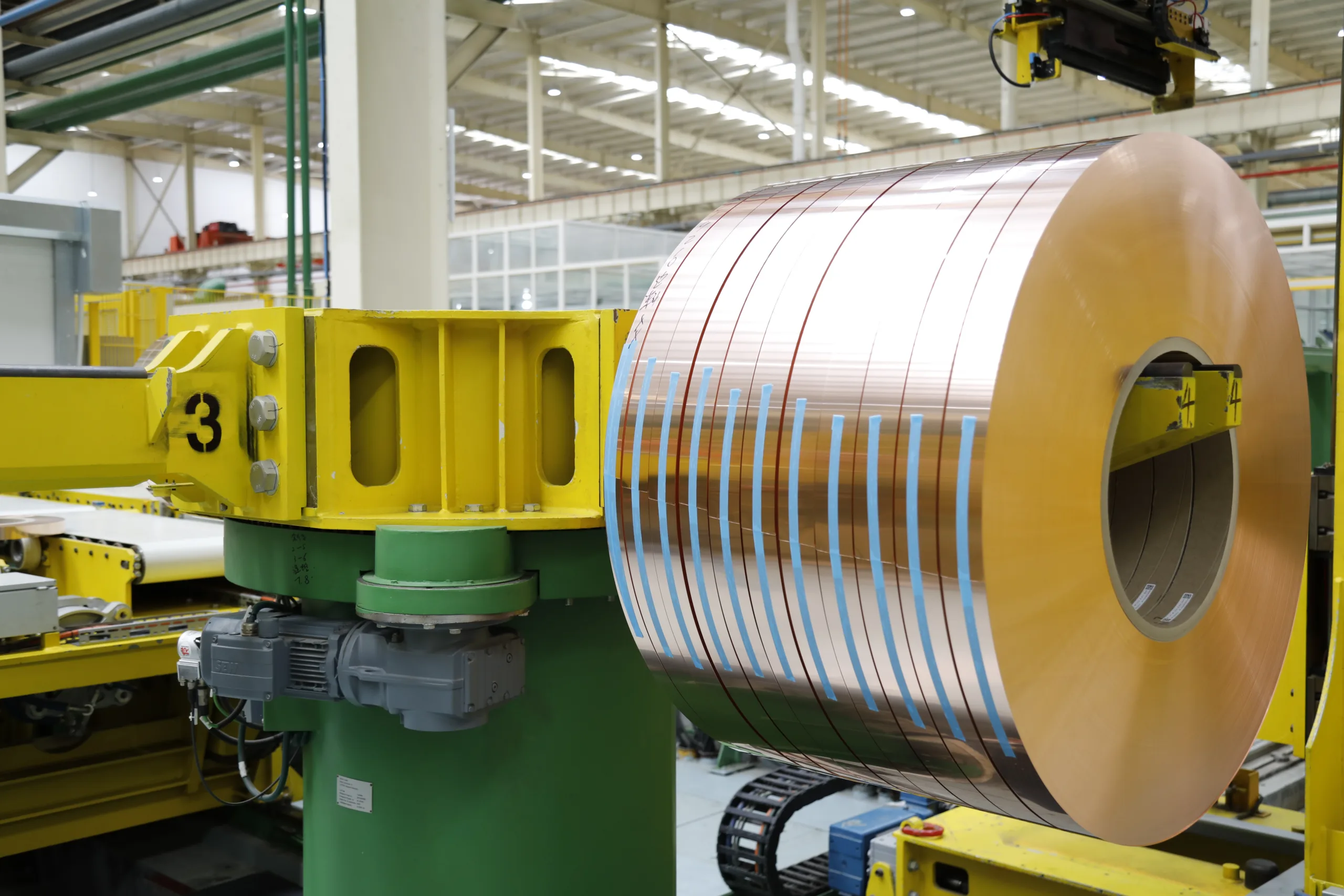
Quality control, traceability, and test methods for connector alloys
Traceability is the difference between a qualified material and a risky one.
For high-speed data transmission connectors, production teams need more than chemistry certificates. They need lot traceability, process history, heat treatment records, and stable inspection criteria. Boway’s 100% traceability model fits a growing procurement requirement in electronics: the ability to isolate a defect quickly and prove consistency across batches.
Test methods should be mapped to part function. Conductivity testing verifies electrical capability, tensile testing checks mechanical margin, and aging tests reveal force loss. ISO 6892-1 is commonly used for tensile testing of metallic materials, while ASTM B193 supports resistivity measurement. These standards matter because suppliers and customers must speak the same validation language.
- Define the connector function first: signal, power, shield, or spring.
- Set the minimum electrical and mechanical targets before choosing alloy grade.
- Verify the temper and strip condition after rolling and heat treatment.
- Require lot-level traceability for all released coils and stamped parts.
- Use aging, mating, and corrosion tests before design freeze.
This approach reduces hidden risk. A connector program that skips validation may pass a short prototype run and still fail in mass production. By contrast, a qualified alloy and traceable process flow can shorten troubleshooting time and improve field reliability.
For teams building multi-region supply chains, manufacturing footprint and supply continuity also matter because connector programs often require synchronized quality across customer sites and contract manufacturers.
How to compare non ferrous alloy materials during sourcing
The best sourcing comparison is a functional comparison, not a price-only comparison.
Purchasing teams often receive multiple quotes with similar alloy descriptions but very different manufacturing quality. One supplier may offer nominal conductivity, while another provides tighter thickness control, better edge condition, and more reliable lot documentation. In connector programs, those differences affect yield and assembly stability.
Use the checklist below when comparing suppliers.
- Confirm alloy grade, temper, and conductivity class in writing.
- Ask for thickness tolerance, flatness, and burr limits on strip.
- Request test methods and acceptance criteria for every critical property.
- Verify traceability from coil to finished stamped component.
- Review plating compatibility and thermal aging behavior before release.
A useful procurement metric is total cost of quality, not piece price. According to U.S. Department of Energy manufacturing guidance, quality losses can be significant when scrap, rework, and downtime are included in the calculation; the exact effect depends on process and product, but the principle is consistent across electronics. In connectors, a lower-cost alloy that increases scrap by even a small amount can become the more expensive option.
That is why engineering, quality, and purchasing should review the same material data package. A single-page quote is not enough for high-speed interconnect hardware.
What design teams should specify for high-speed connector projects
A complete material specification prevents most late-stage surprises.
Instead of asking for a generic alloy, design teams should define thickness, temper, conductivity target, mechanical property window, surface finish, and inspection rules. For fine-pitch connector components, also specify allowable camber, edge quality, and forming behavior after heat treatment. If gold or tin plating is used, define the base condition required for adhesion and wear performance.
In practice, a robust specification package includes the following fields.
- Alloy family and exact temper condition
- Thickness and tolerance class
- Conductivity target and test method
- Tensile and hardness range
- Surface condition and cleanliness requirement
- Traceability, packaging, and storage rules
For engineering teams working on next-generation platforms, this level of detail is not bureaucracy. It is a control system for reliability. It also improves communication between design, stamping, plating, and assembly teams, which is especially important when the same connector family must scale across regions or product generations.
When the material specification is well written, the connector program becomes easier to validate, easier to audit, and easier to repeat.
FAQ about non ferrous alloy materials for high-speed data transmission connectors
What is the best non ferrous alloy material for high-speed connectors?
The best alloy depends on the connector function. Copper-nickel-silicon is often a strong choice for signal contacts, phosphor bronze is common for spring elements, and copper-chromium-zirconium is useful where higher conductivity is critical.
Why is conductivity not the only selection criterion?
Because a connector also needs spring force retention, wear resistance, and stable geometry. A highly conductive material can still fail if it loses contact force during thermal aging.
How do engineers measure connector material quality?
They typically use conductivity, tensile, hardness, forming, and aging tests. Relevant standards include ASTM B193 for resistivity and ISO 6892-1 for tensile testing.
What is IACS and why does it matter?
IACS stands for International Annealed Copper Standard. It is a common reference for electrical conductivity in copper and copper alloys, making it useful when comparing material options.
What causes contact resistance drift in connectors?
Contact resistance drift usually comes from oxide growth, fretting wear, force loss, contamination, or poor plating adhesion. Material choice and surface treatment both matter.
How important is traceability in connector alloy sourcing?
Traceability is critical because it lets quality teams isolate defects by lot, heat, or coil. In high-reliability electronics, traceability often determines whether a supplier is qualified.
What should purchasing teams ask before placing an order?
They should ask for alloy grade, temper, thickness tolerance, conductivity target, test methods, plating compatibility, and lot traceability. Those details reduce production risk more effectively than price alone.
For teams evaluating material platforms for data transmission hardware, the core idea is straightforward: choose non ferrous alloy materials that match the connector’s electrical role, mechanical load, and process route. If the application is high-speed and high-density, performance should be validated with real standards, not assumptions. Authoritative references such as ISO 6892-1:2019, ASTM B193, and IEC connector test documentation help define the validation framework, while public technical resources from NIST support measurement discipline and traceable testing culture.