
High-conductivity copper alloy strip is designed to move current efficiently while keeping strength, stability, and processability under control. Standard copper strip is usually chosen for general-purpose forming and basic electrical use, where peak conductivity is less critical than cost and availability.
High-Conductivity Copper Alloy Strip vs Standard Copper Strip: The Core Difference
The main difference is the balance between electrical performance and mechanical behavior. High-conductivity copper alloy strip is engineered for low resistance, stable contact performance, and reliable heat dissipation in demanding assemblies. Standard copper strip is typically a more general material, often selected when the application does not require the same level of current-carrying efficiency or long-term contact reliability.
In practical terms, the choice depends on the conductive alloy comparison you are making. If the part must carry high current, resist heat buildup, and maintain consistent performance across many cycles, the alloyed strip is usually the better fit. If the part is a simple stamped component, busbar, or general connector where design margins are wider, standard copper strip may be sufficient.
| Property | High-Conductivity Copper Alloy Strip | Standard Copper Strip |
|---|---|---|
| Electrical conductivity | Optimized for efficient current transfer | Good, but usually not optimized for peak performance |
| Mechanical strength | Balanced for durability and contact stability | Often softer and more formable |
| Heat resistance | Better suited for thermal stress | More dependent on the base copper grade |
| Typical use | Connectors, charging systems, relay parts | General electrical and stamped parts |
Why Conductivity Is Only One Part of the Selection
Conductivity matters, but it is not the only selection criterion. In high-density electrical systems, engineers also evaluate strength, springback, fatigue life, and surface stability. That is why a high-conductivity copper alloy strip is often specified for connectors, charging interfaces, and power distribution parts, where a stable contact force is as important as low resistance.
Standard copper strip can still be effective in less demanding environments. It is commonly used where the design allows more tolerance for resistance variation, lower thermal load, or simpler forming requirements. For buyers, the real question is not which material is “better” in general, but which one matches the operating window of the final component.
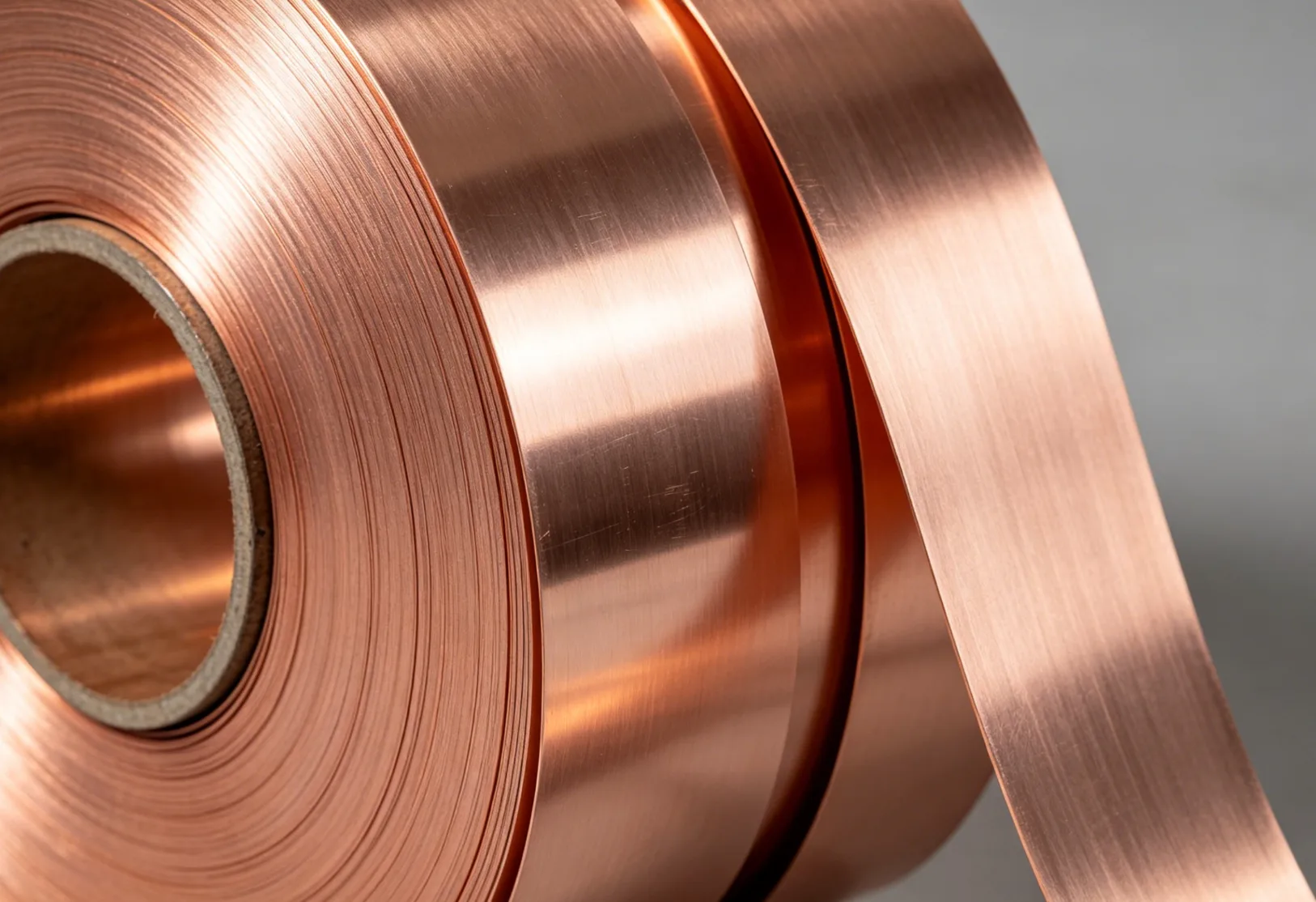
How the Difference Shows Up in Real Applications
The difference becomes clear when the strip is used in modern high-reliability systems. In electric vehicles, for example, current density and thermal management are tightly linked. The new energy vehicle solutions page shows how copper alloy materials are applied in connectors, charging systems, battery components, and control units. In these environments, a high-conductivity copper alloy strip helps reduce energy loss and supports safer operation.
In semiconductor packaging, the material must also support precision and consistency. Boway’s semiconductor materials focus on lead frames, CPU sockets, and high-power components, where dimensional control and surface quality matter as much as conductivity. Standard copper strip may be suitable for simpler structures, but advanced packaging often needs a more engineered alloy.
For broader precision applications, the precision strips category shows how alloy design can improve cold working, plating, and process stability. That is important when the strip must survive stamping, bending, or repeated thermal cycling without losing performance.
Performance Factors Engineers Compare Before Choosing a Strip
The best material choice depends on the full conductive alloy comparison, not just one property. Engineers usually compare conductivity, tensile strength, elongation, fatigue resistance, and surface finish. According to the U.S. Department of Energy, electrical resistance losses increase as current and heat rise, which is why material selection becomes critical in power-intensive systems. DOE vehicle efficiency guidance
Material traceability is also becoming a procurement requirement. Boway’s global manufacturing model emphasizes digital quality control and batch traceability, which supports auditability in regulated supply chains. For buyers in automotive, electronics, and semiconductor sectors, that can be as important as the strip’s nominal conductivity. The company’s company profile also notes its multi-site manufacturing footprint across China, Germany, Canada, and Vietnam.
Industry demand is also rising. The International Energy Agency reported that global EV sales exceeded 14 million in 2023, and continued growth is expected to keep pressure on power connection materials. IEA Global EV Outlook 2024 As electrification expands, the need for stable, high-conductivity strip products grows with it.
When Standard Copper Strip Is the Better Choice
Standard copper strip is the better choice when the application is cost-sensitive, low to moderate in electrical load, or less exposed to thermal stress. It is often used in general stamping, simple conductors, and parts where the design already provides enough margin for performance variation. In these cases, over-specifying an alloy can add cost without improving the final product.
Standard strip can also be easier to source and process in some workflows. If the production line prioritizes high formability, broad availability, or short lead times, a standard grade may reduce complexity. The key is to avoid using it in applications that demand tight contact reliability or long service life under heat and vibration.
When High-Conductivity Copper Alloy Strip Is the Better Choice
High-conductivity copper alloy strip is the better choice when electrical efficiency, thermal stability, and mechanical reliability must work together. It is especially relevant in EV charging hardware, high-voltage connectors, relay systems, semiconductor lead frames, and compact electronic modules. In these cases, a small improvement in material performance can reduce failure risk and improve system efficiency.
For teams evaluating precision alloy strip solutions, the decision should start with the component’s real operating conditions. If the part sees repeated insertion cycles, elevated temperatures, or strict dimensional tolerances, an engineered copper alloy is usually the safer option. If the part is simple and non-critical, standard copper strip may be enough.
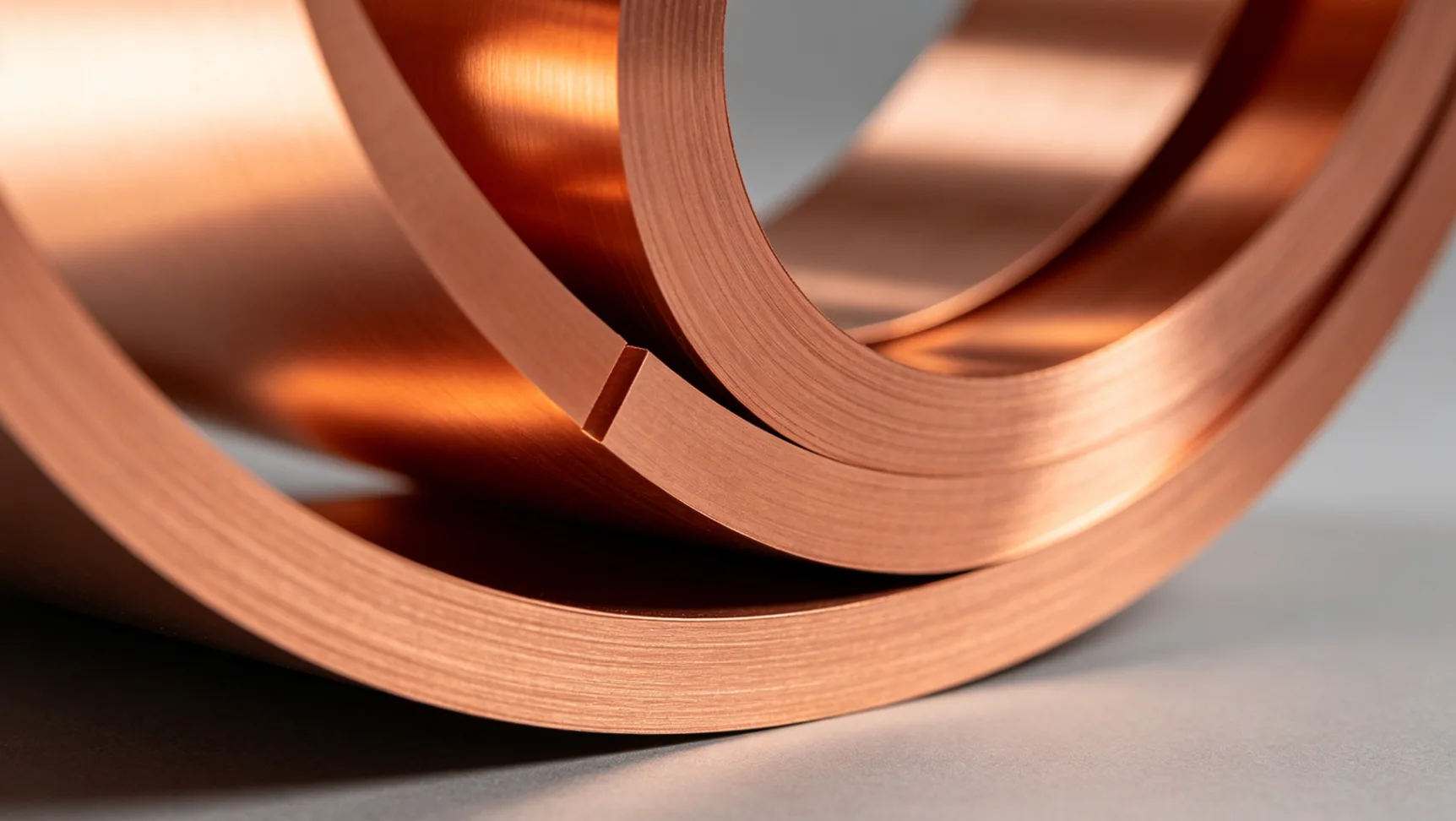
Selection Guide for Buyers and Engineers
The simplest way to choose between the two materials is to map the application against performance risk. Use the table below as a quick screening tool before requesting samples or specifications.
| Application Need | Recommended Material | Reason |
|---|---|---|
| High current transfer | High-conductivity copper alloy strip | Lower resistance and better thermal control |
| Repeated contact cycles | High-conductivity copper alloy strip | Better stability and fatigue resistance |
| General forming parts | Standard copper strip | Cost-effective and easier to process |
| High-reliability electronics | High-conductivity copper alloy strip | Supports tighter quality and performance targets |
- Check current load and temperature rise first.
- Review forming, stamping, and plating requirements.
- Confirm contact life and vibration exposure.
- Ask for batch traceability and test data.
- Match the strip grade to the final assembly, not just the drawing.
What This Means for Modern Manufacturing
The difference between high-conductivity copper alloy strip and standard copper strip is ultimately a difference in engineering intent. One is built for demanding electrical and thermal environments; the other is built for broader utility and simpler cost control. In advanced manufacturing, that distinction affects reliability, yield, and long-term field performance.
As electrification, miniaturization, and high-density packaging continue to expand, material selection is becoming more specialized. That is why buyers increasingly ask for application-specific strip products rather than generic copper grades. The most effective procurement strategy is to define the operating environment first, then choose the strip that best supports it.
FAQ
1. Is high-conductivity copper alloy strip always better than standard copper strip?
No. It is better only when the application needs higher electrical efficiency, thermal stability, or stronger contact reliability. For simple parts with lower current and less heat, standard copper strip may be more economical and fully adequate. The right choice depends on the component’s duty cycle, not on conductivity alone.
2. Does a higher conductivity grade automatically mean lower strength?
Not necessarily, but there is usually a trade-off between conductivity and mechanical strength. Alloy design tries to balance both properties so the strip can carry current and still survive stamping, bending, and service loads. Engineers should review the full property set, not just the conductivity number.
3. Where is high-conductivity copper alloy strip most commonly used?
It is commonly used in EV charging systems, high-voltage connectors, relays, semiconductor lead frames, and precision electronic parts. These applications need stable current transfer and consistent performance under heat, vibration, or repeated cycling. In such cases, material stability can be as important as raw conductivity.
4. Can standard copper strip be used in electric vehicle parts?
Yes, but only in less demanding EV components where the electrical load, temperature, and contact life are moderate. For critical power paths, charging interfaces, and safety-related assemblies, engineers often prefer a more specialized copper alloy strip. The final decision should be based on the actual operating conditions.
5. What should buyers request before selecting a strip supplier?
Buyers should request conductivity data, mechanical properties, surface condition details, and batch traceability records. For industrial procurement, consistency across lots is often more important than a single test result. A reliable supplier should also support application matching, process guidance, and quality documentation.