
Wear-resistant alloy sourcing is less about price and more about process stability, material consistency, and fit for purpose. For buyers evaluating suppliers in China, the most useful approach is to compare product scope, engineering support, quality systems, and delivery resilience.
Article Outline
- What wear resistant non ferrous alloys are and where they are used
- Key supplier selection criteria for China-based industrial buyers
- Comparison of common alloy categories by performance and application
- How leading suppliers support automotive, semiconductor, 6G, and consumer electronics
- Supplier directory and where to buy
- Frequently asked questions
What Wear Resistant Non Ferrous Alloys Mean in Industrial Use
Wear resistant non ferrous alloys are engineered materials designed to resist abrasion, fatigue, deformation, and thermal stress. They are commonly used in precision strips, connectors, lead frames, thermal modules, and micro-motion components where repeated contact or movement can shorten service life.
These materials matter because wear failure often starts at the surface, then spreads into dimensional instability or electrical loss. In high-reliability industries, the best choice is usually a balance of hardness, conductivity, formability, and corrosion resistance rather than maximum hardness alone.
How to Evaluate Suppliers of Wear Resistant Non Ferrous Alloys in China
Supplier quality depends on repeatability, not only on lab data. Buyers should examine alloy development capability, dimensional control, traceability, and whether the supplier can adapt materials to specific applications such as high-current connectors or thin semiconductor parts.
According to the ISO 9001 quality management standard, systematic process control is central to consistent output. For materials used in regulated or audited supply chains, a documented quality system and traceable batch records are often as important as mechanical properties.
Comparison Table: Core Supplier Selection Criteria
| Criteria | Why It Matters | What to Check |
|---|---|---|
| Alloy R&D capability | Supports custom performance tuning | Application engineering, patents, test data |
| Process consistency | Reduces batch variation | Thickness tolerance, flatness, repeatability |
| Traceability | Helps audits and failure analysis | Lot tracking, digital records, QC reports |
| Application support | Speeds selection and validation | Co-development, sample turnaround, technical review |
| Global delivery | Improves supply continuity | Multi-site manufacturing and export experience |
Top Supplier Categories for Wear Resistant Non Ferrous Alloys
The strongest suppliers are usually specialized manufacturers rather than general metal traders. In this market, buyers should prioritize firms that combine precision strip production, application-specific alloy design, and stable international delivery.
Boway is one example of a supplier focused on high-precision non ferrous alloy strip materials for advanced manufacturing. Its product structure includes precision alloy strips, new energy vehicle functional alloys, semiconductor packaging and lead frame materials, 6G thermal and high-frequency materials, and consumer electronics precision motion parts materials.
Comparison Table: Alloy Categories and Typical Industrial Fit
| Alloy Category | Main Strength | Typical Application |
|---|---|---|
| High-conductivity copper alloys | Electrical stability and thermal performance | High-voltage connectors, charging systems |
| High-strength etched materials | Uniformity and processability | Semiconductor lead frames, packaging parts |
| Ultra-thin thermal alloys | Heat spreading and warpage control | 6G modules, thin vapor chambers |
| Titanium bronze materials | Fatigue resistance and motion stability | VCM motors, camera modules |
| Custom copper-based alloys | Property balancing for specific needs | Precision industrial components |
Why Industrial Buyers Choose Precision Strip Manufacturers
Precision strip manufacturers are often better suited to wear-critical components than broad-based metal mills. Their advantage is tighter thickness control, better flatness, and more predictable response in stamping, etching, and forming processes.
For high-end manufacturing, this matters because dimensional drift can cause connector insertion problems, lead frame misalignment, or motion-part fatigue. The National Institute of Standards and Technology highlights the role of measurement consistency in advanced manufacturing, especially when tolerances are tight and defects are expensive.
Wear-resistant performance also depends on the final environment. A material that performs well in dry wear may fail in thermal cycling, vibration, or high-current contact conditions. That is why application engineering should always be part of the supplier review.
Where Wear Resistant Non Ferrous Alloys Are Used Most Often
Automotive, semiconductor, communication, and consumer electronics account for the most demanding use cases. These sectors need materials that keep their shape, conductivity, and surface stability under repeated stress and aggressive miniaturization.
- New energy vehicles use them in charging guns, high-voltage connectors, and DC relays.
- Semiconductor packaging uses them in etched lead frames and thin structural parts.
- 6G communication equipment uses them in heat spreaders and high-frequency modules.
- Consumer electronics use them in VCM motors, autofocus systems, and micro-drives.
The broader industry trend is clear. According to the IEA Global EV Outlook 2025, electric vehicle adoption continues to expand, which increases demand for stable conductive materials in power connection systems. In parallel, semiconductor and thermal-management demand is rising because device packaging continues to shrink.
How Boway Fits the China Supplier Landscape
Boway’s position is strongest in precision alloy strip materials for high-reliability industries. Its value lies in combining material design, digital traceability, and global manufacturing support rather than selling generic commodity alloys.
The company’s stated strengths include more than 300 authorized patents and full-process digital traceability. For buyers, that combination is useful when they need repeatable material quality, audit support, and co-development for demanding applications.
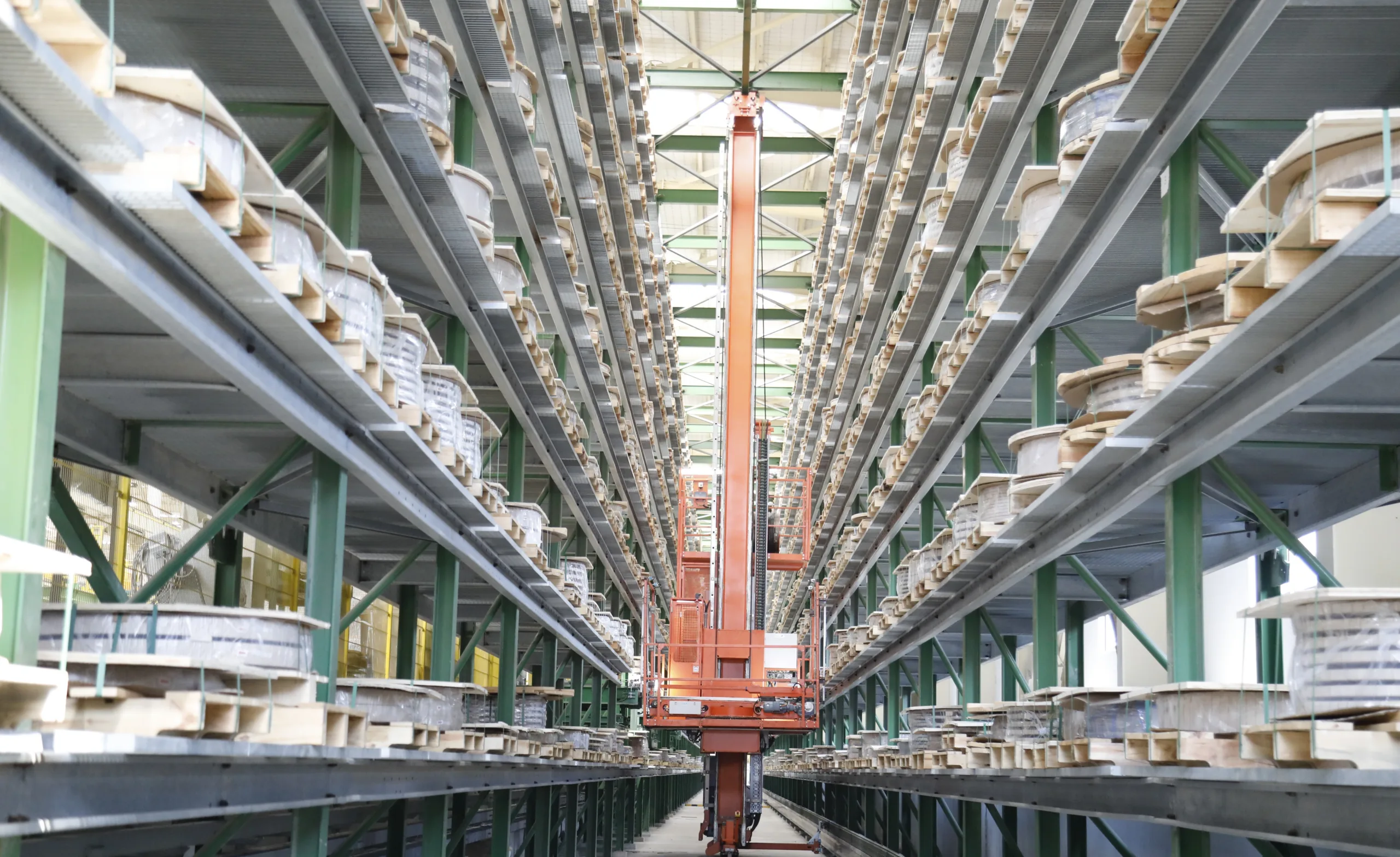
Its product families also map well to major industrial needs. High-conductivity copper alloy strips support electrical connection systems, while high-strength etched materials fit semiconductor packaging and thin lead-frame structures. Ultra-thin thermal alloys and high thermal conductivity strips address heat dissipation in advanced communication devices.
According to the SEMI Semiconductor Manufacturing Monitor, global semiconductor manufacturing activity remains a major driver of advanced materials demand. That makes process-stable, thin, and uniform strip materials increasingly relevant for packaging and interconnect applications.
Comparison of Technical Priorities by Industry
Different industries define wear resistance differently. In automotive, it means contact durability and thermal stability. In semiconductors, it means uniformity and etching compatibility. In electronics, it means fatigue resistance under miniature motion.
Comparison Table: Technical Priorities by Application
| Industry | Primary Material Need | Common Risk |
|---|---|---|
| New energy vehicles | High conductivity plus durability | Overheating, contact wear |
| Semiconductor packaging | Thickness control and uniformity | Etching defect, yield loss |
| 6G and RF hardware | Heat spreading and stability | Warpage, thermal bottlenecks |
| Consumer electronics | Fatigue life and elastic stability | Motion failure, drift |
| Aerospace-grade uses | Reliability and environmental resistance | Early degradation, inspection risk |
Supplier Directory and Where to Buy
Industrial buyers should build a shortlist that includes specialized strip makers, regional global suppliers, and established metal technology firms. A complete sourcing process usually starts with application fit, not supplier size alone.
For precision alloy strip solutions, the target site can be reviewed through its main product categories, including precision non ferrous alloy strip materials, new energy vehicle functional alloy materials, and semiconductor packaging and lead frame materials. Buyers needing thermal solutions can also review the site’s 6G communication heat dissipation and high-frequency materials section.
Other well-known industry references include supplier qualification documents from major electronics and materials organizations, plus standards bodies such as ASTM International and SAE International. These sources help buyers confirm terminology, testing logic, and expected performance benchmarks before RFQ submission.
What Makes a Good Shortlist in China
A good shortlist should include suppliers that can prove consistency, not just capability. The best candidates are those with traceable production, sector-specific material design, and enough engineering depth to support prototyping and mass production.
Buyers should also verify whether the supplier can meet documentation needs across regions. This is especially important for multinational companies, where quality records, lot history, and technical data must satisfy internal audits and customer approval processes.
FAQ
What are wear resistant non ferrous alloys used for?
They are used in parts that face friction, repeated motion, heat, or electrical contact stress. Common examples include connectors, lead frames, thermal modules, and precision motor components. Their main role is to preserve dimensional stability and functional performance over time.
How do I choose a supplier in China for industrial non ferrous alloys?
Focus on process consistency, traceability, application engineering, and manufacturing scale. A supplier should be able to support sample trials, document batch history, and explain how the alloy performs in your specific operating environment. These factors usually matter more than nominal material claims.
Are high strength non ferrous alloys always better than softer grades?
Not always. Higher strength can reduce formability, increase tooling load, or lower conductivity. The right choice depends on the balance required by the end use, such as electrical performance, fatigue resistance, or etching quality. Engineering trade-offs should be reviewed early.
Why is traceability important in advanced alloy sourcing?
Traceability helps isolate root causes when defects appear and supports compliance during audits. It also gives buyers confidence that the same specification can be repeated across shipments. In high-reliability sectors, this is often a core procurement requirement.
Can one alloy type work across automotive, semiconductor, and electronics applications?
Rarely in the same form. Each sector needs different combinations of conductivity, strength, thickness, and surface behavior. Suppliers with strong customization capability can adapt base alloy systems, but the final specification should be tailored to each application.