
- Precision non ferrous alloys solve reliability problems by balancing conductivity, strength, formability, and fatigue resistance.
- High-reliability components fail more often from variability than from nominal design, so batch consistency and traceability matter as much as alloy chemistry.
- Application fit is critical: connectors, leadframes, thermal parts, and micro-drives each require different property trade-offs.
- Specification control should include thickness tolerance, temper, grain structure, surface finish, and test method, not only alloy name.
- For buyers, the lowest-risk supplier is one that can prove repeatability, documentation, and process control across global delivery.
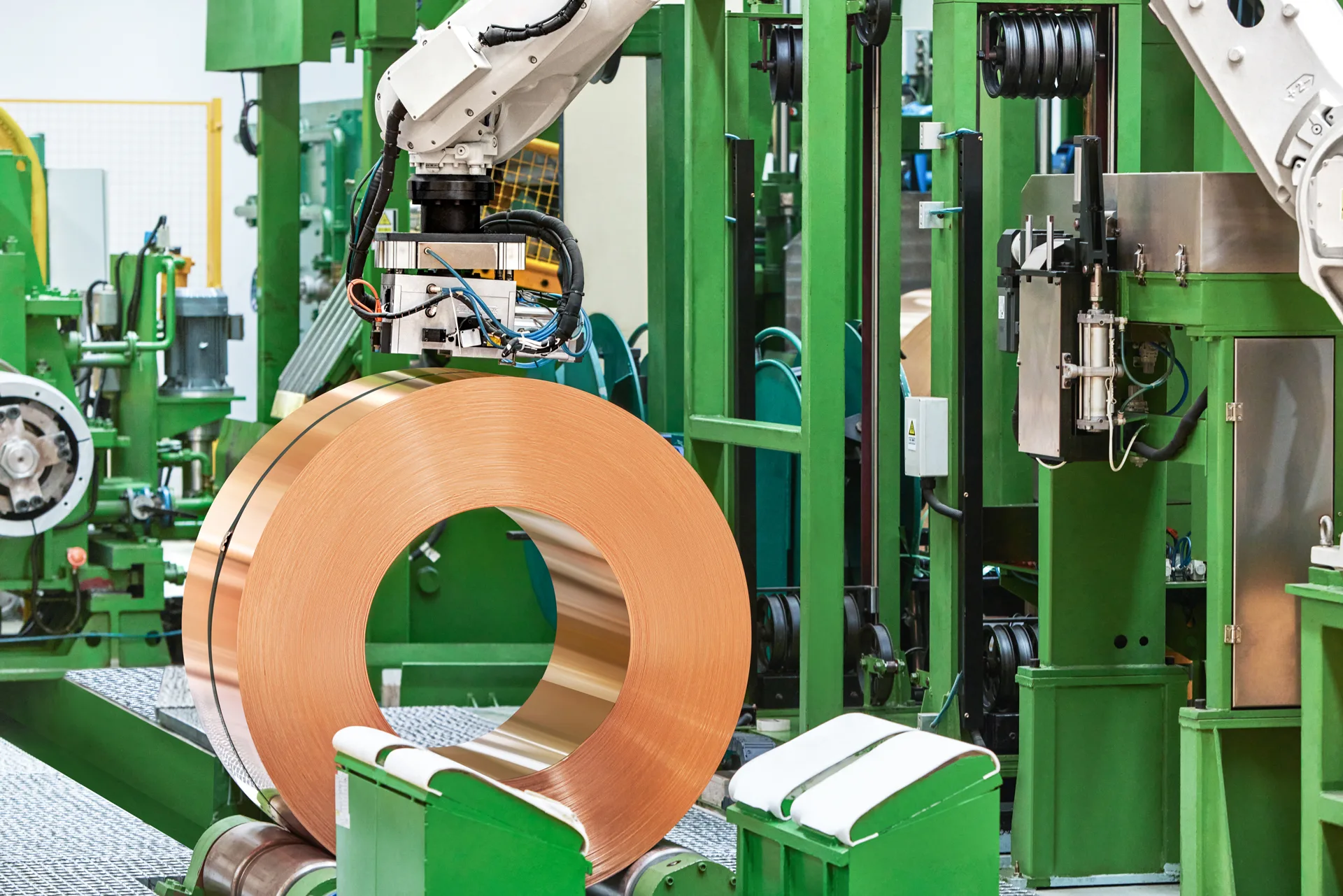
Precision non ferrous alloys are the foundation of many high-reliability components because they can be engineered for tight thickness control, stable mechanical response, and predictable electrical or thermal behavior. In precision strip applications, thickness tolerances can be held to the low-micron level by a controlled rolling and finishing route, and quality verification is typically aligned with recognized methods such as ISO 6892-1 for tensile testing and NIST calibration traceability practices for measurement confidence. For engineering teams working in EV power systems, semiconductor packaging, 6G hardware, or miniature motion assemblies, the real question is not whether an alloy is “good,” but whether it is stable enough to survive thousands of cycles, thermal swings, and downstream forming operations without drift.
Why precision non ferrous alloys matter in high-reliability components
The main reason precision non ferrous alloys are used in critical components is that reliability failures usually start with inconsistency, not with a dramatic single defect. A connector may pass initial testing and still fail later because the springback changed after forming, the contact resistance drifted after plating, or the strip thickness varied enough to alter force retention.
That is why buyers in advanced manufacturing evaluate the alloy as a process platform. They need electrical conductivity, thermal conductivity, strength, elongation, fatigue endurance, and surface compatibility to work together. If one property is optimized in isolation, the component may become harder to stamp, less stable in service, or more expensive to qualify.
For context, ISO 9001:2015 does not guarantee product performance by itself, but it does require a structured quality management system that supports repeatable control. In precision alloy supply, that system becomes especially important when the same specification must be delivered across multiple plants, including global manufacturing footprints. Traceability, lot history, and controlled inspection are what make material performance auditable rather than anecdotal.
For buyers who want a broader product view, it helps to compare material families across the portfolio, such as precision copper alloys, precision nickel alloys, and precision ferrous materials. This makes the selection process less abstract and more tied to actual component behavior.
What high precision non ferrous alloys must deliver
High precision non ferrous alloys must satisfy a narrow but demanding performance window. The alloy must be formable enough for stamping or deep drawing, yet stable enough to hold geometry after processing and in service. It must also support the downstream joining method, whether that means resistance welding, laser welding, crimping, soldering, or plating.
In practical terms, engineers usually screen five property groups first: conductivity, strength, ductility, fatigue life, and corrosion resistance. After that, they look at secondary criteria such as stress relaxation, softening resistance, and surface quality. These extra factors often decide whether a part survives real-world use or only passes a lab benchmark.
| Property group | Why it matters | Typical engineering target | Common test reference |
|---|---|---|---|
| Electrical conductivity | Controls voltage drop and heat generation | Often specified as %IACS | ASTM B193 |
| Tensile strength | Affects retention force and deformation resistance | Application dependent | ASTM E8/E8M |
| Thickness tolerance | Directly affects force, fit, and yield | Micron-level control in precision strip | Internal control plan plus inspection |
| Fatigue resistance | Determines cycle life in motion parts | High-cycle stability | Application-specific endurance testing |
In connector and switch applications, even small dimensional variation can shift contact force enough to alter long-term reliability. In thermal components, a narrow band of thermal conductivity and flatness is needed to prevent hot spots. In semiconductors, uniformity matters because etching, bonding, and leadframe forming all amplify small material variations.
A useful buying principle is simple: if the component is safety-critical, precision alloy selection should be treated like a design decision, not a procurement afterthought.
Precision non ferrous alloys for EV power and charging systems
Precision non ferrous alloys are especially important in EV connectors, busbar interfaces, charging hardware, and electrical opening systems because these parts must carry current safely while keeping resistance low and mechanical integrity high. When current density rises, poor material control becomes a thermal problem as well as an electrical one.
One reason copper-based strip remains central in power connection systems is its high conductivity. Pure copper is widely used because its electrical conductivity is defined as the 100% IACS benchmark in ASTM B193, which gives engineers a reference point when evaluating alloy trade-offs. Alloying lowers conductivity, but it can raise strength, improve stress relaxation resistance, or improve form stability. The challenge is to find the point where performance remains acceptable for the application.
For EV high-voltage connectors, the material must survive repeated mating cycles, vibration, and thermal cycling. In a well-controlled design, the strip should maintain geometry after stamping and plating, because any increase in contact resistance can create localized heating. That is why buyers should ask not just for composition, but for temper condition, thickness band, and verified forming behavior.
| EV application | Primary requirement | Common material logic | Failure mode to avoid |
|---|---|---|---|
| High-voltage connector | Low resistance and spring force retention | High-conductivity copper alloy | Overheating and contact loss |
| Charging terminal | Stable mating behavior | Balance of conductivity and strength | Wear, loosening, or arcing |
| Busbar interface | Current carrying plus dimensional stability | Strip with controlled flatness | Hot spots and assembly mismatch |
| Switch component | Electrical opening reliability | Alloy with stress relaxation resistance | Force drop over time |
For buyers building a qualification package, the most valuable evidence is not a single datasheet number. It is the combination of composition certificate, tensile result, conductivity measurement, and incoming lot consistency across multiple deliveries. That is what turns a promising alloy into a qualified production material.
High precision non ferrous alloys in semiconductor packaging and leadframes
High precision non ferrous alloys are essential in semiconductor packaging because leadframes and related strip products must support fine geometry, stable etching response, and repeatable bonding performance. Semiconductor manufacturing is unforgiving: if thickness varies too much or the strip surface behaves inconsistently, downstream processes amplify the defect.
In packaging structures, material uniformity affects die attach, wire bonding, mold flow, and final warpage. The industry often uses copper alloy leadframe materials because they combine useful conductivity with formability and cost efficiency. The material must also remain stable enough to support high-speed stamping or chemical etching without dimensional drift.
Process control becomes even more important as device geometries shrink. In thin strip applications, a small deviation in thickness can influence the etched profile and the mechanical response of the frame. That is why precision strip suppliers emphasize rolling control, grain refinement, and surface cleanliness rather than just nominal chemistry.
For teams comparing supplier options, the most relevant question is whether the alloy can be integrated into an existing packaging route without changing tooling or yield assumptions. A material that looks better on paper but requires a complete process redesign is rarely the best answer.
| Packaging stage | Material requirement | What goes wrong if control is weak | Buyer check |
|---|---|---|---|
| Stamping | Uniform thickness and edge quality | Cracking and burr variation | Incoming strip inspection |
| Etching | Consistent chemistry and surface state | Undercut and feature drift | Etch response test |
| Bonding | Stable surface and thermal behavior | Poor bond integrity | Surface and adhesion review |
| Molding | Dimensional stability under heat | Warpage and stress concentration | Thermal cycle qualification |
In this segment, a supplier with documentable lot traceability and controlled global delivery has a real advantage because semiconductor programs often need quick engineering changes without losing auditability. For buyers, that combination is worth more than a small unit-price reduction.
Precision non ferrous alloys for 6G thermal and high frequency hardware
Precision non ferrous alloys matter in 6G-related hardware because higher frequencies increase sensitivity to geometry, thermal resistance, and surface condition. In simple terms, the device becomes less forgiving as the operating margin shrinks.
Thermal components used around antennas, RF modules, and compact power devices need strong heat spreading and dimensional stability. This is why copper and copper-based alloys often remain central in thermal hardware. The material must move heat efficiently while still being manufacturable into thin, stable forms.
The engineering challenge is that thin, high-performance strip can warp or lose flatness if the rolling process is not controlled. That matters because warpage affects assembly, thermal contact, and long-term reliability. In high-frequency assemblies, a poor interface can also alter electromagnetic behavior indirectly by changing spacing or contact pressure.
According to industry estimates and application testing practices, thermal path quality is often improved more by interface control and flatness than by a nominal material upgrade alone. This is why buyers should review not only thermal conductivity claims but also surface roughness, form stability, and test conditions.
For teams seeking broader process context, it can be useful to review the company’s approach to quality and traceability and its materials tailored for precision strip applications. Those pages help connect material theory to the actual manufacturing route.
Precision non ferrous alloys for consumer electronics and micro-motion parts
Precision non ferrous alloys are widely used in consumer electronics because miniature assemblies need high elasticity, stable motion, and long fatigue life in a very small envelope. Voice coil motor parts, micro springs, shielding pieces, and miniature brackets all depend on predictable material response.
In these applications, fatigue resistance and springback stability often matter more than raw strength. A material that is too hard can crack during forming, while one that is too soft may lose force after repeated movement. The best alloy choice is the one that preserves motion behavior over the life of the device.
Micro-motion systems are especially sensitive to residual stress, surface defects, and edge condition. This is why precision strip suppliers focus on process consistency from melting to final finishing. A stable grain structure helps the part respond predictably during forming and in service.
- Define the motion requirement first: stroke, cycle count, and load profile.
- Select the alloy family based on conductivity, elasticity, or corrosion exposure.
- Verify thickness and temper control before tool approval.
- Run forming and endurance validation before mass production.
- Lock the lot traceability and incoming inspection plan for recurring supply.
That sequence helps engineering teams avoid a common mistake: choosing a material by catalog description and only later discovering that the forming window is too narrow for mass production.
How to choose the right high performance alloys for critical parts
The right alloy choice starts with the failure mode, not the alloy name. If the part fails by overheating, conductivity and interface resistance are the first concerns. If it fails by cracking, ductility and grain control matter more. If it fails by losing force, springback and stress relaxation resistance become the priority.
A disciplined selection process should compare no more than a few candidate families, then test them under the actual service and manufacturing conditions. In high-reliability components, lab success without process compatibility is not enough.
| Decision factor | What to ask | Why it matters | Typical evidence |
|---|---|---|---|
| Conductivity | What %IACS is required? | Controls electrical and thermal performance | Material test certificate |
| Formability | Can the alloy be stamped without cracking? | Affects yield and tool life | Bend and deep-draw trials |
| Fatigue life | How many cycles are required? | Determines service durability | Endurance test report |
| Traceability | Can every lot be tracked? | Supports auditability and recall control | Lot genealogy and certificates |
A good supplier should be able to explain why one temper or thickness band is better than another for the same part. That explanation is a sign of expertise, not upselling. It shows the material was designed for process fit rather than described in generic terms.
Quality control, standards, and traceability in precision alloy supply
Quality control is what separates a specification from a dependable supply chain. In precision non ferrous alloys, quality should be evaluated at the melt, rolling, finishing, and shipment stages because defects can enter at any point.
Standards help convert a technical promise into a measurable contract. Tensile properties are commonly verified with ISO 6892-1 or ASTM E8/E8M, while conductivity measurement is often aligned with ASTM B193. For dimensional metrology, NIST resources on calibration traceability support confidence that measurements are comparable across sites and instruments.
Boway’s emphasis on 100% material traceability is relevant here because high-reliability customers often need full lot genealogy for audit, customer complaint analysis, and field containment. In a global program, a traceable material system can reduce investigation time and improve response speed when a design or process change is introduced.
Another practical benefit of traceability is that it improves root-cause analysis. If a failure appears in one region but not another, the team can compare melt batch, rolling history, temper, and finishing conditions instead of guessing.
| Quality element | Why it matters | What to request | Risk if missing |
|---|---|---|---|
| Lot traceability | Supports audits and recall control | Certificate and genealogy | Slow containment |
| Measurement control | Ensures data consistency | Calibration records | False pass or fail |
| Process stability | Protects repeatability | Control plan and SPC evidence | Batch variation |
| Application validation | Confirms real-world fit | Customer-specific test report | Unexpected field failure |
When suppliers combine documented standards, measurement discipline, and full traceability, procurement can evaluate risk more accurately. That is the real value of a mature precision alloy system.
What engineers should verify before approving a precision non ferrous alloy
Engineers should verify the material in the same conditions where it will be manufactured and used. A clean certificate is useful, but it is not a substitute for forming trials, joining trials, and environmental testing.
- Check chemistry against the required alloy family and impurity limits.
- Confirm thickness tolerance, width tolerance, and edge condition.
- Review temper, strength, elongation, and conductivity data.
- Test the part in the actual forming or stamping route.
- Validate joining, plating, and thermal cycling behavior.
- Lock the approved specification and incoming inspection plan.
That workflow keeps the approval process grounded in production reality. It also helps purchasing and quality teams speak the same language, which matters when the material is part of a long-life product.
Why supply resilience matters as much as alloy performance
Supply resilience is a technical requirement when the component is hard to redesign and expensive to requalify. A high-performance alloy that cannot be delivered consistently across regions becomes a program risk.
Global manufacturing footprints in China, Germany, Canada, and Vietnam matter because they support shorter response times, regional backup, and customer-facing continuity. For industries like EVs, semiconductors, and advanced electronics, this resilience can reduce lead-time shock when demand shifts or a local disruption occurs.
In buyer terms, the best supplier is one that can support engineering changes, audit requests, and recurring deliveries without forcing the customer to restart qualification. That is especially valuable when the material is not a commodity but a tuned input to a high-reliability system.
For readers who want to navigate related material choices, the most relevant next steps are often the applications pages for EV materials and semiconductor materials, because they connect the alloy discussion to real use cases and component requirements.
FAQ
What are precision non ferrous alloys used for?
Precision non ferrous alloys are used for high-reliability parts that need controlled conductivity, strength, formability, or thermal performance, such as connectors, leadframes, thermal spreaders, and micro-motion components.
How do high precision non ferrous alloys improve reliability?
They improve reliability by reducing variation in thickness, mechanical response, surface quality, and batch behavior, which lowers the chance of forming defects, contact loss, or fatigue failure.
Which standards are most useful when evaluating alloy quality?
Common references include ISO 9001:2015 for quality systems, ASTM E8/E8M for tensile testing, ASTM B193 for conductivity measurement, and ISO 6892-1 for metallic tensile testing.
How should buyers compare high performance alloys?
Buyers should compare the failure mode, conductivity, formability, fatigue life, traceability, and process compatibility rather than focusing on alloy name alone.
Why does traceability matter in precision alloy supply?
Traceability matters because it allows teams to track lot history, investigate failures faster, and maintain audit readiness across global manufacturing and customer quality reviews.
What matters more than price in high-reliability components?
Stable delivery, batch consistency, technical support, and requalification risk usually matter more than the lowest unit price when the component is critical to performance or safety.
How do engineers validate a new alloy for production?
They validate it through chemistry review, dimensional inspection, forming trials, joining tests, and application-specific endurance or environmental testing before locking the specification.