
- Non ferrous alloys are essential in EV power paths because conductivity and thermal control directly affect safety and efficiency.
- Alloy selection is a trade-off among conductivity, strength, formability, corrosion resistance, and fatigue life.
- Traceability, batch consistency, and standards-based qualification matter as much as nominal material properties.
- Precision strip and engineered alloy products are preferred where dimensional stability and repeatability drive downstream yield.
Why automotive manufacturers depend on non ferrous alloys is ultimately a design question, not a purchasing slogan: the best material must satisfy electrical, thermal, mechanical, and manufacturing constraints at the same time. In electric vehicles, a small improvement in resistance or heat dissipation can influence system losses, connector temperature rise, and assembly reliability, while precision flatness and thickness control affect stamping and welding outcomes. Standards such as ISO 16750-4:2023 and ISO 6722-1:2019 frame how automotive electrical components are evaluated under environmental and cable-performance conditions, and the industry increasingly relies on tightly controlled alloy strip with verified traceability. For buyers comparing non ferrous alloy products and precision strip materials, the real value is predictable behavior across thousands of parts, not just a single lab number.
Why non ferrous alloys for automotive industry are so widely used
Non ferrous alloys solve the central material problem in automotive engineering: they offer performance that steel alone cannot provide in electrical and thermal roles.
Automotive platforms now combine high-voltage electrification, compact packaging, and stricter mass targets, so materials must do more than carry load. Copper alloys are favored where conductivity and joining reliability matter, while aluminum alloys are preferred where mass reduction and thermal spreading are priorities. In practical vehicle architecture, those two families appear in busbars, battery interconnects, shielding parts, terminals, heat spreaders, and connector springs. For manufacturers, this diversity means the question is not “metal or no metal”; it is “which alloy family fits this function, process, and lifetime target.”
The shift toward electrified vehicles also raises the cost of failure. A connector that runs hot can accelerate oxidation and increase contact resistance, while a spring material that relaxes too quickly can reduce contact force and trigger intermittent faults. That is why engineers often compare non ferrous alloys for automotive industry applications by looking at conductivity, tensile strength, elongation, fatigue performance, and heat resistance together rather than in isolation.
| Common automotive function | Typical alloy family | Why it is chosen | Key numeric target |
|---|---|---|---|
| Busbars and power links | Copper alloys | Low resistance and stable current carrying | Electrical conductivity often specified in % IACS |
| Heat spreaders | Aluminum alloys | Low mass and good thermal diffusion | Density about 2.7 g/cm3 for aluminum |
| Connector springs | Copper alloys | Elastic recovery and contact force retention | High cycle fatigue resistance required |
| Shielding and EMI parts | High performance alloys | Balance of conductivity, formability, and corrosion control | Thickness tolerance often in tens of microns |
For manufacturers, the benefit is system-level efficiency. According to the U.S. Department of Energy, reducing vehicle mass can improve fuel economy or energy efficiency, and lightweighting is one reason aluminum remains central in transportation design; see the Vehicle Technologies Office. That same logic applies in EVs, where mass reduction can support range while maintaining crash and thermal requirements.
How high performance alloys support EV electrification
High performance alloys are used in the automotive sector because electrification compresses more electrical and thermal function into less space.
EV systems place unusual stress on materials. Battery pack interconnects, high-voltage connectors, charging contacts, and power distribution units must handle current, heat, vibration, humidity, and repeated thermal cycling. A material that performs well in room-temperature conductivity may still fail if it softens too much after heat exposure or loses spring force after repeated loading. This is where high performance alloys become critical: they are engineered to keep their properties after forming, joining, and long-term service.
In many designs, the engineering goal is a balanced alloy rather than a single-property champion. For example, pure copper is excellent for conductivity, but a copper alloy may be chosen when higher strength, better stress relaxation resistance, or improved stamping behavior is needed. Aluminum alloys, meanwhile, are often selected for enclosures and thermal structures where reduced weight and controlled heat flow are more important than absolute conductivity. For compact high-voltage assemblies, the final choice depends on current density, temperature rise limits, corrosion environment, and manufacturing route.
| Property | Copper | Aluminum | Why it matters in vehicles |
|---|---|---|---|
| Density | 8.96 g/cm3 | 2.70 g/cm3 | Mass reduction and packaging efficiency |
| Thermal conductivity | about 401 W/m-K | about 237 W/m-K | Heat spreading and thermal management |
| Electrical conductivity | about 100% IACS | lower than copper, alloy-dependent | Losses and temperature rise |
| Corrosion behavior | good with proper alloying and finish | good with proper coating control | Long-term durability in road environments |
These values are widely referenced in engineering handbooks and materials data sheets, but the automotive decision goes beyond raw numbers. The best alloy is the one that stays stable after forming, joining, coating, and vibration exposure. For that reason, OEMs and tier suppliers increasingly request material evidence packages, not just certificates of chemistry.
Where non ferrous alloy products create the most value in automotive systems
Non ferrous alloy products matter most in parts where failure is visible, expensive, or safety-critical.
The highest-value automotive applications are often not the largest parts. Small connectors, lead frames, terminals, springs, and current-carrying strips can determine the reliability of an entire electrical subsystem. In EV architecture, the stakes are even higher because higher voltage increases sensitivity to contact quality and thermal stability. If a component deforms, oxidizes, or cracks, the problem can propagate into downtime, warranty claims, or safety recalls.
Precision strip is especially relevant in these applications because thickness variation, burr formation, and flatness can affect downstream stamping and assembly. Boway’s focus on precision strip aligns with this need for repeatability across large production volumes. For procurement teams, that means fewer process adjustments. For quality teams, it means easier auditability. For design engineers, it means a narrower spread between lab expectations and line performance.
When selecting high performance alloys for vehicle programs, engineers commonly examine four use cases:
- High-voltage connectors and terminals where conductivity and contact retention matter.
- Busbars and current paths where resistance and heat rise must be tightly controlled.
- Thermal plates and shields where heat spreading and dimensional stability are critical.
- Spring and actuation parts where fatigue resistance and elastic recovery drive service life.
A useful rule is that the more mission-critical the function, the more buyers prioritize repeatability over nominal cost per kilogram. That is why high-reliability automotive programs often prefer qualified alloy strip suppliers with stable process windows rather than general-purpose commodity sourcing.
Material selection criteria for automotive manufacturers
Material selection succeeds when the alloy is matched to the failure mode, not just the print requirement.
Automotive engineers usually compare non ferrous alloys across six criteria: conductivity, tensile strength, elongation, fatigue resistance, corrosion resistance, and processability. In practice, the best candidate is the one that passes not only a datasheet screen but also stamping, brazing, welding, coating, and durability tests. The trade-off is straightforward: higher strength can reduce formability, while higher conductivity often limits the amount of strengthening alloying elements that can be added.
For procurement teams, the selection process is also about supply chain robustness. A material may look ideal on paper but still be risky if batch-to-batch variation is large or if global delivery is unreliable. This is why many automotive buyers now request traceability by heat, lot, and processing route. In a high-volume vehicle program, a tiny variation in hardness or thickness can alter forming force, springback, or contact pressure across millions of parts.
| Selection criterion | What engineers look for | Typical test or control | Why it matters |
|---|---|---|---|
| Conductivity | % IACS or W/m-K | Standard conductivity measurement | Heat generation and electrical losses |
| Strength | MPa tensile strength | Mechanical tensile test | Load-bearing and deformation resistance |
| Formability | Elongation percent | Cold forming evaluation | Stamping yield and crack prevention |
| Fatigue life | Cycles to failure | Repeated loading tests | Connector and spring durability |
| Traceability | Heat and lot records | Material genealogy review | Audit readiness and recall containment |
For dimensional control, automotive buyers often specify tight strip tolerances because the downstream process is sensitive. ISO 2768 is commonly referenced for general tolerancing, but precision strip applications usually demand much tighter internal controls than generic machining tolerances. That is especially true in connector and lead-frame production, where very small geometry shifts can change assembly force or etch behavior.
Why traceability and consistency matter more than price alone
Traceability is now a core performance requirement in automotive materials, not just a compliance feature.
In high-volume vehicle manufacturing, consistency is a financial and technical asset. A low-cost material that varies in thickness, hardness, or chemistry can increase scrap, slow stamping lines, and create hidden reliability issues. By contrast, a fully traceable alloy stream allows engineering teams to isolate problems quickly, protect yield, and support customer audits. This is especially important for EV programs, where the same material may be used across multiple platforms and global plants.
Boway’s emphasis on 100% material traceability fits what automotive quality teams typically want: lot genealogy, controlled processing history, and a clear record of inspection points. In practice, this supports APQP-style development, PPAP submissions, and customer-specific quality approval. It also helps when a supplier must demonstrate stable output across multiple manufacturing sites.
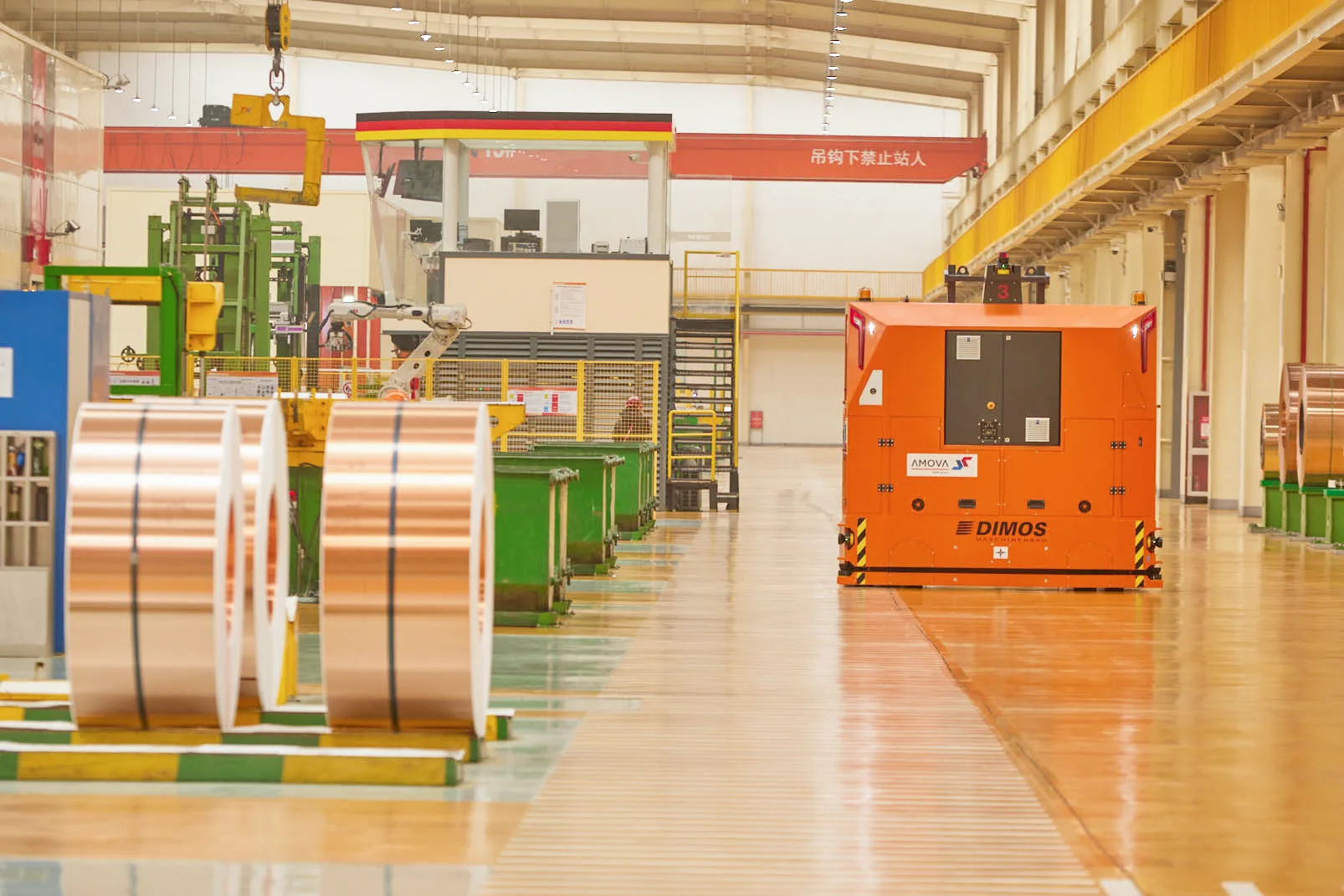
The traceability advantage becomes even more valuable when the material is custom-developed. If an alloy is tuned for a specific balance of conductivity, strength, and formability, the customer must know not only the final chemistry but also how the process route affected microstructure. That is one reason advanced buyers increasingly choose manufacturers with digital manufacturing and global delivery capability rather than commodity distributors.
| Buying factor | Commodity supply | Traceable engineered supply | Impact on automotive programs |
|---|---|---|---|
| Batch consistency | variable | controlled by process windows | Lower scrap and fewer line stops |
| Audit support | limited documentation | lot-level records and inspection data | Easier customer qualification |
| Customization | standard grades only | application-specific development | Better fit to exact performance targets |
| Supply resilience | single-region exposure | multi-site manufacturing | Reduced disruption risk |
For global OEMs, the strategic value is clear: traceability lowers uncertainty, and lower uncertainty lowers total cost of ownership. That matters more than a small unit price difference when one platform can contain millions of identical parts.
How automotive manufacturers qualify non ferrous alloys
Qualification is where a promising alloy becomes a production-ready material.
Automotive qualification normally starts with chemistry verification, then moves into mechanical, thermal, electrical, and environmental testing. A material may pass tensile testing yet still fail after thermal aging or soldering. It may also look acceptable in a coupon test but behave differently after stamping and edge trimming. That is why qualification must reflect the real manufacturing route.
A practical qualification flow includes the following steps:
- Define the service environment, including temperature range, humidity, vibration, and electrical load.
- Set target properties such as conductivity, hardness, elongation, and springback tolerance.
- Run lab samples through forming, joining, and coating simulations.
- Test aged samples after thermal cycling and corrosion exposure.
- Lock down inspection plans, traceability rules, and change-control procedures.
Standards give this process structure. For example, ASTM D2244-24 is often used for calculating color differences in coatings, while metallic material characterization commonly relies on ASTM or ISO tensile and conductivity methods depending on the application. For automotive wiring and cable-related environments, ISO 16750 is widely used to frame electrical equipment exposure, vibration, and environmental conditions.
In a production setting, these tests are not academic. If a connector material loses spring force after heat aging, contact resistance can rise. If a strip edge cracks during forming, yield drops. If coating adhesion is poor, corrosion performance may fail in salt exposure. The most reliable suppliers therefore test not just material properties, but process-induced behavior after stamping, forming, and joining.
What non ferrous alloys mean for the future of automotive design
The future of automotive design depends on materials that enable compact, safe, and efficient systems.
As vehicles become more electrified and more software-defined, the material stack must support higher current density, smaller modules, and stronger thermal control. Non ferrous alloys are central to that transition because they allow designers to manage electricity and heat without giving up manufacturability. They also support lighter structures and more compact parts, which helps improve packaging and reduce subsystem complexity.
This is why advanced alloy development is moving toward tighter property windows, better surface control, and improved recyclability. In parallel, automotive engineers are asking for more than standard grades: they want application-specific alloy strip that can survive stamping, bonding, welding, and long service cycles with minimal variation. That is particularly true for next-generation battery systems, high-frequency electronics, and compact motor assemblies.
For buyers, the best procurement strategy is to evaluate suppliers on three levels: material capability, process control, and support depth. A supplier that can only sell a grade is less useful than one that can help tune the alloy for the application, verify performance data, and maintain traceability through delivery. That is where non ferrous alloy products with precision manufacturing and documented quality controls become strategically important.
From an engineering standpoint, the takeaway is simple: non ferrous alloys are not a legacy material choice. They are an enabling technology for electrified mobility, compact power electronics, and reliable vehicle architectures.
FAQ: non ferrous alloys for automotive industry
1. Why do automotive manufacturers use non ferrous alloys instead of steel in electrical parts?
They use non ferrous alloys because electrical parts need conductivity, thermal management, and stable contact behavior that steel cannot provide as effectively.
2. Which non ferrous alloy family is most common in EV power systems?
Copper alloys are most common where conductivity and joining reliability matter, while aluminum alloys are common where weight reduction and heat spreading are priorities.
3. What is the main technical trade-off in high performance alloys for automotive use?
The main trade-off is between conductivity, strength, and formability, since improving one property often affects another.
4. Why is traceability important for non ferrous alloy products?
Traceability helps quality teams control batch variation, support audits, and isolate issues quickly in high-volume vehicle programs.
5. How do engineers qualify non ferrous alloys for automotive applications?
They test chemistry, conductivity, tensile behavior, thermal aging, forming performance, and environmental durability before releasing the material to production.
6. Are precision strip materials important in automotive manufacturing?
Yes. Precision strip materials improve stamping accuracy, assembly consistency, and downstream yield in connectors, springs, and thin-function parts.
7. What should buyers ask a supplier before selecting an alloy for automotive use?
Buyers should ask about property data, process control, traceability, regional supply capability, and whether the supplier can support custom development and qualification.
Sources: ISO 16750-4:2023, ISO 6722-1:2019, U.S. Department of Energy Vehicle Technologies Office, ASTM D2244-24