
- Heat-resistant non ferrous alloys improve reliability by slowing creep, oxidation, and contact degradation.
- Material selection should be driven by operating temperature, load type, joining method, and conductivity targets.
- Batch consistency, traceability, and forming stability are as important as nominal alloy strength.
- Standards such as ISO 6507 and ASTM E8 help define how performance is measured, not just claimed.
High temperature non ferrous alloys are often chosen because equipment reliability depends on more than peak strength: it depends on how properties hold up after repeated thermal cycling, vibration, and electrical loading. For example, hardness is commonly verified with ISO 6507-1:2018, while tensile properties are measured under ASTM E8/E8M; both matter when a contact strip, connector, or precision spring must stay within specification after thousands of cycles. In high-reliability manufacturing, the same material family may be used in EV charging parts, semiconductor lead frames, and thermal management hardware, but each use case demands a different balance of conductivity, formability, and heat resistance.
Why high temperature non ferrous alloys matter for equipment reliability
Reliability starts to fail when temperature changes the material faster than the design can absorb the stress.
In many industrial assemblies, heat does not cause one dramatic break; it causes gradual drift in contact force, springback, surface finish, or dimensional stability. That drift is often enough to trigger resistance rise, intermittent electrical behavior, or fatigue cracks. Non ferrous alloys are used because copper-, nickel-, aluminum-, and titanium-based systems can be engineered to keep useful electrical and mechanical properties where plain steels may oxidize too quickly or where magnetic behavior is undesirable.
The key reliability advantage is property retention under thermal exposure. A component that looks acceptable at room temperature may fail after thermal cycling because creep reduces stress, oxidation increases contact resistance, or grain growth weakens fatigue resistance. In high current assemblies, even small contact degradation can create local heating, and local heating accelerates the same failure loop. This is why engineering teams rarely ask only for a material name; they ask for conductivity, softening resistance, dimensional tolerance, and process history.
For buyers evaluating high performance alloys or precision strip, the question is usually whether the alloy can hold its function after forming, joining, plating, and service heat. That is especially important when the final part must remain stable across repeated thermal load rather than just pass a one-time lab test.
Which industrial non ferrous alloys are used in hot equipment
The most reliable alloy choice depends on whether the design is electrical, structural, or thermally loaded.
| Alloy family | Typical reliability advantage | Common use case | What engineers watch |
|---|---|---|---|
| Copper alloys | High conductivity with improved strength | Connectors, busbars, contact strips | Softening resistance, contact force, oxidation |
| Nickel alloys | Excellent heat and corrosion resistance | Hot zones, springs, shielded assemblies | Creep, fatigue, scale formation |
| Aluminum alloys | Low mass and strong thermal response | Heat sinks, housings, thermal structures | Dimensional stability, joining behavior |
| Titanium alloys | High strength-to-weight ratio | Specialty hardware, corrosive environments | Forming, cost, joining process control |
Industrial non ferrous alloys are not interchangeable, even when they look similar on a datasheet. Copper-based grades often win when electrical performance is central, but they must be chosen carefully if the service temperature is high enough to soften the material or alter spring force. Nickel-based systems are often preferred when oxidation and creep are the dominant risk. Aluminum alloys are attractive in thermal management because low density helps system design, but they require careful control of joining and local stress. Titanium alloys can be valuable where mass reduction and corrosion resistance are critical, but they are typically selected for specific structural reasons rather than pure conductivity.
The most reliable sourcing decision is therefore application-first. If the component is part of a power path, conductivity and low contact resistance may outrank everything else. If the part is a spring or retaining feature in a heated enclosure, stress relaxation may matter more than conductivity. If the part sits near aggressive media, corrosion and thermal oxidation may dominate.
How specialty non ferrous alloys reduce failure modes in practice
Specialty non ferrous alloys improve reliability by controlling the exact failure mode the engineer fears most.
In field conditions, high temperature failures usually fall into four categories: creep, oxidation, fatigue, and contact instability. Creep is the slow deformation of a part under stress and heat. Oxidation changes surface condition and can raise contact resistance. Fatigue appears after many thermal or mechanical cycles. Contact instability shows up as intermittent resistance spikes, especially in connectors and switching parts.
Specialty alloys are designed to resist one or more of these modes without introducing a new weakness. For example, a copper alloy with improved softening resistance may preserve spring force longer in a charging connector. A nickel alloy may preserve geometry in a hot zone where long dwell times would otherwise cause drift. A precision strip alloy may be optimized for flatness and edge quality so downstream forming does not create hidden microcracks.
According to NIST materials and engineering resources, measured properties can shift significantly with test condition and thermal history, which is why reliability engineering depends on controlled characterization, not nameplate assumptions. That is also why many OEMs require both incoming chemical verification and process traceability, especially for safety-critical assemblies.
| Failure mode | What heat does | Relevant alloy response | Reliability indicator |
|---|---|---|---|
| Creep | Raises permanent deformation over time | Higher creep resistance | Stable clamp force |
| Oxidation | Attacks the surface at elevated temperature | Better scale resistance | Lower contact resistance drift |
| Fatigue | Accelerates crack initiation under cycling | Improved ductility and microstructure control | More cycles to crack |
| Relaxation | Reduces elastic recovery in springs | Softening resistance | Retained force after heat aging |
What quantitative data actually matters when selecting high temperature non ferrous alloys
Selection becomes reliable only when the numbers match the real duty cycle.
Engineers usually compare yield strength, tensile strength, elongation, conductivity, hardness, and softening behavior, but the most useful metric depends on the part. A connector designer may care more about contact resistance under heat than about ultimate tensile strength. A lead-frame designer may care more about thickness tolerance and etch response than bulk strength. A spring designer may care more about stress relaxation after heat aging than about initial hardness.
Several standards help make those comparisons objective. Tensile testing is commonly aligned with ASTM E8/E8M. Hardness is commonly checked with ISO 6507-1:2018. Dimensional and geometric consistency may be validated through shop-floor measurement plans and process controls, while material characterization often begins with certified chemistry and traceable heat lot data. For high-volume industrial buyers, that traceability is not paperwork; it is the basis for failure containment.
| Property | Why it matters | Typical test or control method | Reliability impact |
|---|---|---|---|
| Tensile strength | Resistance to permanent rupture | ASTM E8/E8M | Structural margin |
| Hardness | Surface and deformation resistance | ISO 6507-1 | Wear and indentation stability |
| Conductivity | Electrical loss control | Material certification and lab test | Lower heat generation |
| Stress relaxation | Retention of force at temperature | Heat aging and cycle testing | Stable contact pressure |
Real-world buyers also need to think beyond one isolated number. A copper alloy with strong conductivity but poor relaxation behavior can still fail in a hot connector. A nickel alloy with excellent temperature resistance may be unsuitable if the design needs high conductivity. The best high temperature non ferrous alloys are the ones that balance all required properties in the actual service envelope.
How reliability changes in EV, semiconductor, 6G, and consumer electronics applications
Application context determines which reliability risk is most expensive.
In electric vehicles, thermal reliability often revolves around current-carrying parts, charging interfaces, and electrical opening and closing events. The material must tolerate heat, vibration, and repeated mechanical engagement without losing conductivity or contact force. In semiconductor packaging, reliability is frequently driven by dimensional uniformity, etch compatibility, and thermal stability because even small material variation can affect yield and bonding performance.
In 6G and high-frequency communication hardware, thermal management and structural stability become central because miniaturization raises local heat density. In consumer electronics, especially micro motors and miniature drive assemblies, fatigue life and elastic recovery often matter more than bulk strength alone. A small strip that relaxes too quickly can create noise, vibration, or intermittent motion problems long before the product reaches end of life.
For buyers reviewing precision strip, electronic materials, or new energy materials, the key is to match the alloy to the stress profile, not the industry label. The same base family can behave very differently after cold working, annealing, or plating.
What a reliability-focused material specification should include
A good specification prevents failure better than a broad material name does.
- Define the service temperature range, not just the nominal operating temperature.
- State the load type: static stress, cyclic stress, electrical current, or mixed loading.
- Set measurable acceptance criteria for conductivity, hardness, thickness, and flatness.
- Require heat lot traceability and chemistry verification for every production batch.
- Include a heat aging or thermal cycling test aligned with the product risk profile.
- Specify joining constraints, such as welding, brazing, stamping, or etching compatibility.
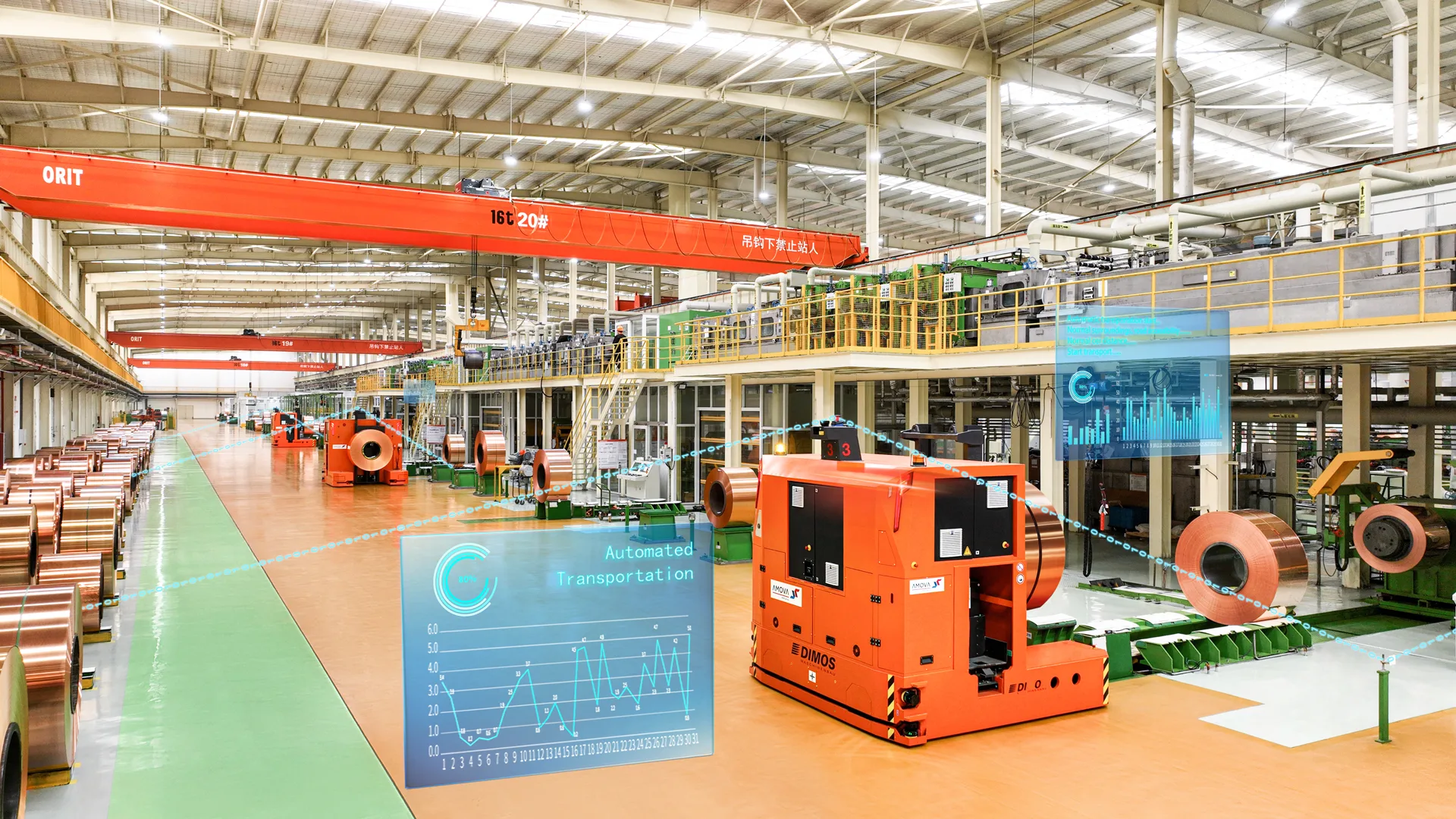
When specifications are written this way, procurement teams can compare suppliers on actual performance rather than on ambiguous claims. This is also where a manufacturer’s process control matters. A supplier with digital manufacturing and traceability can often reduce variation that otherwise becomes field failure. Boway’s production approach, for example, is structured around alloy development, digital manufacturing, and global delivery, which is useful when customers need consistent batch behavior across regions and programs.
How to evaluate supplier reliability beyond the alloy datasheet
The best alloy supplier is the one that can prove repeatability, not just chemistry.
Material reliability in high temperature use depends on upstream controls. Even a technically sound alloy can underperform if strip thickness drifts, surface quality varies, or heat treatment is inconsistent. That is why quality teams increasingly ask for full traceability, process records, and lot-to-lot consistency data. In regulated or safety-sensitive supply chains, those records often matter as much as the nominal specification.
Supplier evaluation should therefore include manufacturing capability, response time, and engineering support. If a customer is co-developing a connector strip or a lead-frame material, the supplier must be able to adjust mechanical response without destabilizing the rest of the process chain. That is a different capability from simply shipping standard stock.
| Supplier check | Why it matters | What good looks like | Risk if missing |
|---|---|---|---|
| Traceability | Limits failure containment time | Heat lot and batch records | Slow root-cause analysis |
| Process stability | Protects batch-to-batch uniformity | Controlled thickness and hardness spread | Yield loss |
| Test capability | Validates real performance | Mechanical, electrical, thermal tests | Spec mismatch |
| Engineering support | Improves design fit | Application-specific material guidance | Overdesign or premature failure |
For high temperature non ferrous alloys, this is especially important because failure often appears after secondary operations. A strip may pass incoming inspection, then fail after stamping, plating, or assembly because those steps altered stress state or surface condition. Supplier engineering support reduces that risk by aligning material choice with downstream manufacturing.
Why standards and test methods make reliability measurable
Reliability becomes actionable when the industry agrees on how to measure it.
Standards do not guarantee performance, but they create a common language for comparing materials. ISO hardness testing, ASTM tensile testing, and NIST reference resources help teams define how a claim was verified. That matters in global supply chains because a material can be described with the same trade name but tested under different methods and acceptance criteria.
When a purchasing team asks for a stronger alloy, the engineering team should ask: stronger in what test, at what temperature, after what forming process, and under what cycle count? Without those questions, the selection may optimize the wrong property. A reliable product is one in which the alloy, the process, and the service environment are all aligned.
In high-temperature electrical assemblies, a useful design target is often not maximum conductivity or maximum hardness, but controlled retention of both after heat exposure. That is why the best-performing materials are often specialty non ferrous alloys tailored for one industry problem, not generic metals sold on a broad promise.
Practical selection guide for high temperature non ferrous alloys
A simple selection workflow can prevent expensive redesigns.
- Start with the failure mode you need to suppress: creep, oxidation, fatigue, or contact resistance drift.
- Map the operating temperature, cycle frequency, and mechanical load.
- Choose the alloy family that matches the dominant risk.
- Define the downstream process chain, including stamping, forming, plating, and joining.
- Insist on traceability, test data, and batch consistency before qualification.
If the application is a connector or conductor, copper-based specialty alloys are often the first screening candidate. If the problem is hot-zone durability or stress retention, nickel-based systems may be more appropriate. If the challenge is thermal structure with low weight, aluminum-based materials may offer the best system-level value. If the challenge is a precision electronic component with strict forming behavior, a customized strip alloy may be the difference between stable yield and chronic scrap.
That last point is important: in industrial purchasing, the cheapest material is rarely the least expensive option once scrap, rework, and field failures are included. A small improvement in thermal reliability can offset cost through fewer interruptions, lower warranty exposure, and less maintenance labor.
Conclusion: reliability comes from matching alloy behavior to service reality
High temperature non ferrous alloys improve equipment reliability when they are selected for the real service environment rather than for a generic material label.
The strongest reliability gains come from three things working together: the right alloy family, the right process control, and the right verification method. Standards such as ISO 6507-1:2018 and ASTM E8/E8M help quantify performance, while traceable production and application-specific engineering help ensure the numbers remain true in the field. For OEMs in EV, semiconductor, 6G, and consumer electronics, the best outcome is not simply a metal that survives heat, but a material system that stays predictable across batches, regions, and life cycles.
That is why buyers increasingly favor specialty non ferrous alloys with documented traceability, stable process behavior, and proven fit for the exact failure mode they need to eliminate.
FAQ
What are high temperature non ferrous alloys used for?
They are used in connectors, springs, lead frames, thermal structures, and other parts that must keep performance under heat, vibration, and repeated cycling.
Which property matters most for reliability in hot environments?
The most important property depends on the application, but common priorities are stress relaxation resistance, oxidation resistance, conductivity, and fatigue life.
Are copper alloys always the best choice for electrical parts?
No, because copper alloys may lose spring force or soften if the temperature and load profile are too severe; nickel or specialty alloys may be better.
How do you verify an alloy is suitable for high-temperature service?
Use standardized tests such as ASTM E8/E8M for tensile properties and ISO 6507-1 for hardness, then validate thermal aging and cycle performance.
Why is traceability important in non ferrous alloy supply?
Traceability helps isolate quality issues quickly, supports auditability, and reduces the risk of mixed lots or inconsistent field performance.
What makes specialty non ferrous alloys different from standard grades?
Specialty grades are tailored for a specific balance of conductivity, strength, formability, and heat resistance rather than for general-purpose use.
How should procurement teams compare suppliers?
They should compare not only price, but also process stability, test methods, traceability, and engineering support for the target application.