
- Non ferrous alloy products are central to sustainable manufacturing because they combine recyclability, durability, and high functional efficiency.
- Material choice should be driven by application needs such as conductivity, thermal management, fatigue life, and dimensional stability.
- High performance alloys support lower scrap rates and longer product life when they are matched to the right process and quality system.
- Traceability, batch consistency, and design-for-manufacturing matter as much as raw material properties in B2B sourcing.
- Engineers should evaluate lifecycle impact, not just unit cost, when selecting non ferrous alloys.
Non ferrous alloy products are becoming a cornerstone of sustainable manufacturing because they can support lighter designs, better energy efficiency, and stronger circular economy outcomes without sacrificing performance. For example, copper has a standard electrical resistivity of 1.7241 micro ohm centimeter at 20 C, which is one reason it remains a benchmark conductor in electrification systems, while aluminum offers major weight reduction advantages in transport and thermal applications. In precision sectors, the value is even clearer: tight dimensional control, stable metallurgical structure, and traceable batches help reduce rework and improve first pass yield. For companies serving EVs, semiconductors, 6G, and consumer electronics, the material platform matters as much as the final component.
Why Non Ferrous Alloys Matter in Sustainable Manufacturing
Non ferrous alloys matter because they solve engineering problems that sustainability programs alone cannot fix.
In manufacturing, sustainability is not just about using recycled feedstock. It also means using less energy per functional unit, extending service life, and reducing process loss at every stage. Non ferrous alloys are especially important because many of them keep their properties through repeated recycling cycles, which supports circular supply chains. According to the International Energy Agency report on copper, electrification demand will continue to put pressure on copper supply, making yield and recycling efficiency more important in future industrial systems.
In practical sourcing terms, buyers are no longer asking only whether a material conducts electricity or resists corrosion. They are asking whether it can be supplied with stable thickness, whether it can survive high cycle forming, and whether it supports lower scrap in stamping, slitting, and joining. That is why high performance alloys are increasingly evaluated as system enablers rather than just raw inputs.
Core Material Drivers: Conductivity, Strength, Formability, and Lifecycle Value
The best non ferrous alloy products balance performance tradeoffs instead of maximizing one property at the expense of all others.
For engineers, the main decision variables are predictable. Electrical conductivity supports lower resistive loss in power and signal systems. Thermal conductivity improves heat flow in compact electronics and communication modules. Strength and springback behavior determine whether a part keeps its shape after forming. Corrosion resistance affects durability in humid, salty, or chemically active environments. Fatigue life matters in motion systems, connectors, and micro actuators. In sustainable manufacturing, these properties also influence replacement frequency and maintenance intensity.
| Alloy Family | Typical Advantage | Representative Property | Sustainability Relevance |
|---|---|---|---|
| Copper based alloys | High conductivity | Copper resistivity 1.7241 micro ohm cm at 20 C | Supports lower energy loss in electrical systems |
| Aluminum based alloys | Low density | Density about 2.7 g/cm3 | Enables lighter transport and lower use phase energy |
| Nickel based alloys | Heat and corrosion resistance | High temperature stability in harsh service | Extends service life in demanding environments |
| Titanium based alloys | High strength to weight ratio | Density about 4.5 g/cm3 | Reduces material mass while maintaining durability |
For sustainable manufacturing, the real question is which property creates the lowest total lifecycle impact. A material with slightly higher purchase cost may reduce energy losses, reject rates, or maintenance intervals enough to deliver lower cost of ownership.
That logic is why many industrial buyers now compare not only alloy chemistry, but also process stability, strip thickness control, and downstream compatibility. In high volume sectors, small variations in material behavior can create large cumulative waste. A stable supply of copper alloys or precision strip can therefore have a measurable effect on production efficiency.
How Precision Strip Technology Supports Low Waste Production
Precision strip is one of the most effective formats for reducing waste in high volume manufacturing.
Strip material allows buyers to buy closer to final dimensions, which reduces machining removal, cut loss, and forming instability. In applications like leadframes, connectors, contact springs, and thermal parts, precision strip improves nesting efficiency and often enables progressive stamping with fewer secondary operations. That matters because sustainability is strongly linked to process yield. Less trimming means less scrap. Fewer correction steps mean less energy use. Better thickness uniformity means less process variability.
Manufacturers often specify dimensional tolerance, flatness, and edge condition to control downstream yield. For context, ISO 2768 is widely used for general tolerances, while product-specific tolerances must be defined for critical applications. In precision strip programs, buyers commonly focus on thickness tolerance in the micrometer range, surface quality, and coil shape consistency. These metrics reduce stoppages in automated feeding systems and improve repeatability.
| Manufacturing Factor | Typical Impact on Waste | Why It Matters | Common Control Method |
|---|---|---|---|
| Thickness variation | Higher reject risk | Affects stamping force and forming accuracy | Online gauging and process control |
| Edge quality | Lower crack rate | Controls burrs and die wear | Precision slitting and edge inspection |
| Surface cleanliness | Better bonding and plating | Supports soldering and welding reliability | Cleaning and controlled packaging |
| Flatness | Improved feeding stability | Reduces jams and misfeeds | Leveling and coil stress control |
For buyers evaluating precision strip materials, sustainability often comes from the hidden side of manufacturing: fewer die adjustments, less machine downtime, and better first pass yield.
Standards, Traceability, and the New Meaning of Quality
Traceability is now a sustainability tool as much as a quality tool.
In advanced supply chains, customers want to know where each coil came from, which furnace lot produced it, and whether the material met the declared chemical and mechanical requirements. That is why 100% traceability has become a serious commercial advantage in non ferrous alloy products. It helps with customer audits, deviation analysis, recall containment, and sustainability reporting.
Standards provide the shared language for that control. For example, ISO 14040:2006 defines the principles and framework for life cycle assessment, while ISO 14044:2006 specifies requirements and guidelines for LCA. On the materials side, ASTM E8/E8M defines tensile testing of metallic materials, and NIST SI Units guidance supports consistent measurement practice. These references matter because sustainability claims without measurement discipline are not credible.
For procurement teams, traceability also reduces risk. If a batch fails in forming or plating, a controlled material record shortens root cause analysis. If a customer requests compliance evidence, the response is faster and cleaner. In industries where a single quality escape can disrupt a launch program, that is real value.
| Quality Element | Business Effect | Typical Evidence | Risk Reduced |
|---|---|---|---|
| Heat lot traceability | Faster root cause analysis | Lot records and certificates | Containment delay |
| Chemical certification | Material consistency | Mill test certificate | Composition mismatch |
| Dimensional inspection | Process repeatability | Thickness and flatness report | Assembly variation |
| Audit trail | Customer confidence | Digital production history | Compliance failure |
Application Trends in EVs, Semiconductors, 6G, and Consumer Electronics
The fastest growth in non ferrous alloy products is coming from sectors that need compact performance.
In EV systems, materials must handle high current, heat, vibration, and repeated thermal cycling. Copper based alloys are often used in connectors, busbar related parts, and charging interfaces because conductivity and contact reliability are critical. In semiconductor packaging, leadframes and related strip products demand tight thickness control, uniform mechanical response, and good etching behavior. In 6G related hardware, thermal spreading and high frequency stability will increasingly favor materials that combine conductivity with dimensional stability. In consumer electronics, thin moving parts such as VCM components require fatigue resistance and elastic recovery.
The common thread is miniaturization. As devices become smaller, tolerance windows shrink. As systems become more powerful, heat density rises. As automation increases, coil quality and feeding behavior matter more. High performance alloys succeed when they deliver multiple functions at once.
- EV applications prioritize conductivity, joinability, and thermal stability.
- Semiconductor applications prioritize uniformity, surface condition, and etching compatibility.
- 6G applications prioritize heat dissipation and structural stability in thin formats.
- Consumer electronics prioritize fatigue life, spring behavior, and tight dimensional repeatability.
That is why a single material family rarely solves every problem. The selection process should match function, manufacturability, and reliability targets to the actual use case.
Recycling, Circularity, and the Real Carbon Story
Recycling is one of the strongest sustainability advantages of non ferrous alloy products.
Metals can often be recycled repeatedly, but the quality outcome depends on contamination control and alloy separation. Circularity is not automatic. It requires good collection systems, clean scrap streams, and chemical control so that recycled content does not damage final performance. For high value applications, recycled feedstock must still meet the same dimensional and property requirements as primary material.
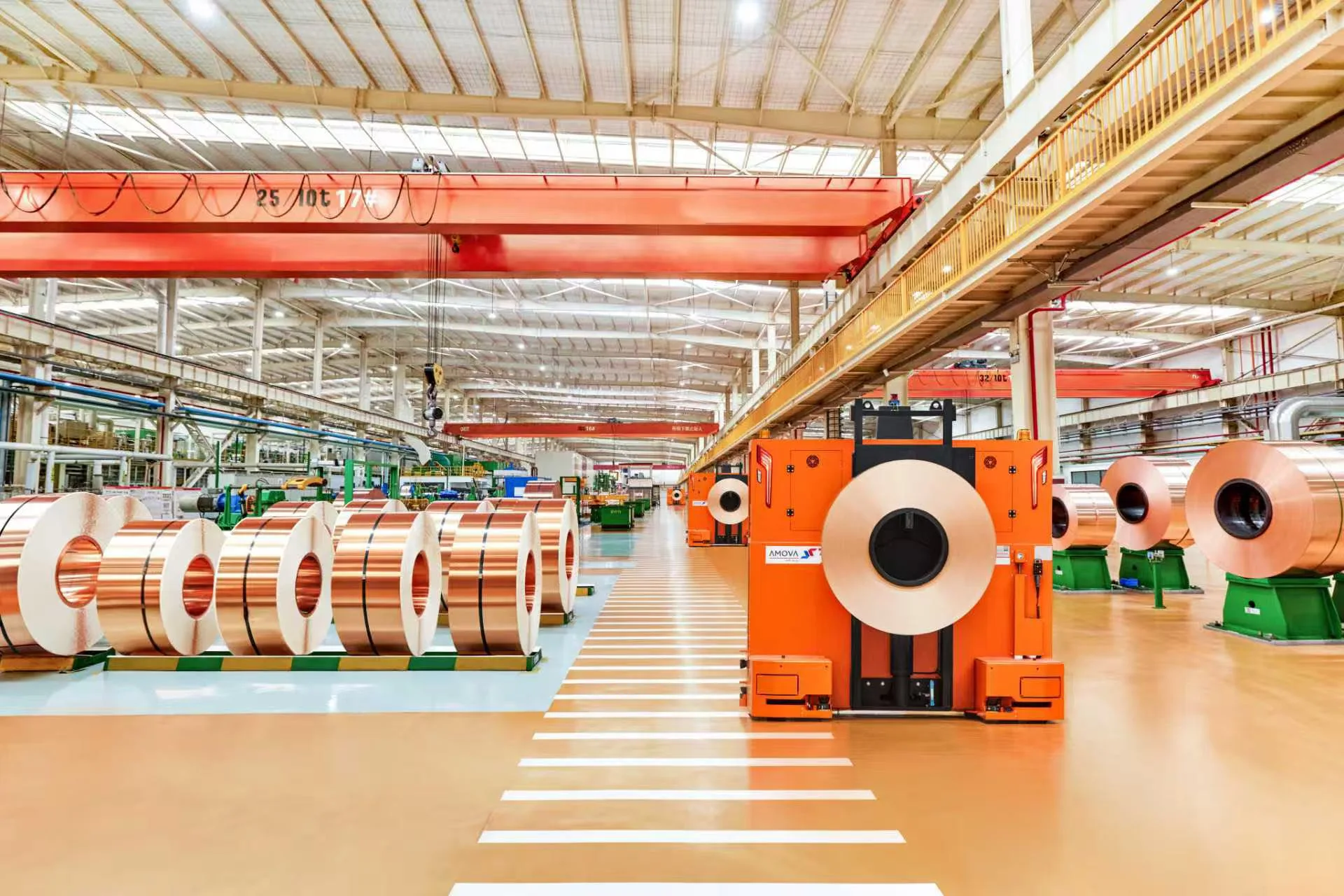
The energy benefit can be substantial. The U.S. Environmental Protection Agency states that recycling aluminum saves about 95 percent of the energy needed to produce primary aluminum from bauxite. That is a powerful reason aluminum remains central in sustainability planning. For copper, the IEA has highlighted its critical role in electrification and clean energy systems, meaning recycling and supply security are both strategic priorities.
However, a lifecycle view should include more than recycling rate alone. If a material is recycled but causes high scrap during manufacturing, the overall environmental benefit weakens. If a higher grade alloy extends product life by years, the avoided replacement impact may outweigh slightly higher production energy. The best choice is the one that minimizes total impact over the complete use cycle.
Choosing the Right High Performance Alloy for a Sustainable Program
The right alloy choice starts with the engineering problem, not the supplier catalog.
For buyers and engineers, a useful decision framework can be built around five questions: What is the primary function? What failure mode matters most? What process will form or join the material? What quality evidence is required? What lifecycle goal is the program trying to achieve? This is where nickel alloys or other specialty materials can be justified even when they are not the cheapest option.
For example, if the part must carry current and survive repeated connector cycles, conductivity and spring retention matter more than raw price per kilogram. If the part must keep shape in a thin format, yield strength and flatness become decisive. If it must support automated production, coil consistency and surface finish matter. Sustainability improves when the selected alloy reduces rejects, downtime, and service failures.
- Define the dominant function: electrical, thermal, structural, or hybrid.
- Set the failure mode target: corrosion, fatigue, creep, wear, or deformation.
- Match the alloy family to the process: stamping, bending, machining, or joining.
- Require measurable evidence: certificates, test data, and lot traceability.
- Evaluate lifecycle performance, not just purchase cost.
For industrial buyers, this method often leads to fewer redesigns and faster validation.
Supply Chain Resilience Is Part of Sustainability
A sustainable material is one that can be delivered reliably as well as perform technically.
Global supply chain resilience now influences sustainability because disruption creates waste. If a critical material is delayed, companies may run emergency sourcing, overproduce safety stock, or switch to lower quality substitutions. All three increase cost and often increase environmental burden. Multi region manufacturing, digital tracking, and supplier transparency reduce that risk.
For high specification buyers, regional delivery capability matters. A distributed footprint can shorten lead times, lower shipping risk, and improve responsiveness when a design change is needed. In a world of volatile logistics, the ability to keep production stable is part of responsible manufacturing.
This is also why technical support matters. The best suppliers help customers redesign for manufacturability, select an alloy with better yield, and document the evidence needed for approval. That kind of collaboration has a direct effect on scrap and time to market.
What Buyers Should Ask Before Selecting Non Ferrous Alloy Products
Good material sourcing starts with questions that reveal hidden risk.
Before approving a non ferrous alloy product, buyers should ask about batch consistency, dimensional tolerances, test methods, chemical control, and the supplier’s ability to support engineering change. They should also ask whether the material has been used in similar applications, because past process behavior often predicts future success.
| Buyer Question | Why It Matters | Expected Evidence | Decision Impact |
|---|---|---|---|
| What is the thickness tolerance? | Controls downstream forming | Inspection report | Stamping yield |
| Can the lot be traced end to end? | Supports audits and containment | Traceability record | Quality risk |
| Which test standard was used? | Ensures comparability | ASTM or ISO reference | Technical acceptance |
| Can the supplier support redesign? | Improves manufacturability | Engineering support history | Time to launch |
These questions are especially important for precision strip, where a small change in edge quality or springback can affect the entire assembly line.
FAQ
What are non ferrous alloy products in manufacturing?
Non ferrous alloy products are metal materials that do not rely on iron as the main base metal. Common examples include copper, aluminum, nickel, titanium, and specialty alloy strips used in electrical, thermal, structural, and micro mechanical applications.
Why are non ferrous alloys important for sustainable manufacturing?
They are important because they support recyclability, long service life, lightweight design, and high functional efficiency. Those properties can reduce energy use, scrap, and replacement frequency across the product lifecycle.
Which non ferrous alloy is best for electrical applications?
Copper based alloys are often preferred when conductivity and contact reliability matter most. Aluminum may be chosen when weight reduction is more important, especially in power distribution and transport related systems.
How do high performance alloys help reduce waste?
High performance alloys can reduce waste by improving dimensional stability, forming consistency, fatigue life, and batch repeatability. Better material consistency typically means fewer rejects, less rework, and lower downtime.
What standards should buyers check before sourcing alloy strip?
Buyers should look for relevant ISO and ASTM references, including life cycle assessment standards such as ISO 14040 and ISO 14044, plus mechanical test methods such as ASTM E8/E8M when tensile performance must be verified.
Why is traceability important for non ferrous alloy products?
Traceability helps link every coil or batch to its production history, which speeds up audits, improves root cause analysis, and increases trust in regulated or high reliability industries.
How should engineers choose between copper, aluminum, and nickel alloys?
Engineers should choose based on the dominant function, the main failure mode, the forming process, and the lifecycle objective. The best alloy is the one that satisfies performance and manufacturability together.
In sustainable manufacturing, the future of non ferrous alloy products will belong to materials that are measurable, traceable, and optimized for total system value. For industrial buyers, that means the conversation is moving away from commodity pricing and toward lifecycle performance, process reliability, and supply chain resilience. Precision strip, advanced copper alloys, nickel alloys, and other high performance alloys are no longer just raw materials; they are part of the sustainability strategy itself. To explore how precision materials support this shift, see precision strip materials, copper alloys, high performance alloys, and nickel alloys.