
- High performance alloys are selected for application fit, not generic material strength.
- Conventional non ferrous alloys are usually easier to source and process, but they may not meet advanced thermal, electrical, or fatigue requirements.
- For engineering buyers, the most important variables are conductivity, formability, thickness tolerance, traceability, and lifecycle stability.
- Specialty non-ferrous alloys are often justified when failure cost is higher than material cost.
Comparing high performance alloys and conventional non ferrous alloys starts with a simple reality: modern manufacturing often needs materials that do several hard things at once. In advanced electronics and energy systems, sheet or strip materials may need yield strength above 300 MPa, thickness control within microns, and reliable surface quality for stamping or plating. Precision strip tolerances are commonly evaluated against established measurement practices such as ISO 9443:2005 for cold-rolled narrow steel strip width tolerances, while the broader principle of controlled dimensional verification is aligned with traceable metrology methods such as those used in NIST reference systems. For buyers in EV, semiconductor, and connectivity markets, the real question is not whether an alloy is high performance in the abstract; it is whether it can hold consistent properties across lots, sustain forming without cracking, and support traceable production from melt to shipment.
High performance alloys vs conventional non ferrous alloys: what the comparison really means
The most useful comparison is based on function, not marketing labels. Conventional non ferrous alloys usually refer to broadly used copper, aluminum, nickel, or zinc-based materials designed for cost-effective production and mature processing routes. High performance alloys, by contrast, are formulated or processed to achieve a narrower and more demanding property window. That may mean higher conductivity with higher strength, greater heat resistance without embrittlement, or better spring performance after repeated cycling.
In industrial buying, the difference becomes visible in downstream process windows. A conventional alloy may be easy to stamp but lose flatness after heat treatment. A specialty alloy may cost more per kilogram, but it can reduce scrap, improve assembly yield, and lower warranty risk. That is why many buyers compare total cost of ownership rather than raw material cost alone.
| Comparison factor | Conventional non ferrous alloys | High performance alloys | Why it matters |
|---|---|---|---|
| Property balance | 1-2 main priorities | 3-5 balanced properties | Advanced applications need multiple requirements at once |
| Dimensional control | Standard mill tolerances | Tighter strip and flatness control | Critical for stamping, etching, and automated assembly |
| Typical use case | General fabrication | EV, semicon, 6G, micro devices | Higher failure cost justifies tighter specs |
| Qualification effort | Shorter | Longer, with more validation | High reliability sectors require more evidence |
For a technical buyer, the table above is the core decision map: conventional non ferrous alloys are often acceptable when geometry, service load, and life expectancy are moderate, while specialty non-ferrous alloys become the better choice when the design limit is determined by fatigue, thermal drift, corrosion, or contact resistance.
Why high performance alloys win in EV, semiconductor, and 6G applications
High performance alloys are usually chosen because the application has a narrow tolerance for failure. EV charging and high-voltage connection systems need stable conductivity, spring force retention, and resistance to thermal cycling. Semiconductor packaging and lead frame applications need uniform thickness, good etching behavior, and repeatable mechanical response. 6G-related hardware often pushes the material toward higher thermal conductivity, thin-gauge stability, and low distortion under assembly pressure.
These requirements are not theoretical. Copper remains one of the reference materials for electrical and thermal applications, with annealed copper standardized at a conductivity of 100 percent IACS, equivalent to about 58 MS/m according to widely used engineering convention documented by organizations such as the Copper Development Association. Aluminum, widely used when weight matters, has a density of about 2.70 g/cm3 versus copper at 8.96 g/cm3, which is why design teams often compare conductivity-to-weight rather than conductivity alone. In power and thermal systems, those ratios matter more than brochure claims.
| Material reference | Density | Electrical conductivity | Typical design implication |
|---|---|---|---|
| Copper | 8.96 g/cm3 | 100% IACS | Best for conductivity-sensitive systems |
| Aluminum | 2.70 g/cm3 | About 61% IACS | Best when lightweight design matters |
| Nickel-based alloys | Varies by grade | Lower than copper | Useful where heat and corrosion resistance dominate |
For many buyers, the key insight is that high performance alloys are chosen because they reduce system-level risk. A slightly better springback curve, a more stable microstructure, or lower thickness variation can improve assembly consistency across thousands or millions of parts.
Conventional non ferrous alloys: where they still make sense
Conventional non ferrous alloys remain the right choice in many programs because they are familiar, available, and easier to process. If a part does not face extreme thermal load, repeated flexing, or miniaturized assembly tolerances, a standard alloy may be the most efficient answer. Procurement teams often prefer these materials when supply continuity, short qualification cycles, and cost control are the dominant criteria.
The downside is that conventional materials often reach their limits sooner. For example, a standard copper alloy may form well but lose mechanical recovery after repeated bending, or an aluminum alloy may offer weight advantages but not the spring properties needed for a connector or contact system. In those cases, the apparent savings can disappear in scrap, rework, or field failures.
- Use conventional non ferrous alloys when service conditions are stable and predictable.
- Use them when qualification time is short and cost pressure is high.
- Avoid them when the design depends on tight fatigue, heat, or conductivity margins.
From a purchasing perspective, conventional materials are often the baseline option, but they should not be treated as the default for high reliability systems. The correct material is the one that fits the operating envelope, not the one that simply appears cheaper on a quote.
Specialty non-ferrous alloys and the case for engineered strip material
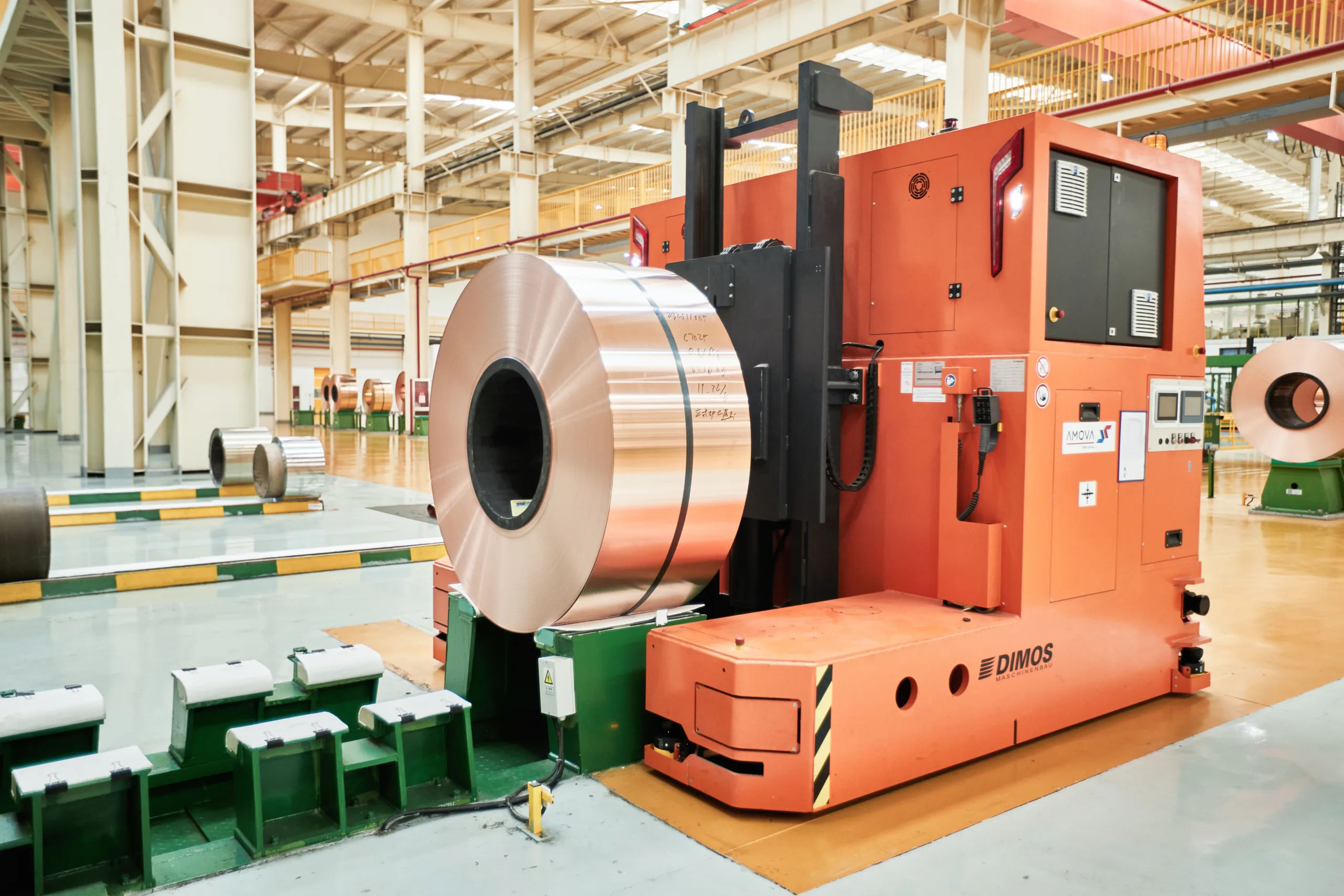
Specialty non-ferrous alloys matter most when the customer needs repeatable performance in strip or ribbon form. This is especially true in precision strip manufacturing, where thickness consistency, edge quality, and coil-to-coil stability influence the success of downstream stamping, welding, and etching. Boway’s focus on high performance non-ferrous alloys and precision strip aligns with this industrial reality, because advanced applications increasingly depend on material platforms rather than single-use metals.
For applications like high voltage connectors, battery systems, and micro-electromechanical assemblies, a strip material must do more than meet a chemistry target. It must maintain flatness, survive high-speed feeding, and keep mechanical properties stable after heat treatment. Traceability also matters. Many customers now require full lot history, and quality teams frequently ask for melt traceability, inspection records, and process auditability before approving a supplier.
That is why many engineering teams treat specialty alloys as a process solution. The alloy specification, cold rolling path, annealing route, surface state, and inspection method are all part of the final performance outcome.
| Strip requirement | Conventional route | Specialty route | Expected benefit |
|---|---|---|---|
| Thickness control | Standard mill range | Tighter process window | Better feed stability |
| Surface consistency | General commercial finish | Controlled surface quality | Improved stamping and plating |
| Traceability | Partial batch records | Full lot traceability | Better audit readiness |
| Application fit | Broad use | Designed by use case | Lower system-level risk |
In practice, this is where a supplier with digital manufacturing and strong material governance can help engineering and procurement teams move faster. If your program needs repeatable strip behavior across regions and production nodes, precision strip solutions and high performance alloys are more relevant than a generic commodity catalog.
Quantitative factors that should drive alloy selection
The best alloy comparison is a numbers-based comparison. Engineers should evaluate at least five measurable variables: conductivity, tensile strength, elongation, thickness tolerance, and fatigue life. These values do not need to be identical across every grade, but they must be aligned with the design envelope.
For example, ASTM B193 is the standard test method for resistivity of electrical conductor material, and it exists because conductivity is not a subjective characteristic. It is measured, compared, and qualified. Likewise, ASTM B170 covers oxygen-free copper rod, bar, and shapes for electrical applications, giving buyers a framework for understanding purity and application fit. You can review the standards at ASTM B193 and ASTM B170. Standards do not replace engineering judgment, but they make supplier comparisons more objective.
| Selection metric | Typical question | Why it matters | Reference or standard example |
|---|---|---|---|
| Conductivity | Will the part carry current efficiently? | Controls heat rise and losses | ASTM B193 |
| Tensile strength | Will it survive forming and service load? | Controls cracking and deformation | Grade-specific datasheet |
| Thickness tolerance | Can the strip feed reliably? | Controls stamping yield | Dimensional control methods |
| Fatigue life | Will repeated cycling cause failure? | Critical for connectors and actuators | Application validation testing |
Quantitative evaluation also protects procurement teams from false equivalence. Two alloys with similar chemistry can perform very differently if their grain size, impurity profile, or heat treatment history differs. That is why process documentation is as important as chemical analysis.
How to compare cost, scrap, and total value, not just unit price
The cheapest alloy is often not the lowest-cost alloy once scrap and requalification are included. In high-volume manufacturing, a small improvement in material consistency can reduce punch wear, die adjustment, or rework. Even a modest change in first-pass yield can outweigh a higher raw material price.
Industry studies and supplier experience often show that customers underestimate the cost of variability. If a conventional non ferrous alloy creates a 2 percent additional scrap rate in a million-part program, the hidden cost can exceed the premium of a higher-grade specialty alloy, depending on the part value and downstream operations. Exact economics vary by design, but the principle is stable: variability is expensive.
- Compare raw material price per kilogram.
- Add conversion cost, scrap rate, and inspection load.
- Include requalification time and launch delay risk.
- Estimate the cost of field failure or recall exposure.
- Select the alloy with the lowest total lifecycle cost.
This is why many engineers prefer a supplier who can support custom development rather than only offer stock grades. If the material must be tuned for a specific connector, heat spreader, or micro-motion part, a custom alloy development path can reduce iterative trial cycles and improve launch certainty.
Processability: stamping, forming, annealing, and surface quality
Processability is where many alloy decisions succeed or fail. An alloy that looks excellent on paper can become expensive if it cracks during stamping, distorts after annealing, or loses surface quality during slitting. Conventional non ferrous alloys are often preferred when forming complexity is low, but high performance alloys are designed to survive more aggressive processing windows.
For strip products, one of the most important process variables is the stability of mechanical properties after cold work and heat treatment. Another is edge condition, because burrs and edge microcracks can compromise downstream assembly. In semiconductor and electronics applications, surface cleanliness and oxide control also affect solderability, plating adhesion, and contact resistance.
Quality standards help here too. Manufacturers often align inspections with robust metrology and process control systems, including traceable gauges, statistical process control, and documented lot verification. In practice, customers care less about theoretical alloy potential and more about whether the supplier can reproduce that performance over time.
| Process step | Common risk | What to verify | Best-practice outcome |
|---|---|---|---|
| Cold rolling | Thickness drift | Gauge control and flatness | Stable feed behavior |
| Annealing | Property scatter | Temperature and time profile | Repeatable ductility |
| Slitting | Edge burr | Edge quality and cleanliness | Lower stamping wear |
| Packaging | Surface damage | Protection and handling | Better yield at customer line |
When a supplier can control these steps end to end, the material becomes more predictable in the customer’s plant, which is often the real measure of quality.
What engineering buyers should ask before choosing a supplier
Engineering buyers should ask questions that reveal process capability, not just catalog breadth. The best suppliers can explain not only what the alloy is, but how it is made, tested, and traced. That is especially important in regulated or high reliability sectors where material nonconformance can stop a line or trigger a customer audit.
- Can the supplier provide full lot traceability from melt to shipment?
- What are the guaranteed thickness, flatness, and mechanical property ranges?
- Which test standards are used for conductivity, tensile strength, and surface evaluation?
- How stable are properties across production lots?
- Can the supplier support custom alloy development and validation?
For buyers building global supply chains, regional manufacturing presence also matters. A supplier with multi-site production can improve continuity when lead times, logistics, or local compliance requirements change. That resilience is especially valuable when the material is critical to EV, semiconductor, or communications programs.
How Boway’s material strategy fits advanced non ferrous alloy selection
Boway’s positioning is strongest when viewed through the lens of application engineering. The company’s focus on high performance non-ferrous alloys, precision strip, digital manufacturing, and 100 percent material traceability speaks directly to the requirements of industrial buyers who need repeatable performance rather than generic supply. Its long development history, global manufacturing footprint, and participation in standards-related work are relevant because advanced material buyers care about execution quality as much as chemistry.
For readers evaluating options, the practical takeaway is straightforward: use conventional non ferrous alloys when the design envelope is forgiving, and choose specialty non-ferrous alloys when reliability, miniaturization, or thermal-electrical performance becomes the limiting factor. In that second category, the supplier’s ability to deliver controlled properties, documented quality, and engineering support is often more important than a marginal price difference.
If you want to compare product families by application, start with non ferrous alloys, then review precision strips and company capabilities for traceability, manufacturing scope, and global delivery support.
FAQ on high performance alloys and conventional non ferrous alloys
What is the main difference between high performance alloys and conventional non ferrous alloys?
High performance alloys are designed to balance multiple demanding properties at once, while conventional non ferrous alloys are usually optimized for cost, availability, and general-purpose processing.
When should I choose a specialty non-ferrous alloy?
Choose a specialty non-ferrous alloy when your part faces tight tolerances, repeated cycling, thermal stress, or high failure cost.
Are conventional non ferrous alloys still useful in advanced manufacturing?
Yes. They remain effective when service conditions are moderate and the design does not require extreme conductivity, fatigue resistance, or dimensional stability.
Why does traceability matter so much in alloy sourcing?
Traceability supports audits, root-cause analysis, and batch consistency, which are critical in EV, semiconductor, and electronics supply chains.
What should I compare first when evaluating alloy suppliers?
Start with property consistency, process capability, test standards, thickness control, and lot traceability before comparing price.
How do standards help in choosing between alloys?
Standards such as ASTM B193 and ASTM B170 create common measurement and qualification rules, which make supplier comparisons more reliable.
Can a higher-priced alloy lower total cost?
Yes. If it reduces scrap, rework, downtime, or field failure risk, the higher material price can still produce a lower lifecycle cost.