
- RoHS compliance begins with alloy chemistry control, supplier qualification, and documented material traceability.
- Industrial non ferrous alloys must balance conductivity, strength, formability, and thermal stability for the target application.
- Batch-level testing, dimensional control, and process audits matter as much as the raw material certificate.
- The best alloy choice depends on use case: EV power parts, semiconductor precision parts, telecom thermal structures, or micro-motion consumer components.
- Verification should combine standards, lab data, and stable manufacturing records rather than relying on claims alone.
For buyers searching for non ferrous alloy materials, specialty non ferrous alloys, and industrial non ferrous alloys, the real question is how to meet RoHS while still achieving the electrical, mechanical, and thermal performance the application requires. In regulated supply chains, that means combining compliance with measurable control: for example, RoHS limits lead, mercury, cadmium, hexavalent chromium, PBB, and PBDE at 0.1% by weight for most substances and 0.01% for cadmium, while ISO 9001:2015 requires a documented quality management system that supports consistent output and traceability.
Why RoHS Compliance Matters for Non-Ferrous Metal Alloys
RoHS compliance matters because it determines whether a material can move through global electronics and industrial supply chains without regulatory friction.
For non ferrous alloys, RoHS is especially important because the alloy is often embedded in high-value assemblies where a single restricted substance can block shipment, rework, or customer approval. The directive is not limited to finished goods in the eyes of procurement teams; it affects the acceptability of base metals, plated surfaces, solders, coatings, and downstream components. That is why compliance planning must start at the alloy design stage, not during final inspection.
In real purchasing workflows, the compliance question usually appears alongside performance questions. A buyer may need a copper alloy for a high-current busbar, a nickel alloy for corrosion resistance, or a precision strip for a connector spring. The material has to meet electrical and mechanical targets while remaining audit-ready. That is where industrial non ferrous alloys differ from commodity metals: they are engineered for repeatability, documentation, and application-specific tolerances.
Non ferrous alloy materials are often chosen because they offer lower magnetic response, good conductivity, corrosion resistance, or high temperature stability. However, each advantage can create a compliance or processing challenge. Tin-bearing systems may need tighter impurity control; plated products may require extra scrutiny on surface chemistry; and thin precision strip must maintain flatness, thickness uniformity, and surface cleanliness across the coil.
| RoHS-controlled substance | Maximum concentration by weight | Typical risk area in alloys | Control method |
|---|---|---|---|
| Lead (Pb) | 0.1% | Free-machining additions, solder contamination | Incoming chemistry review, ICP test |
| Mercury (Hg) | 0.1% | Contaminated coatings or processing aids | Restricted chemical audit |
| Cadmium (Cd) | 0.01% | Plating contamination, recycled feedstock | Batch test and supplier declaration |
| Hexavalent chromium (Cr VI) | 0.1% | Surface treatment and conversion coatings | Surface chemistry verification |
| PBB / PBDE | 0.1% | Polymeric contamination in assemblies | Material declaration review |
The most important compliance insight is simple: the alloy itself may be compliant, but the final assembly can still fail if surface treatments, solders, or recycled inputs are not controlled. That is why many industrial buyers request full material declarations, lot traceability, and test records before approval.
How Industrial Non Ferrous Alloys Are Evaluated for Compliance
Compliance is verified through a chain of chemistry control, process control, and documentation control.
The first layer is chemical composition. For alloys used in regulated markets, suppliers typically verify elemental content through spectrometric or wet-chemical analysis, then match the result to product specification and customer limits. The second layer is process stability. Heat treatment, rolling reduction, annealing, and surface finishing all influence final properties, so the production route must be repeatable. The third layer is documentation: certificates, test reports, lot numbers, and change-control records must align so an auditor can trace one coil back to its source.
In quality systems, this is where ISO 14001:2015 and ISO 45001:2018 are often used alongside product specifications. While these standards do not certify alloy chemistry, they strengthen the governance around environmental control, worker safety, and process discipline, which matter in metal manufacturing with high-risk thermal and chemical steps.
For buyers, the practical test is whether the supplier can answer four questions quickly: What is the chemistry? How was it measured? Which lot was shipped? What changed since the last approval? If any answer is slow or incomplete, the compliance risk increases even if the material meets nominal specs.
| Compliance layer | What is verified | Common evidence | Why it matters |
|---|---|---|---|
| Chemistry | Restricted substances and alloy elements | Test report, MTC, declaration | Confirms legal acceptability |
| Process | Annealing, rolling, coating stability | Process sheet, control plan | Protects performance consistency |
| Traceability | Lot, heat number, shipment link | Barcode, certificate, ERP record | Supports audits and recall control |
| Change control | Material or process revisions | ECN, customer notice | Prevents unapproved variation |
This is especially relevant for precision strips for electronic assemblies, where thickness variation, surface quality, and coil-to-coil consistency can affect stamping yield and downstream assembly reliability. It is also relevant for copper alloy products used in power and signal applications, where conductivity and spring performance must coexist with regulatory compliance.
Which Specialty Non Ferrous Alloys Are Most Commonly Used in Regulated Industries
Different regulated industries require different alloy families because compliance alone does not solve the engineering problem.
In EV power distribution, copper-based alloys are often selected for busbars, connectors, and terminals because conductivity and mechanical strength must be balanced. In semiconductor packaging, precision copper or copper-based strip can support lead frames and fine-structure parts, where dimensional control is critical. In 6G and high-frequency communications, thermal management parts often require high thermal conductivity and dimensional stability. In consumer electronics, micro-motion parts such as VCM components need fatigue resistance and stable spring behavior.
The key is to map the alloy family to the performance bottleneck. If the issue is heat, prioritize thermal conductivity and surface stability. If the issue is current carrying, prioritize conductivity and softening resistance. If the issue is stamping or bending, prioritize elongation, yield strength, and edge quality. Compliance becomes easier when the selected alloy already fits the process window.
| Application | Preferred alloy trait | Typical engineering target | Compliance focus |
|---|---|---|---|
| EV connector / busbar | High conductivity + strength | Low resistance, stable formability | Restricted substances, traceability |
| Semiconductor lead frame | Thickness uniformity | Tight strip tolerance | Composition, surface purity |
| 6G thermal part | Thermal conductivity | Heat spreading and stability | Coating chemistry, batch stability |
| VCM / micro-motion part | Fatigue resistance | High cycle durability | Process consistency, cleanliness |
For precision procurement teams, the difference between a standard alloy and a specialty alloy often shows up in scrap rate and throughput. Industry practice shows that tighter coil thickness control and better surface uniformity can reduce downstream stamping variability, but the exact benefit depends on the part design and tooling condition. That is why suppliers of industrial non ferrous alloys are expected to provide not only chemistry data but also formability guidance and application notes.
When buyers evaluate sources such as nickel alloy solutions or high performance alloy families, they are usually screening for three things at once: can the material survive the environment, can it be manufactured reliably, and can it pass compliance review without delays?
What Standards and Test Methods Prove Compliance
Compliance becomes credible when standards and test methods are tied to the material claim.
For dimension and geometry control, ISO 2768-1 is widely used for general tolerances when individual drawings do not specify tighter limits. For mechanical verification, ASTM E8/E8M defines tension testing of metallic materials, while ASTM E18 covers Rockwell hardness testing. These methods do not replace product specifications, but they make results comparable across suppliers and labs.
For electronic and industrial buyers, that comparability matters. A reported tensile strength of 600 MPa is only useful if the test method, sample orientation, and heat treatment state are known. Likewise, a conductivity value is only meaningful if the alloy condition is clear. Standards reduce ambiguity, which makes supplier comparison much faster and more defensible.
Material teams also rely on internal specification control, especially for thin strip products where the real tolerances are often tighter than generic standards. In advanced strip manufacturing, thickness tolerances can reach the low micrometer range depending on alloy type and customer drawing, while flatness and edge quality become just as important as strength. Those tighter controls are what make industrial non ferrous alloys suitable for precision stamping and high-reliability electrical parts.
| Standard / method | What it verifies | Typical use case | Why buyers care |
|---|---|---|---|
| ISO 2768-1 | General dimensional tolerances | Drawings, machined parts | Reduces ambiguity in acceptance |
| ASTM E8/E8M | Tensile properties | Strength and elongation checks | Confirms mechanical suitability |
| ASTM E18 | Hardness | Spring and wear-sensitive parts | Supports process validation |
| RoHS guidance | Restricted substances | Electronics supply chains | Prevents market access risk |
For organizations building a quality case, a strong supplier file should include the standard number, the test method, the lot number, and the revision date of the specification. That four-part record is often more valuable than a generic certificate because it can survive an audit.
How Performance Targets Shape Non Ferrous Alloy Selection
Performance targets should define the alloy, not the other way around.
In EV and power-electronics applications, current density, temperature rise, and contact resistance drive selection. In semiconductor packaging, fine stamping and etching response matter more than bulk strength. In high-frequency communication hardware, thermal spreading and structural stability are essential because localized heat can shift device performance. In consumer micro-drive parts, the dominant issue is cyclic durability under small, repeated movement.
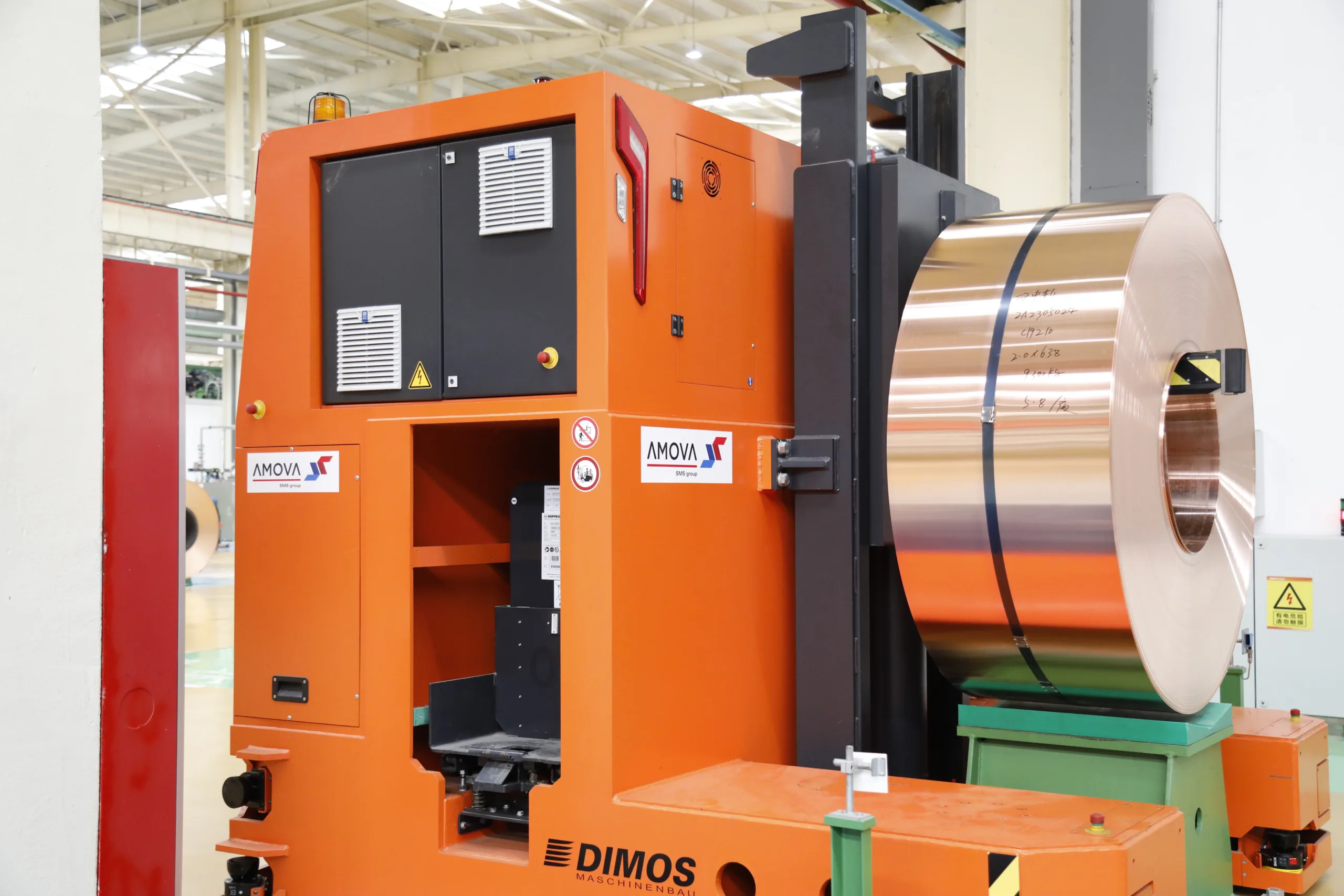
Typical engineering targets are often framed in measurable terms: tensile strength, elongation, conductivity, hardness, and fatigue life. For example, industrial copper alloys may be specified by conductivity ranges, while spring alloys are judged by yield behavior and set resistance. The exact figures vary by composition and temper, but the selection logic is universal: define the load, define the environment, then select the alloy condition that survives both.
In precision manufacturing, even small improvements in strip uniformity can reduce downstream rejection. If a connector stamping line is losing parts to burrs or springback, material variation may be part of the root cause. If a thermal module is warping during assembly, coefficient mismatch and temper drift may be the issue. Those are engineering problems first and compliance problems second.
- Define the operating environment: heat, humidity, current, vibration, or cycle count.
- Set measurable acceptance criteria: thickness, tensile strength, conductivity, hardness, or fatigue life.
- Confirm whether RoHS or other regional restrictions apply to the final assembly.
- Request lot traceability and test evidence before pilot approval.
- Validate with a trial run that uses real tooling and real process settings.
That workflow is especially useful when sourcing from brass alloy products or customized alloy solutions, because the best material is rarely the one with the highest headline property. It is the one that keeps acceptable performance after forming, joining, and long-term use.
How Traceability and Digital Manufacturing Strengthen Trust
Traceability is one of the strongest trust signals in industrial non ferrous alloys.
When a supplier can trace every coil to a heat number, process route, test result, and shipment record, the buyer gains more than documentation; they gain a lower risk of hidden variation. This is especially important in sectors with customer audits, safety review, and multi-tier supply chains. A robust traceability system also shortens problem resolution because nonconforming lots can be isolated faster.
Digital manufacturing adds another layer of control by linking production data to quality records. If rolling thickness, annealing temperature, inspection data, and packing history are captured in a single system, it becomes easier to identify process drift before it reaches customers. In practice, digital traceability can reduce the time needed to answer audit questions, though the exact improvement depends on plant maturity and system integration.
For multinational buyers, regional manufacturing footprint also matters. Localized production in different regions can improve response time, reduce logistics risk, and support supply continuity during disruptions. In a market where qualification cycles are long, the ability to keep the same specification stable across multiple sites is a major competitive advantage.
| Trust factor | Evidence buyers expect | Decision impact | Risk if missing |
|---|---|---|---|
| Traceability | Heat and lot records | Audit readiness | Recall and compliance exposure |
| Digital control | Process data linkage | Faster root-cause analysis | Slow issue containment |
| Change management | Revision notice | Qualification stability | Unexpected performance drift |
| Global support | Regional supply plan | Business continuity | Lead-time volatility |
For OEMs and tier suppliers, that level of control is often more valuable than a low initial quote. A lower-cost alloy that fails audit or causes unstable yield is expensive in the end.
Common Mistakes When Buying RoHS-Compliant Non Ferrous Alloys
The biggest mistake is treating compliance as a paperwork exercise instead of a material-control system.
Buyers often request a RoHS declaration but skip the questions that expose real risk: Was recycled feedstock used? Has the plating chemistry changed? Is the current lot identical to the pilot lot? Are test methods and sampling plans documented? When these details are missing, a material can look compliant on paper while still creating downstream failures.
Another frequent mistake is choosing an alloy only on one property, such as conductivity or hardness, without checking manufacturability. A strong strip that cracks in forming is not a good industrial solution. Likewise, an extremely soft alloy may form easily but fail contact pressure requirements. Compliance should never force a compromise that breaks the part.
There is also a sourcing mistake: assuming all suppliers interpret specifications the same way. In reality, one supplier may quote nominal thickness while another quotes a tolerance band, and one may test hardness on a different scale or sample orientation. Standardized methods solve this, but only if the buyer asks for them.
- Do not accept compliance claims without a lot-specific test record.
- Do not approve material based on chemistry alone.
- Do not ignore surface condition, coating chemistry, and joining behavior.
- Do not skip pilot trials under real forming or assembly conditions.
These errors are avoidable when the sourcing team works from a specification sheet that combines legal compliance, mechanical performance, and processing requirements in one place.
FAQ About Non Ferrous Alloy Materials and Industrial Standards
What makes a non ferrous alloy RoHS compliant?
A non ferrous alloy is RoHS compliant when restricted substances remain below the directive limits and the supplier can document that result with traceable evidence. In practice, that usually means controlling raw materials, coatings, and any secondary processing inputs.
Are RoHS and ISO 9001 the same thing?
No. RoHS is a substance restriction requirement, while ISO 9001:2015 is a quality management standard. A supplier can be ISO 9001 certified and still need separate material evidence to prove RoHS compliance.
Which tests are most important for specialty non ferrous alloys?
The most important tests depend on the application, but chemistry analysis, tensile testing under ASTM E8/E8M, and hardness testing under ASTM E18 are common starting points. Dimensional verification is also essential for strip and precision components.
Why is traceability so important in industrial non ferrous alloys?
Traceability allows a buyer to connect a delivered coil or batch to its exact production history. That matters for audits, recalls, root-cause analysis, and qualification continuity.
What is the best alloy for EV connectors?
There is no single best alloy for every EV connector. The right choice depends on current load, temperature rise, contact design, forming method, and plating system. Copper-based specialty alloys are common because they balance conductivity and strength.
How do precision strips support semiconductor applications?
Precision strips support semiconductor applications by offering tight thickness control, stable surface quality, and reliable etching or stamping behavior. These traits help reduce variation in lead frames and related package parts.
What should buyers ask before approving a new supplier?
Buyers should ask for chemistry data, test methods, lot traceability, change-control rules, and pilot sample consistency. They should also confirm which standards were used and whether the supplied condition matches the approved condition.
In short, non ferrous alloy compliance is strongest when substance control, process control, and application performance are designed as one system. That is the difference between a material that merely passes a declaration and one that survives industrial reality.