
- Deep drawing success depends on ductility, anisotropy control, and stable sheet quality more than on nominal tensile strength.
- Industrial non-ferrous alloys must be matched to the part geometry, draw ratio, edge condition, and final functional requirement.
- Precision non-ferrous alloys are especially valuable when the formed part must also meet conductivity, thermal, or fatigue targets.
- Quality control matters: thickness variation, surface roughness, and temper consistency can make or break forming yield.
Non-ferrous metal alloys are widely used in deep drawing and forming because they can combine elongation, corrosion resistance, electrical performance, and excellent surface finish in gauges thin enough for high-volume manufacturing. For engineering teams, the real question is not whether a metal can be formed, but whether it can be formed repeatedly with controlled springback, stable wall thinning, and low scrap. In sheet forming, that balance is often evaluated with standards such as ISO 6892-1 for tensile testing and ASTM E8/E8M for tensile properties, because formability starts with measurable material behavior, not assumptions. For advanced applications, precision non-ferrous alloys can also be engineered for thickness tolerances and batch traceability, which is why many buyers compare precision strip materials, high conductivity alloy options, and spring alloy grades before committing to tooling.
Why non-ferrous metal alloys behave differently in deep drawing and forming
Non-ferrous metal alloys generally form more predictably than many high-strength ferrous materials because they can offer a more favorable ductility-to-strength ratio in the delivered temper. That advantage is most visible in deep drawing, where the sheet must flow radially into the die cavity without necking at the punch radius or tearing at the wall.
The key material variables are elongation, strain-hardening exponent, normal anisotropy, planar anisotropy, and surface condition. If those values are poorly controlled, the result is uneven flow, wrinkling in the flange, or splits in the sidewall. For that reason, industrial buyers of non-ferrous alloys usually care more about consistent metallurgical state than about one-off high performance values.
In general, copper alloys, aluminum alloys, nickel alloys, and titanium alloys each bring different forming behavior. Copper alloys tend to be excellent where electrical or thermal performance matters. Aluminum alloys are attractive where light weight and corrosion resistance matter. Nickel alloys and titanium alloys may be selected where temperature or chemical exposure matters, but they usually require more careful forming windows.
| Alloy family | Typical strength direction | Formability tendency | Best-fit forming use |
|---|---|---|---|
| Copper-based alloys | Moderate to high conductivity | Good to very good | Contacts, terminals, shielding parts |
| Aluminum-based alloys | Low density, moderate strength | Good in suitable tempers | Lightweight housings, thermal parts |
| Nickel-based alloys | High temperature resistance | Moderate, tooling-sensitive | Harsh-environment formed components |
| Titanium-based alloys | High specific strength | Limited compared with softer alloys | Aerospace and specialty high-performance parts |
For design teams, the message is simple: the more demanding the geometry, the more the alloy choice must be tied to real forming data rather than catalog labels.
How deep drawing performance is measured in industrial non-ferrous alloys
Deep drawing performance is judged by whether the sheet can redistribute strain without failure while preserving the target shape. In practice, engineers evaluate this through tensile properties, Erichsen or dome-type tests, forming limit behavior, and draw ratio trials on the real toolset.
Standard tensile testing is important because it provides a common language for specifying yield strength, ultimate tensile strength, and elongation. ISO 6892-1 is widely used for metallic materials at room temperature, while ASTM E8/E8M is a common U.S. reference for tensile testing of metallic materials. These standards do not guarantee formability by themselves, but they help compare heat lots, tempers, and suppliers on the same basis.
For sheet metal engineers, one practical benchmark is the limiting drawing ratio, or LDR, which expresses how much larger the blank diameter can be relative to the punch diameter before failure. Higher LDR usually signals better deep draw potential, but the actual value depends on alloy, lubrication, blank holder force, and edge quality. In production, even a material with good average ductility can fail if coil thickness varies too much across width or if the surface is not suitable for the chosen lubricant.
| Test / metric | What it tells you | Why it matters in forming |
|---|---|---|
| Yield strength | Resistance to initial plastic flow | Affects punch load and springback |
| Elongation | Available plastic strain before fracture | Supports deeper draws and tighter radii |
| r-value | Resistance to thinning | Helps predict wall integrity |
| n-value | Strain hardening capacity | Improves strain distribution during draw |
| Surface roughness | Friction and galling tendency | Impacts lubricant performance and tool life |
When buyers evaluate precision non-ferrous alloys, they should ask for test data tied to specific coil lots, not just generic grade sheets. That is especially important for high-reliability parts where the cost of a single split can exceed the value of the entire lot.
Which precision non-ferrous alloys work best for deep drawing
The best precision non-ferrous alloys for deep drawing are usually those with stable microstructure, controlled temper, and predictable directional properties. For many applications, copper alloys and aluminum alloys dominate because they can deliver the best practical balance of formability and functional performance.
Copper alloys are often chosen when the formed part must also conduct electricity or heat. In connector shells, terminals, and shielding structures, the same sheet must survive drawing and still meet functional requirements after forming. That is why engineers often look for alloys that can maintain conductivity while supporting tight dimensional control. Aluminum alloys are often preferred for lightweight housings and thermal components because density matters as much as formability.
For higher springback control, softer tempers are usually easier to form, but they may need post-forming strengthening or heat treatment depending on the part. Harder tempers can improve strength and reduce service deformation, yet they usually narrow the forming window and increase risk at tight radii. The selection problem is therefore a design tradeoff, not a simple material ranking.
| Selection factor | Low-formability risk choice | High-reliability choice | Typical engineering tradeoff |
|---|---|---|---|
| Formability | Annealed tempers | Controlled intermediate tempers | Higher ductility versus lower final strength |
| Conductivity | Copper-rich alloys | High-conductivity precision alloys | Electrical performance versus cost |
| Weight | Brass or copper family | Aluminum family | Density versus stiffness |
| Tool wear | Softer alloys | Surface-engineered coil stock | Longer tool life versus stricter spec control |
If your formed part is both structural and functional, the safest path is to choose a precision non-ferrous alloy that is qualified against the final application, not just against a generic grade name.
How process parameters shape forming quality in industrial non-ferrous alloys
Forming quality is usually decided at the tool, not in the brochure. Blank holder force, punch speed, lubrication, die radius, and edge condition can turn a good alloy into a failed part or a marginal alloy into a stable one.
In deep drawing, the blank holder force must be high enough to suppress wrinkling but not so high that material flow is choked. Punch speed affects strain rate sensitivity and heat generation, while die radius controls local bending strain. Sharp radii can trigger cracking even when the alloy itself is suitable. Poor edge quality can also initiate tears during the first millimeters of material flow.
Surface roughness matters more than many non-specialists expect. A smoother, more consistent strip surface generally supports more predictable friction and cleaner metal flow. When the part has visible surfaces or post-forming plating, the surface condition of the incoming sheet becomes part of the total cost equation.
Many manufacturers therefore qualify material with real press trials before full launch. That is particularly important in electronics and automotive programs where a small geometry change can alter the forming limit significantly. A coil that performs well in one tool may not perform equally well in another with different lubrication, holder geometry, or draw bead design.
- Verify coil thickness, crown, and edge condition before tool tryout.
- Match temper and alloy family to the draw depth and final function.
- Set lubrication and blank holder force together, not separately.
- Use pilot runs to measure thinning, springback, and surface defects.
- Lock the approved material specification to the final production lot.
That sequence reduces the common failure mode in forming programs: blaming the press when the real issue is an unstable material window.
Where non-ferrous alloy forming creates the most value in advanced manufacturing
Non-ferrous alloy forming creates the most value when the formed part must do more than just exist as geometry. In automotive, semiconductors, 6G hardware, and consumer electronics, the part often has to carry current, transfer heat, maintain fatigue life, or fit into a highly compact assembly.
In electric vehicles, deep-drawn connectors and busbar-related components require a balance of conductivity, mechanical retention, and dimensional repeatability. In semiconductor packaging, precision strips are valued because etching, stamping, and lead-frame processing all depend on uniform thickness and stable composition. In 6G-related thermal hardware, thin and stable formed parts are needed to manage heat flux without excessive weight. In consumer electronics, micro-forming success is often measured by fatigue life and low variation from one lot to the next.
These industries also raise the bar for traceability. When a formed component becomes part of a safety-critical or high-yield assembly, customers usually need lot-level documentation, chemistry records, and repeatable forming behavior across regions and production quarters. Boway’s emphasis on full material traceability aligns with that requirement, especially for buyers who must support audit, certification, and supplier qualification workflows.
For many engineering teams, the practical benefit of precision non-ferrous alloys is not just better yield at the press. It is lower downstream risk: fewer cracked parts, less rework, fewer plating defects, and fewer field failures caused by hidden variability in the incoming strip.
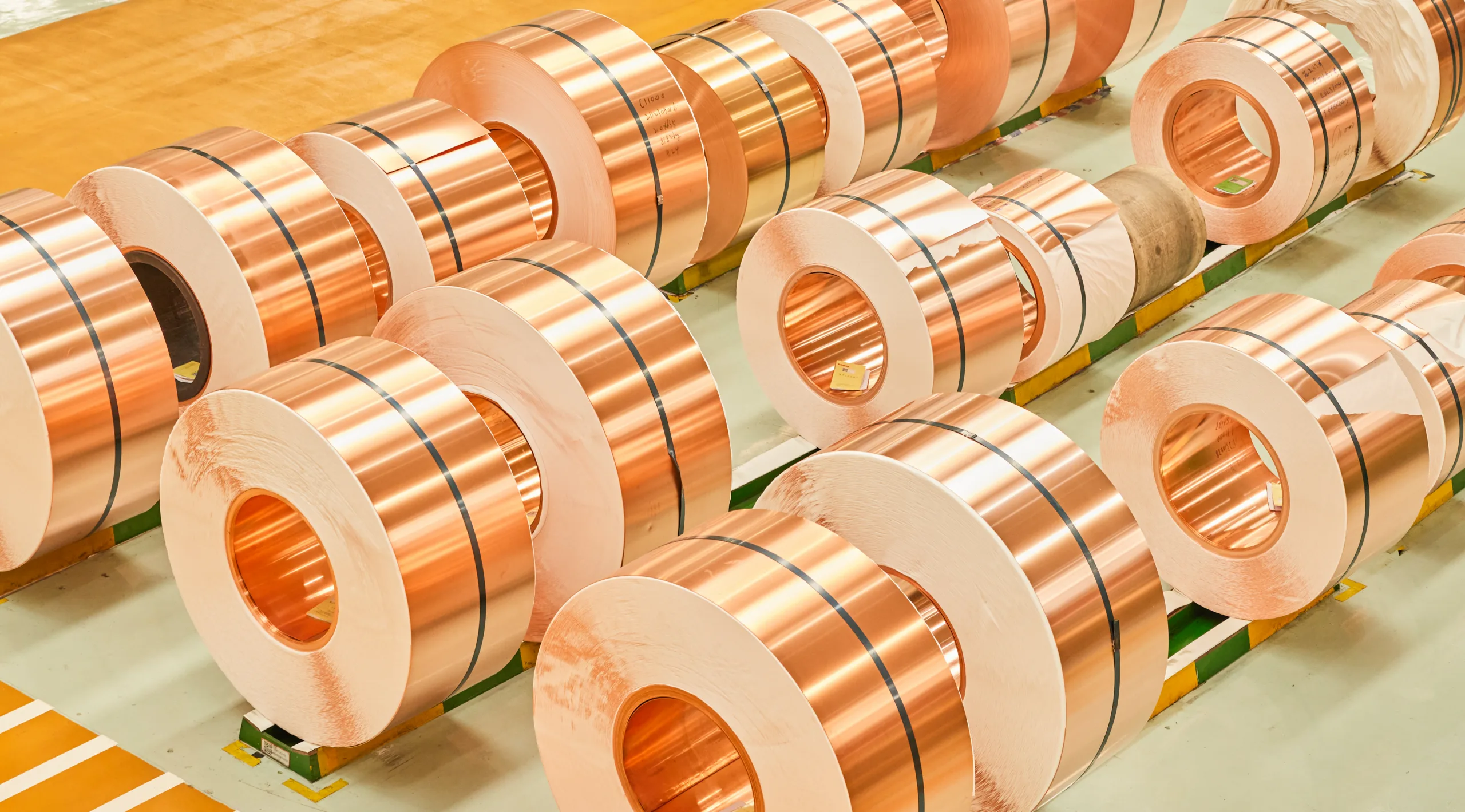
| Industry use | Primary requirement | Why non-ferrous forming helps |
|---|---|---|
| Automotive EV | Conductivity and safety | Supports compact, repeatable connector geometries |
| Semiconductor packaging | Thickness uniformity | Improves lead-frame and stamping consistency |
| 6G thermal hardware | Heat transfer and stability | Allows thin, high-function formed structures |
| Consumer electronics | Fatigue life and miniaturization | Enables micro parts with stable spring behavior |
What quality teams should demand from precision non-ferrous alloys
Quality teams should demand evidence, not reassurance. For formed non-ferrous parts, the most useful supplier documents are chemistry certification, mechanical test reports, thickness maps, surface inspection data, and traceability records tied to the actual coil or strip lot.
In many industrial supply chains, the difference between a preferred supplier and a backup supplier is the ability to reproduce the same forming result on every shipment. That is why process capability, batch segregation, and lot identity are so important. A supplier with digital manufacturing controls can usually support stronger consistency than one relying on informal shop-floor judgment alone.
Standards provide a baseline for this work, but internal qualification remains essential. For example, a supplier may certify tensile properties under ISO 6892-1 or ASTM E8/E8M, yet the buyer still needs forming trials on the exact tool path and lubrication system. In high-volume applications, that extra qualification step often prevents costly late-stage redesign.
For audits, the strongest evidence package usually includes chemistry, mechanical data, dimensional reports, and traceability from melt to shipment. If a supplier can connect all four, the customer can more easily satisfy internal quality systems and customer-facing compliance checks.
- Request coil-level traceability and not just batch-level labels.
- Check whether forming data comes from the same temper and gauge you will buy.
- Ask for surface and thickness consistency metrics across the full width.
- Confirm how nonconforming lots are isolated and documented.
These checks are especially valuable when the final customer also audits the supply chain, because audit readiness is now part of product quality, not a separate administrative task.
How to choose the right industrial non-ferrous alloy for your forming project
The right alloy is the one that minimizes total program risk, not the one that looks best in isolation. A successful choice balances shape complexity, conductivity, strength, corrosion resistance, cost, and process window width.
For shallow draws and simple bends, a wider range of non-ferrous alloys can work. For deep cups, tight radii, or small emboss features, the shortlist narrows quickly. You should also consider downstream operations such as plating, brazing, welding, etching, or heat treatment, because a material that forms well may still create problems later in the route.
Engineers should think in terms of final-use compatibility. A connector alloy may need low resistance after forming. A shielding part may need stable springback. A thermal component may need a clean surface for bonding. A formed part for mass production may need a wider process window than a prototype part because tool wear and line variation will accumulate over time.
In practical procurement, the best supplier is often the one that can co-develop the alloy state with the customer’s forming process. That reduces lead time on troubleshooting and increases the chance of first-pass production success.
| Decision criterion | Ask before buying | Why it matters |
|---|---|---|
| Geometry | What is the draw ratio and minimum radius? | Defines cracking risk |
| Function | Must the part conduct, flex, or dissipate heat? | Defines alloy family |
| Process | Will the part be plated, welded, or etched? | Defines surface and chemistry needs |
| Supply chain | Can the supplier provide lot traceability? | Reduces audit and recall risk |
Practical mistakes that reduce deep drawing yield
The most common mistake is selecting alloy by strength alone. High strength can be useful, but if it narrows the forming window too much, the overall program becomes less reliable and more expensive.
The second mistake is ignoring temper consistency. Two coils with the same nominal grade can behave differently if their heat treatment history or work hardening level is not tightly controlled. The third mistake is underestimating surface condition, which can drastically alter friction and galling behavior. The fourth mistake is assuming that press settings can fully compensate for a weak material specification.
These issues usually appear first as small defects: edge cracking, slight wrinkles, uneven wall thickness, or random springback. By the time those defects become visible in final assembly, the root cause has often already been buried in upstream material selection.
- Do not approve material without a real tool trial.
- Do not use nominal grade names as a substitute for performance data.
- Do not separate material qualification from lubrication and die design.
- Do not ignore lot-to-lot variation when scaling from prototype to mass production.
Programs that avoid these mistakes usually achieve higher first-pass yield and fewer late-stage engineering changes, which matters more than a small raw-material cost difference.
Frequently asked questions about non-ferrous metal alloys in deep drawing and forming
Which non-ferrous metal alloys are easiest to deep draw?
Alloys with high ductility, controlled temper, and stable surface quality are usually easiest to deep draw. In many cases, softer copper and aluminum families perform well when the geometry is not overly aggressive.
What property matters most in forming performance?
Elongation is important, but it is not the only property. Strain hardening, anisotropy, thickness consistency, and surface condition are equally important because they determine how the sheet flows under load.
Why do precision non-ferrous alloys matter for electronics?
Precision non-ferrous alloys matter because electronics parts often need both formability and a second function such as conductivity, spring force, or thermal management. Batch consistency is critical when tolerances are tight.
How do I reduce cracking during deep drawing?
Reduce cracking by improving material selection, increasing punch and die radius where possible, controlling lubrication, and verifying that the temper and surface finish match the intended draw depth.
What standards should I ask suppliers to reference?
For tensile testing, ISO 6892-1 and ASTM E8/E8M are useful starting points. For broader quality assurance, traceability and lot documentation should be added to the supplier package.
How do I compare two alloy suppliers fairly?
Compare them using the same gauge, temper, test method, and forming trial conditions. If the coil lot, lubrication, or die setup is different, the comparison is not reliable.
When should I choose a custom precision alloy instead of a standard grade?
Choose a custom precision alloy when the part has a narrow forming window, a critical secondary function, or strict traceability requirements that standard grades cannot reliably satisfy.
For buyers who want to move from general material selection to application-specific qualification, the most productive next step is to review the target function first, then select the alloy family, then validate the forming window with test data. That sequence gives engineering teams a better chance of reaching stable production with fewer surprises.