
- Specialty non ferrous alloys are selected by function, not by metal family alone.
- In advanced manufacturing, conductivity, formability, fatigue, and traceability usually matter more than raw material price.
- Material standards such as ISO 9001:2015 and ASTM E18 help define quality control and test consistency.
- Application fit is critical: EV connectors, semiconductor leadframes, thermal parts, and VCM springs each demand different alloy behavior.
- High performance alloys create value when they reduce scrap, stabilize yield, and support repeatable processing.
Specialty non ferrous alloys are a core material choice for EV, semiconductor, 6G, and consumer electronics programs because they can combine narrow thickness tolerance, stable mechanical properties, and application-specific conductivity; in precision strip production, thickness control in the micrometer range and hardness verification using standardized methods are central to process reliability, while traceability and quality systems aligned with ISO 14001:2015 and ISO 14001:2015 help support audit-ready supply chains. For buyers comparing non ferrous alloy products, the real decision is usually between the lowest purchase price and the lowest total risk.
What specialty non ferrous alloys are, and why high performance alloys matter
Specialty non ferrous alloys are alloys whose main value comes from controlled performance rather than simple metal content.
Unlike commodity metals, these materials are engineered for exact combinations of conductivity, strength, corrosion resistance, elasticity, magnetic behavior, and processability. That is why high performance alloys are used in thin strip, precision connectors, leadframes, springs, shielding parts, and thermal components.
For engineering teams, the key is balance. A material with excellent conductivity may lose spring force after forming. A very strong alloy may crack during stamping. A corrosion-resistant alloy may be harder to weld or etch. The best non ferrous alloy product solves the system problem, not just the material problem.
In practical procurement, this is why alloy selection is often tied to application windows, design limits, and manufacturing route. A strip used for an EV busbar does not face the same requirements as a leadframe alloy or a VCM spring strip. If one property is over-optimized, another usually suffers.
How to choose non ferrous alloy products by application
Application context determines almost every major alloy decision.
Engineers usually begin by identifying the load case, joining method, operating temperature, and expected life cycle. Then they match those needs to alloy composition, temper, surface finish, and strip thickness tolerance. This is where a structured product page can help users compare options such as non ferrous alloy products, precision strip, and high performance alloys without forcing them to translate technical jargon alone.
| Application | Main requirement | Typical material priority | Common risk if poorly matched |
|---|---|---|---|
| EV connectors and charging systems | Conductivity, low contact resistance, thermal stability | High conductivity with adequate strength | Overheating, contact wear, voltage loss |
| Semiconductor leadframes | Uniformity, etchability, dimensional stability | Clean microstructure and tight strip tolerance | Die attach issues, warpage, poor yield |
| 6G thermal and RF hardware | Heat spreading, thin gauge capability, stability | Thermal conductivity and flatness | Hot spots, frequency loss, assembly mismatch |
| VCM and micro-actuation parts | Fatigue life, elasticity, repeatable motion | Elastic recovery and forming stability | Drift, noise, early failure |
This table shows why a product family should be organized around use case, not just alloy name. Buyers rarely need a textbook metallurgical explanation first; they need a fast way to know whether the alloy fits the problem they are trying to solve.
Core performance factors in specialty non ferrous alloys
The most successful alloy selection process starts with five measurable variables.
These variables are conductivity, strength, formability, fatigue resistance, and corrosion behavior. When all five are considered together, the result is a material that performs consistently through stamping, bending, welding, plating, and final service.
| Property | Why it matters | How it is commonly checked | Typical engineering impact |
|---|---|---|---|
| Electrical conductivity | Controls losses and heat in current-carrying parts | Standard conductivity testing and composition control | Lower temperature rise and better current handling |
| Yield strength | Supports contact force and dimensional recovery | Tensile testing | Improved retention under load |
| Formability | Determines stamping and bending reliability | Forming trials and bend testing | Lower crack risk and higher yield |
| Fatigue life | Critical for moving or vibrating parts | Repeated-cycle testing | Longer service life |
| Corrosion resistance | Protects performance in harsh environments | Salt exposure and environmental simulation | Reduced degradation and maintenance |
In practice, these properties trade off against one another. For example, increasing cold work can raise strength, but it can also reduce ductility. That is why high performance alloys are often specified with a custom temper or intermediate annealing route instead of a generic mill condition.
A useful benchmark for process control is hardness testing. ASTM E18 defines the Rockwell hardness test method, which is widely used to verify consistency in metals. For strip applications, hardness data is especially useful because it reflects how the alloy will behave in stamping and spring-back-sensitive forming steps.
Specialty non ferrous alloys in EV, semiconductor, 6G, and consumer electronics
Different industries ask the same alloy to solve different problems.
In EV systems, the material must carry current safely while surviving thermal cycling and vibration. In semiconductor packaging, the same general family of metals may be evaluated for etching response, bondability, and dimensional control. In 6G hardware, designers are often balancing thermal transport, thin-wall fabrication, and signal integrity. In consumer electronics, especially VCM and micro-drive parts, repeated motion and fatigue become more important than brute strength.
| Industry | Primary design issue | Material focus | Manufacturing sensitivity |
|---|---|---|---|
| EV | Current, heat, safety | Conductivity and stability | High |
| Semiconductor | Packaging precision | Uniformity and etch behavior | Very high |
| 6G | Thermal and RF performance | Thermal spread and flatness | Very high |
| Consumer electronics | Miniaturized motion control | Fatigue and elasticity | High |
For purchasers, these differences matter because the same material family can behave very differently after slitting, stamping, heat treatment, or plating. A supplier that understands the end-use environment can usually reduce requalification loops and shorten design iterations.
Why thickness tolerance and traceability are not optional
Precision strip performance often depends on dimensions that are invisible to the naked eye.
For thin-gauge strip used in connectors, leadframes, and micro-components, tight thickness control supports downstream stamping accuracy, contact force consistency, and assembly fit. In many precision manufacturing environments, dimensional tolerances at the micrometer level are necessary to keep production stable.
Traceability is equally important. When a batch issue appears, a fully traceable supply chain lets engineers isolate root cause faster and avoid broad containment actions. Boway’s emphasis on 100% material traceability reflects a quality requirement that is increasingly standard in high-reliability manufacturing.
For this reason, buyers should ask not only for a certificate of analysis, but also for lot genealogy, process route history, and inspection records. A material with excellent nominal properties can still fail a program if it cannot be traced, audited, and reproduced.
Quality systems are also central to confidence in supplier behavior. ISO 14001:2015 is often used for environmental management, while ISO 45001:2018 supports occupational health and safety systems. Together with quality certification, these frameworks help large buyers assess whether a plant can sustain disciplined manufacturing over time.
How to compare high performance alloys without overcomplicating the decision
The best comparison method is to score the application, not the marketing sheet.
Instead of asking which alloy is “best,” engineers should ask which alloy wins on the exact failure mode they are trying to prevent. That might be creep, crack initiation, resistance drift, spring force loss, or corrosion-related downtime.
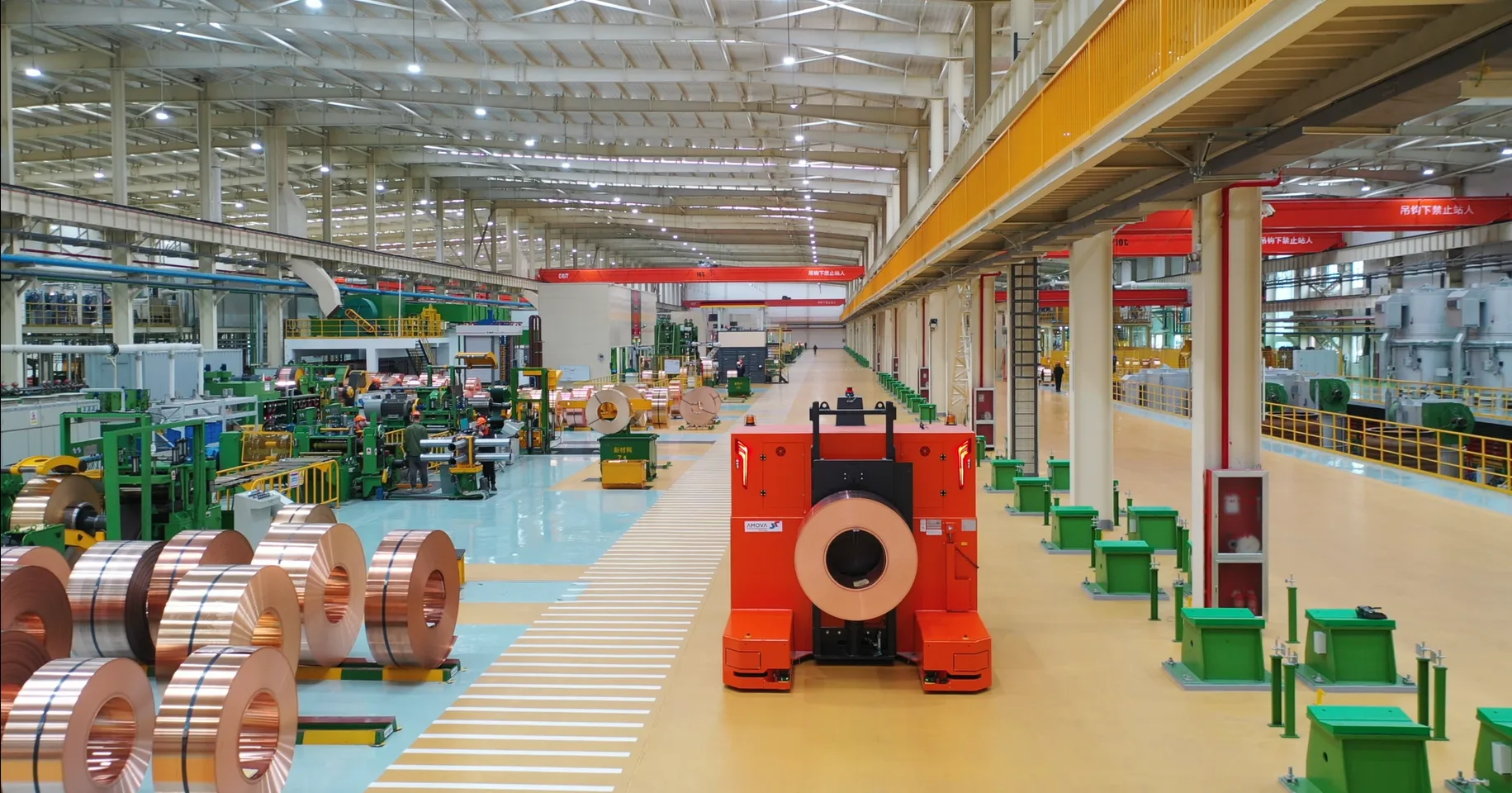
- Define the load case, including current, temperature, vibration, and life cycles.
- Specify the forming route, including stamping, bending, welding, or plating.
- Set the dimensional targets, especially thickness, flatness, and edge quality.
- Review the test method, not just the result value.
- Confirm traceability, supply continuity, and regional delivery support.
| Evaluation item | Good question to ask | Why it matters |
|---|---|---|
| Composition control | Can chemistry variation be held within the agreed window? | Protects consistency across lots |
| Mechanical stability | Does the temper remain stable after processing? | Prevents drift in performance |
| Surface quality | Is the strip free from defects that affect forming or plating? | Reduces scrap and rework |
| Audit readiness | Are records available for customer review? | Supports qualification and compliance |
| Delivery resilience | Can the supplier support multi-region programs? | Reduces supply interruption risk |
These criteria explain why procurement teams in advanced manufacturing often pay more attention to process capability than to purchase price alone. A slightly more expensive alloy that cuts scrap or stabilizes yield can create a lower total cost per finished part.
Relevant standards and test methods for non ferrous alloy products
Standards turn subjective material claims into measurable requirements.
When a buyer sees a number, the next question should always be: according to what method? That is why standard references matter so much in high performance alloys. They define the condition under which a property was measured and make supplier comparisons more credible.
Useful references include ISO 45001:2018 for safety systems, ASTM E8/E8M for tensile testing of metallic materials, and ASTM E18 for Rockwell hardness. For organizations managing supplier quality, ISO 14001:2015 and ISO 9001:2015 provide widely recognized management system frameworks.
These references do not choose the alloy for you, but they make the decision defensible. In engineering and procurement review meetings, defensibility is often as important as the numeric result itself.
Common mistakes when sourcing specialty non ferrous alloys
Most sourcing problems come from incomplete requirements, not from the alloy itself.
Teams often underestimate how much downstream processing changes material behavior. A strip that looks acceptable on the mill certificate may still fail in stamping, bonding, or long-term service if the selection process was too shallow.
- Choosing on conductivity alone without checking forming behavior.
- Ignoring thickness tolerance and edge condition in thin strip applications.
- Skipping fatigue and thermal-cycle testing for moving or hot components.
- Requesting a general alloy family instead of a grade or temper matched to the application.
- Failing to require lot-level traceability and retained records.
A better practice is to start with the failure mode, then work backward to the material and process route. That reduces requalification, engineering change orders, and pilot-line surprises.
What buyers should ask before approving a new alloy
The right questions quickly reveal whether a supplier understands industrial use cases.
- What is the intended application and duty cycle?
- Which test methods were used to verify mechanical and physical properties?
- What tolerances are guaranteed for thickness, width, and flatness?
- How is lot traceability maintained from melt to shipment?
- Can the supplier support qualification across multiple regions or plants?
For buyers evaluating precision strip, these questions are especially important because the downstream impact of a bad strip decision can be much larger than the raw material cost. Scrap, line stoppage, and delayed launch programs quickly outweigh small price differences.
How specialty non ferrous alloys create value in real production
The value of a high performance alloy shows up in the factory, not in the brochure.
When a material is well matched to the process, engineers see fewer crack defects, less dimensional drift, cleaner assembly, and fewer quality escapes. In high-volume industries, even small improvements matter because the same issue repeats thousands or millions of times.
That is why experienced users often describe material selection as a yield strategy. The goal is not merely to buy metal; it is to protect the entire production system from instability. A supplier that can provide technical support, process data, and consistent strip behavior becomes part of that control system.
In advanced manufacturing, this is especially true for globally distributed programs. A dual- or multi-region supply footprint can reduce logistics risk and support local customer requirements without forcing each site to requalify from zero.
FAQ about specialty non ferrous alloys and their applications
What are specialty non ferrous alloys used for?
They are used in applications that need controlled conductivity, strength, corrosion resistance, thermal performance, or fatigue life, especially in EV, semiconductor, 6G, and precision electronics.
How are high performance alloys different from standard non ferrous metals?
High performance alloys are engineered for tighter property windows, more demanding environments, and better process repeatability than commodity materials.
Why does thickness tolerance matter in precision strip?
Thickness tolerance affects stamping accuracy, contact force, spring behavior, and fit-up, so it directly influences yield and assembly reliability.
What is the most important quality factor in non ferrous alloy products?
For many buyers, traceability is the most important quality factor because it supports auditability, root-cause analysis, and batch control.
Which test standards are commonly used for alloy verification?
Common references include ASTM E8/E8M for tensile testing and ASTM E18 for hardness testing.
How do I choose the right alloy for EV connectors?
Start with current load, thermal rise, contact resistance, forming route, and required life cycles, then evaluate conductivity and mechanical stability together.
Why do manufacturers emphasize traceability so much?
Traceability helps identify the source of quality issues quickly, limits containment cost, and improves trust during customer audits and requalification.